Key takeaways
- Gaming performance: The 9800X3D’s 3D V-Cache delivers a meaningful frame-rate lead in CPU-bound games, especially at 1080p and 1440p.
- Price: The 9700X is noticeably cheaper, making it easier to fit into a mid-range budget.
- Power and efficiency: The 9700X runs at a lower TDP and is easier to cool, while the 9800X3D pushes higher power for more performance.
- Productivity: Both are capable in multi-threaded work, but the 9700X’s higher stock clocks can edge ahead in some non-cached workloads.
- Cache: The 9800X3D’s stacked L3 cache is the defining feature and the reason it dominates in gaming benchmarks.
- Value proposition: The 9700X wins on dollars-per-frame for balanced use; the 9800X3D wins on peak gaming performance.
What's inside
AMD’s AM5 platform gives gamers two very different eight-core options in 2026: the Ryzen 7 9800X3D with 3D V-Cache, and the standard Ryzen 7 9700X. On paper they share a core count and the same Zen 5 architecture, but the way they spend their transistor budget could not be more different, and that shapes which one belongs in your build.
The choice matters because these two chips target different buyers at different price points. The 9800X3D chases the gaming performance crown with its stacked cache, while the 9700X aims for efficiency and a friendlier price. Understanding where each one pulls ahead is the key to spending your money wisely in 2026.
As an Amazon Associate we earn from qualifying purchases.


⚡ Save on Your Next PC — Amazon Prime
Prime members get fast free shipping on the systems above, plus early access to Prime Day & Black Friday PC deals. New members get a 30-day free trial.
Watch: Ryzen 7 9800X3D vs 9700X: 2026 Gaming CPU — Video Review
Quick Verdict
Get the AMD Ryzen 7 9800X3D if gaming is your priority and you want the fastest 1080p and 1440p frame rates AMD offers in an eight-core chip. Choose the Ryzen 7 9700X if you want strong all-round performance, lower power draw, and a lower price while still handling modern games very well. Gamers lean 9800X3D; value and efficiency seekers lean 9700X.
Key Differences
- Gaming performance: The 9800X3D’s 3D V-Cache delivers a meaningful frame-rate lead in CPU-bound games, especially at 1080p and 1440p.
- Price: The 9700X is noticeably cheaper, making it easier to fit into a mid-range budget.
- Power and efficiency: The 9700X runs at a lower TDP and is easier to cool, while the 9800X3D pushes higher power for more performance.
- Productivity: Both are capable in multi-threaded work, but the 9700X’s higher stock clocks can edge ahead in some non-cached workloads.
- Cache: The 9800X3D’s stacked L3 cache is the defining feature and the reason it dominates in gaming benchmarks.
- Value proposition: The 9700X wins on dollars-per-frame for balanced use; the 9800X3D wins on peak gaming performance.
AMD Ryzen 7 9800X3D: The Gaming Champion
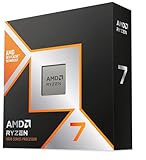
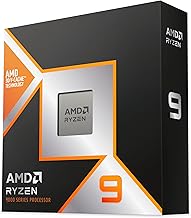
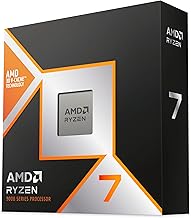
The AMD Ryzen 7 9800X3D is built for one thing above all: frame rates. Its 3D V-Cache dramatically boosts performance in games that thrive on low-latency memory access, and it consistently sits at or near the top of gaming charts. Bundles like the Ryzen 7 9800X3D with TUF Gaming X870-PLUS WiFi or the Micro Center combo with a GIGABYTE X870 board make it easy to drop straight into a high-end AM5 build.
Because it also unlocks for overclocking, enthusiasts can squeeze even more from it. If you pair a fast GPU with a high-refresh monitor and want to make sure the CPU never holds you back, the 9800X3D is the clear pick, and it remains AMD’s go-to gaming eight-core in 2026.
AMD Ryzen 7 9700X: The Balanced Value Pick
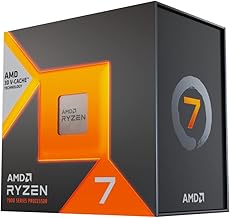
The AMD Ryzen 7 9700X is the sensible all-rounder. It delivers the full Zen 5 experience with eight cores and sixteen threads, handles modern games at high frame rates, and does so at a lower price and lower power draw than its cache-stacked sibling. For most 1440p gamers pairing it with a mainstream GPU, the real-world gap in playable performance is smaller than the benchmark charts suggest.
It is also the smarter choice if your workload mixes gaming with productivity, streaming, and general multitasking, where its higher stock clocks and efficiency shine. When budget matters and you do not need the absolute peak gaming numbers, the 9700X stretches your money further while still feeling fast.
Which Should You Buy?
- For competitive high-refresh gaming: pick the 9800X3D because its 3D V-Cache maximizes frame rates.
- For a balanced mid-range build: pick the 9700X because it delivers great performance for less money.
- For a cooler, lower-power system: pick the 9700X because its lower TDP is easier to manage.
- For a no-compromise gaming flagship: pick the 9800X3D because it leads AMD’s eight-core lineup.
- For mixed work and play on a budget: pick the 9700X because it balances value across every task.
Frequently Asked Questions
How much faster is the 9800X3D in games?
In CPU-bound scenarios at 1080p and 1440p, the 9800X3D can lead the 9700X by a comfortable margin thanks to 3D V-Cache. At higher resolutions where the GPU is the bottleneck, the gap narrows.
Is the 9700X good enough for modern gaming?
Absolutely. The 9700X handles 2026 titles at high frame rates, especially at 1440p and 4K. Most gamers will find it more than sufficient unless they chase the very highest competitive frame rates.
Do both use the same AM5 motherboards?
Yes. Both drop into AM5 boards with DDR5 memory, so you can pair either with X870, B850, or similar chipsets. A BIOS update may be needed on older boards.
Which is the better value?
The 9700X is the better value for balanced use, while the 9800X3D justifies its premium for buyers who want the best gaming performance possible.
Final Verdict
If frame rates are everything, the Ryzen 7 9800X3D is the eight-core to beat and worth the premium for serious gamers. If you want strong performance, lower power, and a friendlier price, the Ryzen 7 9700X is the smarter buy for most builds. Match the chip to your priorities and either delivers a fast, modern AM5 experience.