Key takeaways
- Core count: The 9950X3D offers sixteen cores and thirty-two threads versus eight cores and sixteen threads on the 9800X3D.
- Productivity performance: The 9950X3D dramatically outpaces the 9800X3D in rendering, encoding, and heavily threaded tasks.
- Gaming performance: Both game at the very top tier, with real-world differences often small in most titles.
- Price: The 9800X3D is significantly cheaper, freeing budget for other components.
- Power and cooling: The 9950X3D draws more power and demands stronger cooling under full multi-core load.
- Value for gamers: The 9800X3D delivers nearly the same gaming experience for far less money.
What's inside
When you want the best of AMD’s Zen 5 lineup in 2026, the decision usually narrows to two 3D V-Cache chips: the sixteen-core Ryzen 9 9950X3D and the eight-core Ryzen 7 9800X3D. Both bring stacked cache to the table, but they serve very different users, and picking the wrong one means either overspending or leaving performance on the table.
The 9950X3D is a productivity powerhouse that also games at the top tier, while the 9800X3D is a focused gaming specialist that costs far less. This comparison matters because the extra cores of the flagship only pay off in specific workloads, and understanding where each shines helps you build smart rather than just expensive.
As an Amazon Associate we earn from qualifying purchases at no extra cost to you. Product prices and availability are accurate as of the date shown and are subject to change.


⚡ Save on Your Next PC — Amazon Prime
Prime members get fast free shipping on the systems above, plus early access to Prime Day & Black Friday PC deals. New members get a 30-day free trial.
Watch: Ryzen 9 9950X3D vs 9800X3D: 2026 Showdown — Video Review
Quick Verdict
Choose the AMD Ryzen 9 9950X3D if you mix serious content creation, rendering, or heavy multitasking with top-tier gaming and want it all in one chip. Choose the AMD Ryzen 7 9800X3D if gaming is your main focus and you would rather save money for a stronger GPU. Creators and power users lean 9950X3D; pure gamers lean 9800X3D.
Key Differences
- Core count: The 9950X3D offers sixteen cores and thirty-two threads versus eight cores and sixteen threads on the 9800X3D.
- Productivity performance: The 9950X3D dramatically outpaces the 9800X3D in rendering, encoding, and heavily threaded tasks.
- Gaming performance: Both game at the very top tier, with real-world differences often small in most titles.
- Price: The 9800X3D is significantly cheaper, freeing budget for other components.
- Power and cooling: The 9950X3D draws more power and demands stronger cooling under full multi-core load.
- Value for gamers: The 9800X3D delivers nearly the same gaming experience for far less money.
AMD Ryzen 9 9950X3D: The Do-It-All Flagship
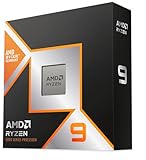
The AMD Ryzen 9 9950X3D is the chip for people who refuse to compromise. Its sixteen cores tear through video editing, 3D rendering, code compilation, and multi-app workflows, while 3D V-Cache keeps its gaming performance in the elite tier. Combos like the 9950X3D with a GIGABYTE X870E AORUS board or an MSI PRO X870E-P give creators a powerful, expandable foundation, and prebuilts like the Panorama XL desktop pair it with an RTX 5080 for a turnkey powerhouse.
If your PC earns its keep through creative or professional work and also has to game at maximum settings when the day is done, the 9950X3D justifies its premium. It is genuinely one chip that does everything at the highest level, which is exactly what demanding users are paying for.
AMD Ryzen 7 9800X3D: The Focused Gaming Value
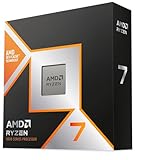
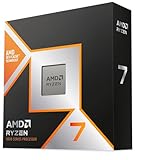
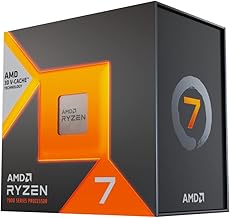
The AMD Ryzen 7 9800X3D proves you do not need sixteen cores to game at the top. With eight cores, sixteen threads, and the same 3D V-Cache technology, it matches or nearly matches the flagship in most games while costing considerably less. That saved money can go straight into a faster GPU, more memory, or better storage, which often improves the overall experience more than extra CPU cores would.
For the vast majority of gamers, streamers, and everyday users, the 9800X3D is the smarter allocation of budget. It runs cooler, is easier to cool, and leaves nothing meaningful on the table for gaming. Only when heavy productivity enters the picture does the flagship pull decisively ahead.
Which Should You Buy?
- For professional content creation: pick the 9950X3D because its sixteen cores crush rendering and encoding.
- For pure gaming value: pick the 9800X3D because it games at the top tier for much less.
- For a single do-everything workstation-gamer: pick the 9950X3D because it excels at both.
- For a GPU-focused budget: pick the 9800X3D and spend the savings on graphics.
- For heavy multitasking and streaming: pick the 9950X3D because its extra threads handle it effortlessly.
Frequently Asked Questions
Does the 9950X3D game better than the 9800X3D?
Only marginally in most titles. Both share 3D V-Cache and sit at the top of gaming charts, so the gaming difference is often small. The 9950X3D’s real advantage is in productivity.
Is the 9950X3D worth the extra cost for gaming alone?
Not for pure gaming. If you never run heavy multi-threaded workloads, the 9800X3D offers nearly identical gaming performance and lets you spend the savings elsewhere.
Which chip needs better cooling?
The 9950X3D. Its sixteen cores draw more power under full load and benefit from a high-end air cooler or a capable AIO, whereas the 9800X3D is easier to keep cool.
Do both support the same motherboards?
Yes. Both are AM5 processors compatible with X870E, X870, and B850 boards, giving you flexibility in choosing a platform for either chip.
Final Verdict
The Ryzen 9 9950X3D is the ultimate do-it-all chip, ideal for creators and power users who also game at the highest level. The Ryzen 7 9800X3D, meanwhile, delivers nearly the same gaming experience for far less, making it the smarter buy for dedicated gamers. Match the chip to your workload and you will get the most performance for every dollar spent.