Our Top Picks
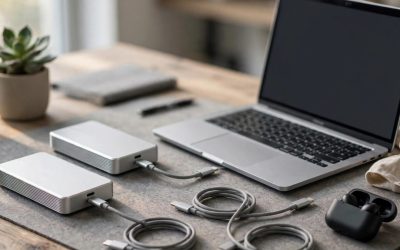
 INIU 10000mAh 45W Fast Charging Portable ChargerSmall Size5.26 x 2.7 x 0.5 inches0.5 poundsCheck on Amazon
 LISEN Airplane Travel Essentials for Flying Airplane Phone1.97 x 2.44 x 2.67 inches0 poundsCheck on Amazon
 Perilogics Universal Airplane Phone Holder Mount1 Unit3.6 x 1.45 x 1.38 inches0 poundsCheck on Amazon
The best phones for travel in 2026 are the iPhone 16 Pro Max for the most dependable all-round experience, Samsung Galaxy S25 Ultra for zoom and broad network support, Google Pixel 9 Pro XL for point-and-shoot photos, and OnePlus 13 for maximum battery life at a lower price.
Your best choice depends less on benchmark speed than on four travel realities: how long the phone lasts away from a charger, whether its cameras work in poor light and at distance, whether it supports the eSIM or local SIM you need, and how much weight you want in your pocket.
INIU 10000mAh 45W Fast Charging Portable Charger, Smaller Travel Power Bank | Flight-Safe, Detachable USB C Cable, Travel Essential, External Battery Phone Pack for iPhone 18 17 Samsung iPad etc
Chosen because it specifies Smaller Travel Power Bank.
View on AmazonLISEN Airplane Travel Essentials for Flying Airplane Phone Holder for Desk Phone Stand Hands Free MagSafe Travel Accessories Long Flight Flying Italy Travels Must Haves Travel Tech Gifts for Men
Picked as a relevant option in this category.
View on Amazon
MiiKARE Airplane Phone Holder Mount, Plane Travel Essentials Gift, Black | Universal Hands-free Phone Holer with 360° Rotation for Flying, Accessory Travel Must Haves Phone Stand for Desk, Tray Table
Chosen because it specifies Plane Travel Essentials Gift and Black.
View on AmazonPerilogics Universal Airplane Phone Holder Mount, Plane Travel Essentials | In-Flight Phone Stand for Travel, Hands-Free Cell Phone Holder with Dual 360°Rotation, Travel Accessory for Flights, Black
Chosen because it specifies Plane Travel Essentials.
View on Amazon🛒 Best Price Today on Amazon
Check today’s deals on the products above before you buy. Prices change often, so compare the live price on Amazon.
Best phones for travel at a glance
| Phone | Approx. weight | Battery capacity | Camera strength | Travel advantage | Typical market range |
|---|---|---|---|---|---|
| iPhone 16 Pro Max | 227 g | About 4,685 mAh | Excellent video, main camera and 5x zoom | Strong eSIM support, long software life and reliable roaming | Usually $900–$1,200 |
| Samsung Galaxy S25 Ultra | 218 g | 5,000 mAh | Most versatile zoom system | Excellent bands, dual-SIM flexibility and built-in S Pen | Usually $900–$1,300 |
| Google Pixel 9 Pro XL | 221 g | 5,060 mAh | Excellent still photos and night photography | Simple camera results and a bright display for maps | Usually $700–$1,000 |
| OnePlus 13 | 210–213 g | 6,000 mAh | Very good main camera and portrait shots | Exceptional endurance and fast charging | Usually $650–$900 |
| iPhone 16e | 167 g | About 4,005 mAh | Good main camera, limited zoom flexibility | Lightweight, efficient and easy to use internationally | Usually $500–$700 |
Choose by the kind of trip you take
| Your situation | Best fit | Why | Main compromise |
|---|---|---|---|
| One phone for airports, maps, photos and video | iPhone 16 Pro Max | Excellent video, long endurance, strong app support and reliable eSIM activation | Large and expensive |
| Wildlife, architecture or distant subjects | Galaxy S25 Ultra | Dedicated telephoto cameras provide more useful reach than digital cropping | Heavy; camera processing can look less consistent across lenses |
| Night streets, people and quick snapshots | Pixel 9 Pro XL | Computational photography handles difficult light with little adjustment | Charging is slower than on OnePlus 13 |
| Remote travel with infrequent charging | OnePlus 13 | 6,000 mAh battery and very fast wired charging | Regional network and eSIM availability require closer checking |
| Frequent walking with a small bag | iPhone 16e | Much lighter than the large flagship phones while retaining modern connectivity | No ultrawide or telephoto camera |
Battery: capacity is useful, but charging access matters more
Battery capacity does not translate directly into hours because screen brightness, cellular signal, camera use and navigation can change consumption dramatically. A phone searching for a weak 5G signal in a mountain valley can use substantially more power than one connected to strong Wi-Fi.
For a practical travel calculation, assume a full day includes:
- Two hours of maps and location services at roughly 8% battery per hour: 16%.
- One hour of camera use and photo processing at roughly 15%: 15%.
- Three hours of browsing, messaging and translation at roughly 5% per hour: 15%.
- Standby, roaming searches, Bluetooth and background activity: about 20%.
That is approximately 66% of a charge before video streaming, hotspot use or gaming. A 5,000–6,000 mAh phone therefore gives a useful safety margin, while a smaller phone may need a top-up by evening. A 20,000 mAh power bank does not deliver 20,000 mAh to the phone: after voltage conversion and heat losses, expect roughly 14,000–16,000 mAh equivalent. That is normally about two full charges for a large flagship, not four.
The OnePlus 13 is the endurance specialist. The Galaxy S25 Ultra and iPhone 16 Pro Max are better balanced if you care equally about camera systems, software support and roaming convenience. The Pixel 9 Pro XL has a large battery, but its advantage is more noticeable when the phone is used as a camera than as a continuously active hotspot.
Camera differences that matter on a trip
For video and moving subjects: iPhone 16 Pro Max
The iPhone 16 Pro Max is the safest pick when your trip includes family video, walking footage or fast-moving subjects. Its camera switching is consistent, stabilization is strong, and video recording options are unusually polished. The 5x telephoto camera is useful for details across a street or a performer on a stage.
For zoom: Galaxy S25 Ultra
The Galaxy S25 Ultra offers the most flexible setup, including wide, ultrawide and telephoto cameras. Use the dedicated telephoto lens for wildlife, landmarks and signs rather than relying on maximum digital zoom. At night, the main camera usually produces cleaner results than the longest zoom setting, so move closer when possible.
For difficult light: Pixel 9 Pro XL
The Pixel 9 Pro XL is particularly convenient for sunsets, indoor attractions and nighttime streets. Its processing can recover faces and shadows without requiring manual controls. It is a strong choice for travelers who want to press the shutter and continue walking rather than edit RAW files.
For a lighter, cheaper setup: iPhone 16e
The iPhone 16e has a capable main camera, but its single-camera design limits ultrawide landscapes and optical reach. It works well for ordinary travel photos, food, portraits and video in good light. Choose it when weight and price matter more than framing flexibility.
eSIM, physical SIM and international network compatibility
Before buying, check the exact regional model, not just the product name. Two phones with the same name can differ in supported LTE and 5G bands, SIM configuration and whether the device is carrier-unlocked.
- eSIM: Convenient for installing a regional data plan before landing. iPhones sold in some markets are eSIM-only, while other regional versions retain a physical SIM tray.
- Physical SIM: Valuable in countries where prepaid tourist SIMs are sold in shops or where local identity verification makes eSIM activation inconvenient.
- Dual-SIM: Lets you keep your home number active for verification texts while using a local data line. Disable data roaming on the home line to avoid unexpected charges.
- Band support: LTE band compatibility matters more than having the newest theoretical 5G feature. A phone with broad LTE support is usually more dependable in rural areas.
- Carrier lock: An eSIM-capable phone can still reject another provider if it is locked. Confirm “unlocked” status before departure.
The iPhone 16 Pro Max and Galaxy S25 Ultra are the easiest recommendations for multi-country travel because their international variants generally offer broad connectivity and mature SIM options. Pixel and OnePlus models can also work very well, but verify the model number and local 5G bands when importing one or buying outside your home market.
Durability, size and daily carrying comfort
All five phones listed here offer water and dust resistance, but resistance is not waterproofing. Salt water, sand, drops onto stone and repeated charging-port contamination can still cause damage. A thin case with raised edges and a screen protector is more useful on a trip than an ultra-thin case that prioritizes appearance.
Large phones are easier to read for navigation and better for editing photos, but they become tiring during long walking days. The 218–227 gram range of the Galaxy S25 Ultra, Pixel 9 Pro XL and iPhone 16 Pro Max is noticeable alongside a power bank and passport. The iPhone 16e is far more comfortable in a small pocket. The OnePlus 13 sits between these extremes while offering the largest battery.
For hot destinations, avoid leaving any phone on a car dashboard or in direct sun. Heat reduces charging speed and can temporarily limit camera performance. If the phone becomes hot while navigating, lower display brightness, remove the case during charging and download maps for offline use.
Travel setup before you leave
- Confirm the model and unlock status. Check LTE bands, 5G bands, eSIM support and whether a physical SIM tray is included in your regional version.
- Install the travel eSIM while on Wi-Fi. Do not delete your home line if you need it for banking or login codes.
- Set the travel line as mobile data. Turn off automatic data switching and roaming on your home SIM.
- Download offline maps and translation languages. This reduces battery use and keeps essential tools available without a signal.
- Enable battery protection. A charging limit around 80–85% is useful for long-term battery health, but temporarily charge to 100% before a remote day.
- Back up photos automatically when connected to Wi-Fi. Keep enough free storage for video; 4K footage can consume several gigabytes during a single day.
Final recommendation
Buy the iPhone 16 Pro Max if you want the least complicated premium travel phone, especially for video and eSIM use. Choose the Galaxy S25 Ultra for the most versatile camera and broad feature set. Pick the Pixel 9 Pro XL for effortless still photography, or the OnePlus 13 when battery endurance and fast charging are your priorities. If you want a genuinely lighter phone and can accept one main camera, the iPhone 16e is the most pocket-friendly option.
More from Amazon
Programs that pair well with the guide above. Offers and eligibility are set by Amazon and may change.
A free business account with business pricing and bulk-buying tools for work, shop or home office.
Create a business accountFree shipping on eligible items, Prime Video and more. Eligible new members can start with a free trial.
Start a Prime free trialAudiobooks and podcasts to listen to on the go. Eligible new members can start with a free trial.
Try Audible freeAd-free music streaming. Eligible new subscribers can start with a free trial.
Try Music Unlimited freeAs an Amazon Associate we earn from qualifying purchases.