Key takeaways
- Knuckle armor: Molded plastic, composite, or other impact-resistant protection is preferable to simple foam for road use.
- Finger protection: Reinforced finger backs and flexible joint armor reduce exposed areas without making the controls difficult to operate.
- Palm reinforcement: Leather overlays, double layers, and padded or hard palm sliders help protect against abrasion and impact.
- Scaphoid coverage: A palm slider or structured panel near the wrist can reduce the chance of the palm catching abruptly.
- Finger bridge: A connection between the ring and little fingers can help prevent the little finger from spreading during a slide.
- Wrist retention: A strap or secure closure should keep the glove attached if your hand contacts the ground.
The best motorcycle gloves for most riders are full-finger gloves with palm reinforcement, knuckle armor, a secure wrist closure, and a cuff long enough to overlap the jacket sleeve; choose leather for abrasion resistance and road feel, or textile for ventilation and weather versatility.
Quick choice: which type fits your riding?
| Riding situation | Best construction | Armor priority | Useful features |
|---|---|---|---|
| Warm-weather commuting | Perforated leather or ventilated textile | Hard or molded knuckles, reinforced palm | Short cuff, touchscreen fingertips, secure wrist strap |
| Sport riding and fast road use | Full-grain or premium cowhide leather | Knuckles, finger joints, palm slider, scaphoid protection | Long cuff, double wrist closure, bridge between ring and little fingers |
| Touring in changing weather | Textile with waterproof membrane | CE-rated knuckle and palm protection | Long cuff, visor wiper, insulation, adjustment over jacket sleeves |
| Adventure and dual-sport riding | Textile, leather-textile hybrid, or enduro glove | Flexible knuckles, palm padding, finger protection | Ventilation, low-bulk cuff, good bar feel, replaceable-style palm reinforcement |
| Cold-weather commuting | Insulated waterproof textile | Armor that remains correctly positioned with insulation | Long gauntlet cuff, battery-compatible heated option, wide wrist adjustment |
Leather versus textile motorcycle gloves
Leather: stronger road feel and abrasion resistance
Leather remains the preferred material for sport and spirited road riding because it offers excellent abrasion resistance without requiring a thick, bulky shell. It also tends to conform to the hand, giving precise control of the clutch, brake, and throttle. Perforated leather improves airflow, while unperforated leather blocks more wind.
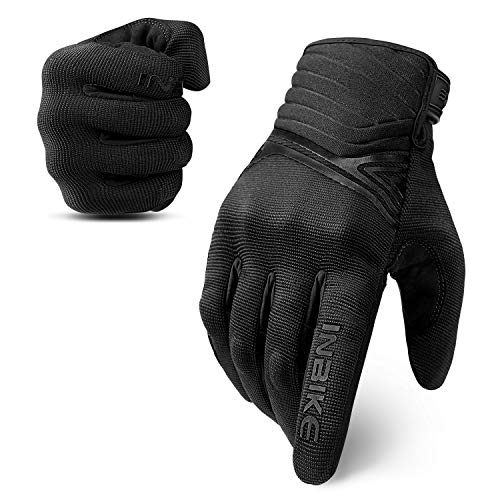
INBIKE Motorcycle Gloves Breathable Mesh Touchscreen Hard Knuckles
Included for 'Best Motorcycle Gloves for Comfort and Protection' as a relevant option in this category; details come from the product listing.
View on Amazon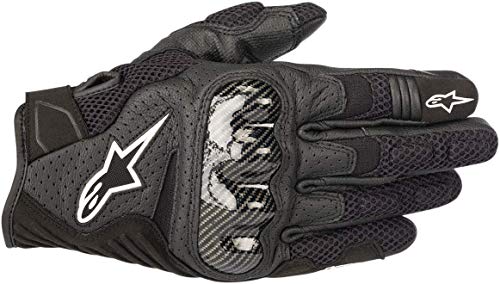
Alpinestars SMX 1 Air V2 Motorcycle Gloves Lightweight Ventilated Design Street Riding Comfort Enhanced Grip Protection
Included for 'Best Motorcycle Gloves for Comfort and Protection' as a relevant option in this category; details come from the product listing.
View on Amazon
Milwaukee Leather MG7510 Men's 'Gel Palm' Black Short Wrist Leather Gloves
Included for 'Best Motorcycle Gloves for Comfort and Protection' as a relevant option in this category; details come from the product listing.
View on AmazonThe drawbacks are slower drying, less inherent weather resistance, and a break-in period. A leather glove that feels slightly snug across the palm can become more comfortable, but fingers should never be cramped or pressed against the end. Do not expect a perforated leather glove to work well in cold rain.
Examples of established leather-oriented designs include the Alpinestars SMX-2 Air Carbon v2 for warm-weather use and the Dainese Carbon 4 Long for a longer sport-oriented cuff. Exact features vary by version and market, so check the product’s current certification and armor specification before buying.
Textile: better ventilation and weather flexibility
Textile gloves can use mesh, synthetic leather, nylon, polyester, or technical laminates. They are often the more practical choice for commuting and touring because panels can combine airflow, stretch, insulation, and waterproofing in one design. A waterproof membrane such as GORE-TEX can prevent rain penetration, but it also reduces breathability compared with an open mesh glove.
Textile does not automatically mean less protection. A well-designed glove can include abrasion-resistant overlays, leather palm sections, molded knuckles, and a certified impact rating. However, lightweight summer mesh gloves usually sacrifice some abrasion coverage for airflow. They are appropriate for heat, not as a universal replacement for a substantial road glove.
For touring, designs such as the REV’IT! Sand 4 gloves or Klim Adventure GTX represent the general textile approach: weather protection, longer cuffs, and more coverage than a short summer glove. Compare the current model’s membrane, insulation, and armor details rather than relying on the name alone.
Armor coverage matters more than the material label
Look for armor that stays over the knuckles when you make a fist and when you grip the handlebar. Loose armor can rotate away from the impact zone. A glove should also protect the palm heel and the outside edge of the hand, where riders may instinctively place their hands during a fall.
- Knuckle armor: Molded plastic, composite, or other impact-resistant protection is preferable to simple foam for road use.
- Finger protection: Reinforced finger backs and flexible joint armor reduce exposed areas without making the controls difficult to operate.
- Palm reinforcement: Leather overlays, double layers, and padded or hard palm sliders help protect against abrasion and impact.
- Scaphoid coverage: A palm slider or structured panel near the wrist can reduce the chance of the palm catching abruptly.
- Finger bridge: A connection between the ring and little fingers can help prevent the little finger from spreading during a slide.
- Wrist retention: A strap or secure closure should keep the glove attached if your hand contacts the ground.
CE marking is useful, but read the actual classification and coverage. A thin glove with limited impact protection may be comfortable yet less appropriate for highway riding than a longer, more protective model.
Palm reinforcement and control feel
The palm is where comfort and protection often conflict. Thick padding may reduce vibration but can make the throttle feel vague. Hard sliders can improve sliding performance but may create pressure points on long rides if they are poorly shaped.
For daily road use, prioritize a reinforced leather or synthetic-leather palm with light padding, secure stitching, and no prominent seam directly under the fingertips. For sport riding, add a palm slider and a finger bridge. For adventure riding, choose a palm that remains flexible enough for standing on the foot pegs and operating switches repeatedly.
Check the grip with the glove on: curl your fingers around a handlebar-sized object and look for excess material bunching in the palm. Bunching can cause blisters and make precise lever control harder. If a glove feels comfortable with your hand open but tight when gripping, the finger length or palm pattern is wrong.
Cuff length and weather protection
Short cuffs are cooler and easier to put on, making them suitable for urban summer riding. Their weakness is the gap that can appear between glove and jacket sleeve. A long gauntlet cuff offers better overlap and helps keep rain and cold air out, but it takes more room beneath or over the jacket cuff.
- Short cuff: Choose it for hot-weather commuting when jacket-sleeve overlap is reliable.
- Medium cuff: A useful compromise for touring and mixed temperatures.
- Gauntlet cuff: Prefer it for highway riding, rain, cold weather, and sport jackets with compatible sleeves.
For waterproof gloves, check how the membrane is joined to the outer shell and whether the cuff is designed to go over the jacket sleeve. A waterproof glove worn with its cuff trapped incorrectly can still allow rain to run down the sleeve and into the glove. Insulated gloves should also leave enough finger space for circulation; a glove that is too tight can make cold hands worse.
Touchscreen fingertips: convenient, not decisive
Touchscreen-compatible index fingers and thumbs are useful for navigation stops, but they are not a substitute for fit or protection. Conductive material may work inconsistently through screen protectors, in rain, or when the fingertip is not aligned with the sensor.
Before riding, set navigation and music controls. If you need to operate a phone frequently, choose a glove with conductive material on the actual finger surfaces rather than a small decorative patch. Never depend on touchscreen use while moving; stopping safely is the better solution.
How to get motorcycle glove sizing accurate
Measure the dominant hand around the widest part of the palm, excluding the thumb, and compare that measurement with the manufacturer’s chart. Hand length and finger proportions matter just as much as palm circumference, so use the chart’s length guidan