Key takeaways
- Cooling performance: Large AIOs can edge out air coolers on the hottest CPUs, while top air coolers match smaller AIOs closely.
- Price and value: Air coolers deliver far more cooling per dollar; AIOs cost more for similar mid-range performance.
- Noise: A quality air cooler is often quieter at idle, while AIO pumps add a small always-on noise source.
- Reliability: Air coolers have no pump or liquid to fail, giving them a longer worry-free lifespan.
- Aesthetics: AIOs offer a clean look with optional screens and RGB, while big air coolers dominate the view over the CPU.
- Compatibility: AIOs suit compact cases and tall RAM, while large air coolers need clearance for height and memory.
What's inside
Every new PC build eventually reaches the same fork in the road: should you cool your CPU with an all-in-one liquid cooler or a traditional air cooler? In 2026, both categories have matured to the point where either can tame a modern high-performance processor, which makes the decision more about your priorities than raw capability.
An AIO promises strong thermals with a clean, radiator-based look, while a premium air cooler offers simplicity, reliability, and outstanding value. The choice matters because it affects your temperatures, noise levels, case compatibility, and budget. Getting it right means a cooler, quieter system that fits your build and your wallet.
As an Amazon Associate we earn from qualifying purchases at no extra cost to you. Product prices and availability are accurate as of the date shown and are subject to change.


⚡ Save on Your Next PC — Amazon Prime
Prime members get fast free shipping on the systems above, plus early access to Prime Day & Black Friday PC deals. New members get a 30-day free trial.
Watch: AIO vs Air Cooler: Which Is Best in 2026? — Video Review
Quick Verdict
Choose an AIO liquid cooler like the ARCTIC Liquid Freezer III Pro 360 if you run a hot, high-core-count CPU, want top-tier thermals, or prefer a clean radiator aesthetic. Choose a premium air cooler such as the Thermalright Peerless Assassin 120 SE if you want excellent cooling, rock-solid reliability, and unbeatable value. High-heat and aesthetic builds lean AIO; value and reliability builds lean air.
Key Differences
- Cooling performance: Large AIOs can edge out air coolers on the hottest CPUs, while top air coolers match smaller AIOs closely.
- Price and value: Air coolers deliver far more cooling per dollar; AIOs cost more for similar mid-range performance.
- Noise: A quality air cooler is often quieter at idle, while AIO pumps add a small always-on noise source.
- Reliability: Air coolers have no pump or liquid to fail, giving them a longer worry-free lifespan.
- Aesthetics: AIOs offer a clean look with optional screens and RGB, while big air coolers dominate the view over the CPU.
- Compatibility: AIOs suit compact cases and tall RAM, while large air coolers need clearance for height and memory.
AIO Liquid Coolers: Maximum Thermals and Clean Looks
An AIO shines when you push a power-hungry, high-core-count CPU or want a tidy, uncluttered interior. A 360mm unit like the ARCTIC Liquid Freezer III Pro 360 moves a huge amount of heat, keeping flagship chips comfortable even under sustained rendering or overclocking. Because the bulk of the cooler mounts to a radiator on the case wall, the area around the socket stays open, which helps with tall memory and gives a premium showcase look.
AIOs are ideal for compact builds where a massive air tower would not fit, and for enthusiasts who want optional LCD screens and RGB flair. The trade-off is a higher price and the presence of a pump, but for the hottest processors and the cleanest aesthetics, an AIO earns its place.
Air Coolers: Value, Reliability, and Simplicity
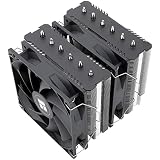
Air coolers remain the smart-money choice for the vast majority of builds. Models like the Thermalright Peerless Assassin 120 SE and the Phantom Spirit 120SE deliver cooling that rivals many AIOs at a fraction of the price, and options like the be quiet! Pure Rock Pro 3 add refined acoustics. With no pump or liquid, there is simply less to fail, so an air cooler often outlasts the rest of your components.
For anyone who values reliability, quiet operation, and getting the most performance per dollar, a premium dual-tower air cooler is hard to beat. The only real caveats are height clearance inside the case and potential interference with tall RGB memory, both easily checked before you buy. For mainstream and even many high-end CPUs, air cooling is more than enough.
Which Should You Buy?
- For the hottest flagship CPUs: pick a 360mm AIO because it offers the strongest sustained thermals.
- For the best value: pick a premium air cooler because it delivers near-AIO cooling for much less.
- For maximum reliability: pick an air cooler because it has no pump or liquid to fail.
- For a clean, showcase build or compact case: pick an AIO because the radiator keeps the socket area open.
- For a quiet everyday system: pick a quality air cooler because it runs silently with no pump noise.
Frequently Asked Questions
Does an AIO cool better than an air cooler?
On the hottest, highest-core-count CPUs, a large AIO can pull ahead. For mainstream and many high-end chips, a top air cooler like the Peerless Assassin 120 SE keeps pace closely.
Are AIOs worth the extra money?
They are worth it if you run a very hot CPU, need a compact build, or want the clean radiator aesthetic. For most builds, an air cooler delivers similar results for less.
Which is more reliable long term?
Air coolers are generally more reliable because they have no pump or liquid to wear out or leak. A quality air cooler can easily outlast several component upgrades.
Will a big air cooler fit my case and RAM?
Check your case’s maximum cooler height and confirm clearance for tall RGB memory. Many dual-tower coolers accommodate standard RAM, but taller kits may require adjusting fan placement.
Final Verdict
An AIO is the right call for the hottest CPUs, compact builds, and those who want a clean, premium look, while a top air cooler wins on value, reliability, and quiet simplicity. For most builders in 2026, a premium air cooler is the sensible default, but an AIO is well worth it when heat, space, or aesthetics demand it.