Key takeaways
- Beginner: Look for adjustable levels, hint functions, take-back support, and legal-move warnings. A maximum engine rating is not important at this stage.
- Improving player: Prioritize puzzles, game recording, position setup, and review through an app or computer. These features help you learn from mistakes instead of simply losing faster.
- Advanced player: Choose a board that can connect to analysis software or online services. A powerful engine is useful, but adjustable time controls and accurate move detection matter just as much.
- Club player: Consider whether the board supports PGN export. Without it, games played on the device can be difficult to archive and study elsewhere.
The best chess computers in 2026 are the Chessnut Air+ for most serious learners, the DGT Centaur for a quiet standalone board, the Chessnut Air for portability, and a dedicated Millennium ChessGenius model for players who want a traditional electronic board without an app or account.
Best chess computers at a glance
| Model or class | Best for | Chess strength | Board and display | Typical market range |
|---|---|---|---|---|
| Chessnut Air | Portable learners and casual players | Strong built-in engine and online play support | Full-size electronic board; small status display | Usually $300–$450 |
| Chessnut Air+ | Players who want better pieces and a more premium portable board | Strong engine; app-based analysis and lessons | Full-size board with integrated visual feedback | Usually $450–$650 |
| DGT Centaur | Relaxed home play without a phone | Adaptive difficulty aimed at human opponents | Large tournament-style playing area; low-information display | Usually $450–$650 |
| Millennium ChessGenius Exclusive | Traditional electronic-board users | Good club-level play, with selectable levels | Large board with LCD information display | Usually $350–$550 |
| Travel electronic board | Beginners, children, and frequent travelers | Suitable for fundamentals rather than advanced analysis | Compact board, smaller pieces, basic LCD or LED indicators | Usually $50–$180 |
Prices vary by region, included pieces, connectivity, and whether a board is sold with a carrying case. Engine ratings are also difficult to compare directly because manufacturers use different processors, software, and level settings.
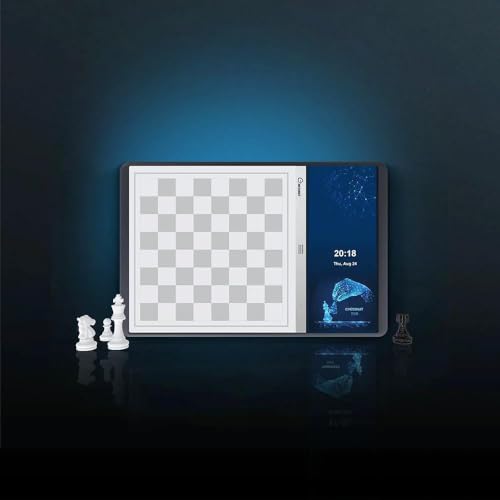
Chessnut Evo AI Chess Computer — Built-in Maia Engine, Customizable Chess Bot, Full Piece Recognition, LED Lights — Play Online on Major Chess Platforms — Smart Electronic Chessboard
Included for 'Best Chess Computers for Every Skill Level' because the listing specifies Customizable Chess Bot and Full Piece Recognition, details this guide uses to compare options.
View on Amazon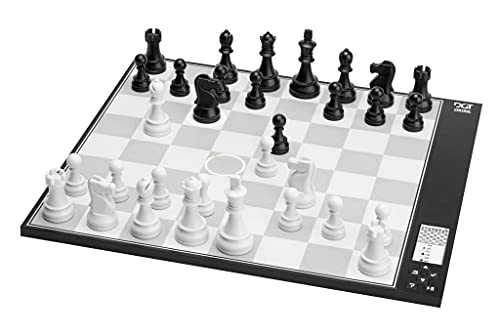
Dgt Centaur 40 x 40cm Chess Computer
Included for 'Best Chess Computers for Every Skill Level' as a relevant option in this category; details come from the product listing.
View on Amazon
Chessnut Air Electronic Chess Board with AI — Handcrafted Wooden Board, LED Indicators, Adaptive Difficulty, Full Piece Recognition — Play Online on Major Chess Platforms
Included for 'Best Chess Computers for Every Skill Level' because the listing specifies LED Indicators and Adaptive Difficulty, details this guide uses to compare options.
View on Amazon
ChessUp 2 - Electronic Chess Board by Bryght Labs - Built-in WiFi, Chess Engine - Includes Chess Set TouchSense Pieces - Light Up Smart Chess Board - with AI, Lessons, Wireless Play & Companion App
Included for 'Best Chess Computers for Every Skill Level' because the listing specifies Electronic Chess Board by Bryght Labs and Built-in WiFi, details this guide uses to compare options.
View on AmazonOur top choices by player and room
Best overall: Chessnut Air+
The Chessnut Air+ is the strongest all-around choice for a player who wants a real board at home but also expects modern training tools. Its wooden-style playing surface and weighted electronic pieces provide a more convincing over-the-board experience than a tablet alone, while the companion software can add puzzles, lessons, game review, online play, and engine analysis.
It suits intermediate players particularly well because the board can grow with your ability. You can begin with legal-move practice and guided puzzles, then use engine analysis to study inaccuracies later. The trade-off is dependence on a phone, tablet, or computer for many advanced features. If you want to sit down and play with no separate screen, the DGT Centaur is more convenient.
Best for portability: Chessnut Air
The Chessnut Air is a better fit for small desks, apartments, dorm rooms, and travel. It retains a full-size chess layout while remaining easier to store than a large wooden electronic board. Its lightweight design also makes it practical to move between a desk and a coffee table.
Choose it over the Air+ when you value portability more than premium materials and extra refinement. The smaller electronics and lighter construction mean you should use a padded case rather than placing it loose in a backpack. It is still a serious learning device, but its value comes from flexibility rather than luxury.
Best no-phone experience: DGT Centaur
The DGT Centaur is designed for players who want a calm, self-contained opponent. Its adaptive system changes the challenge according to the position and your play, making it less intimidating than immediately facing a full-strength engine. The screen communicates moves and game information without turning the experience into a phone session.
This is a particularly good choice for beginners, casual club players, and anyone who finds app notifications distracting. It is less suitable if your priority is online competition, database browsing, or detailed post-game analysis. Its board is also better treated as a home device than as carry-on equipment.
Best traditional electronic board: Millennium ChessGenius Exclusive
The Millennium ChessGenius Exclusive appeals to shoppers who prefer physical buttons, a dedicated LCD, and a conventional electronic-chess workflow. It does not try to be a social platform. Instead, it focuses on selecting a level, making moves, reviewing the game, and practicing against the computer.
This format works well for older players and households where simplicity matters more than app integration. Check the included power adapter and language documentation before buying, particularly if ordering across regions. Some electronic chess products are sold with region-specific accessories.
How to choose the right chess computer
1. Match engine strength to your training goal
- Beginner: Look for adjustable levels, hint functions, take-back support, and legal-move warnings. A maximum engine rating is not important at this stage.
- Improving player: Prioritize puzzles, game recording, position setup, and review through an app or computer. These features help you learn from mistakes instead of simply losing faster.
- Advanced player: Choose a board that can connect to analysis software or online services. A powerful engine is useful, but adjustable time controls and accurate move detection matter just as much.
- Club player: Consider whether the board supports PGN export. Without it, games played on the device can be difficult to archive and study elsewhere.
A computer that always plays at maximum strength is not automatically the best trainer. For many learners, a machine that offers a realistic, beatable level produces more useful practice than one that finds an engine-perfect move every turn.
2. Measure the playing area, not just the case
A full-size chessboard typically has squares close to 2 inches across and feels familiar to players used to tournament equipment. Compact electronic boards may use squares closer to 1.25–1.6 inches. Smaller squares save desk space, but they also make piece recognition and notation harder.
Leave at least 4 inches of clear space around the board for captured pieces, a charging cable, and your hands. A board advertised as roughly 16 inches wide may need a desk area of about 24 inches by 20 inches to feel comfortable during a long game. Measure your actual surface before choosing a larger premium model.
3. Examine piece quality and move detection
Weighted pieces feel more stable and are less likely to slide when you move quickly. Larger felted bases also reduce noise and protect the board surface. For children or shared living spaces, quiet pieces can matter more than a high engine rating.
Electronic boards use different detection systems, including sensors beneath each square and piece identification methods. A board that detects the destination square but cannot identify every piece may require you to confirm moves manually after promotions or unusual positions. Look for reliable support for castling, en passant, promotion, and manually setting up positions.
4. Decide whether you need a screen
A board with a small LCD or LED display keeps the game self-contained but usually cannot show a large board position or detailed explanations. App-connected boards provide richer lessons, arrows, opening databases, and analysis, but they introduce software compatibility, Bluetooth, and account considerations.
If you already use a tablet, an app-connected board usually offers more long-term value. If your goal is to avoid screens, notifications, and subscriptions, choose a standalone model such as the DGT Centaur or a dedicated Millennium board.
Compatibility and buying decision matrix
| Your situation | Prioritize | Best direction | Why |
|---|---|---|---|
| Small desk or frequent travel | Weight, battery, case, compact storage | Chessnut Air | Full chess layout without the bulk of a large home board |
| Intermediate player with a tablet | Puzzles, analysis, PGN export, online features | Chessnut Air+ | Combines physical play with a broader software ecosystem |
| No phone during play | Built-in display and simple controls | DGT Centaur or Millennium ChessGenius | Works as a dedicated appliance |
| Child learning piece movement | Hints, legal-move warnings, forgiving levels | Entry-level electronic board | Lower cost and fewer complex features to manage |
| Serious game study | Position setup, analysis connection, game export | Chessnut Air+ | More useful after the game, not just during it |
Battery and charging: a useful reality check
Manufacturers often quote battery life under light use, but an active game can consume more power because Bluetooth, LEDs, and repeated sensor scans remain active. For example, suppose a board has a 2,000 mAh battery at 3.7 volts. Its nominal energy is:
2.0 amp-hours × 3.7 volts = 7.4 watt-hours.
If the electronics average 0.8 watts while playing, the theoretical runtime is about 9.25 hours. Allowing 20 percent for conversion losses and battery aging gives approximately 7.4 hours of practical use. That is enough for several games, but not necessarily a full weekend away from a charger.
For travel, favor USB-C charging, a replaceable or widely available cable, and a case with space for the adapter. Do not assume a USB port automatically supports charging; some older boards use proprietary connectors or require a specific adapter.
Durability and maintenance
- Store the board flat and avoid placing heavy objects on sensor surfaces.
- Keep drinks away from the board; liquid damage can affect an entire sensor grid.
- Use a soft, dry cloth on the playing surface rather than household spray.
- Keep pieces together in a bag or fitted insert so magnets, felt, or identification components are not damaged.
- Install firmware updates only when the battery is charged and the board will not be interrupted.
For a shared family board, simple standalone controls and robust pieces are usually more valuable than the newest connectivity. For an individual learner, software support and export options can extend the useful life much further than decorative materials alone.
Final recommendation
Choose the Chessnut Air+ if you want the best balance of real-board feel, training software, and long-term learning value. Choose the Chessnut Air when storage and portability come first. Pick the DGT Centaur for screen-free home play with adaptive difficulty, or the Millennium ChessGenius Exclusive for a traditional dedicated electronic board. Beginners on a tight budget should start with a simpler adjustable-level board and spend the savings on a chess course or lessons rather than paying for engine power they will not yet use.