Key takeaways
- Test popular resolvers: Public options like Cloudflare, Google, and Quad9 are consistently fast; benchmark a few from your location to see which wins.
- Prioritize nearby servers: A resolver with data centers close to you will resolve lookups faster than a distant one.
- Consider privacy features: Encrypted DNS options protect your queries without a meaningful speed penalty on modern hardware.
- Match it to your hardware: Set DNS at the router level so every console and PC benefits automatically.
What's inside
When your ping spikes mid-match, your DNS settings are one of the most overlooked culprits. DNS is the system that translates game server names into the IP addresses your console or PC actually connects to, and a slow or distant DNS resolver adds unnecessary delay to matchmaking, downloads, and connection handshakes. Optimizing it is one of the cheapest ways to make online play feel snappier.
This guide explains what DNS does for gaming, how to pick the fastest resolver for your connection, and how the right router can lock in those gains for every device on your network. You do not need to be a network engineer to benefit; a few minutes of setup can meaningfully improve your experience.
As an Amazon Associate we earn from qualifying purchases at no extra cost to you. Product prices and availability are accurate as of the date shown and are subject to change.


⚡ Save on Your Next PC — Amazon Prime
Prime members get fast free shipping on the systems above, plus early access to Prime Day & Black Friday PC deals. New members get a 30-day free trial.
Watch: Best DNS For Gaming 2026 — Video Review
What DNS Actually Does for Gaming
Every time you launch a game, connect to a lobby, or download an update, your device asks a DNS resolver to look up the server address. A faster resolver returns that answer more quickly, shaving milliseconds off connection times. While DNS will not change your raw in-game latency once you are connected, it reduces the friction around matchmaking, patching, and loading remote content.
How to Choose the Fastest DNS for Your Setup
- Test popular resolvers: Public options like Cloudflare, Google, and Quad9 are consistently fast; benchmark a few from your location to see which wins.
- Prioritize nearby servers: A resolver with data centers close to you will resolve lookups faster than a distant one.
- Consider privacy features: Encrypted DNS options protect your queries without a meaningful speed penalty on modern hardware.
- Match it to your hardware: Set DNS at the router level so every console and PC benefits automatically.
Router-Level DNS for Every Device
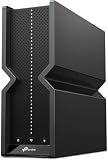
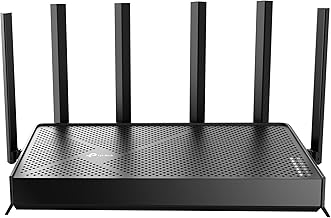
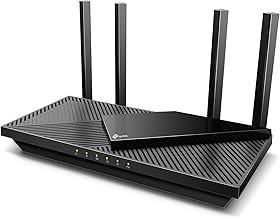
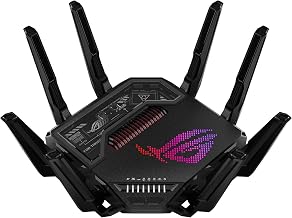
Changing DNS on a single console works, but setting it once on your router applies it to everything. A capable gaming router such as the GL.iNet GL-MT6000 Flint 2 or the ASUS TUF Gaming BE6500 lets you assign custom DNS servers, enable encrypted lookups, and prioritize gaming traffic through built-in accelerators. The TP-Link AXE5400 Archer AXE75 is another strong choice that makes custom DNS setup straightforward in its app.
DNS Versus Latency: Setting Expectations
It is important to understand the limits. Optimizing DNS speeds up name resolution, but it will not fix a congested connection or a physically distant match server. For raw ping, a wired connection, Quality of Service settings, and a router with a game accelerator like the HYPEREV AX3000 or GL.iNet Flint 3 will do more. Think of DNS as one layer in a stack of tuning steps rather than a magic fix.
Frequently Asked Questions
Does changing DNS lower my ping?
Not directly. DNS speeds up server lookups and matchmaking, but your in-game ping depends on your route to the game server, not your DNS resolver.
What is the best DNS server for gaming?
There is no single winner; Cloudflare, Google, and Quad9 are all fast. Benchmark them from your location and pick whichever resolves quickest and stays reliable.
Should I set DNS on my router or console?
The router is better because it applies your chosen DNS to every device at once, saving you from configuring each console and PC individually.
Is encrypted DNS slower for gaming?
On modern routers and devices the overhead is negligible, so you can enjoy the privacy benefits without a noticeable impact on speed.
Conclusion
Optimizing your DNS is a quick, free win that smooths out matchmaking and downloads, and configuring it at the router level makes those gains automatic across your whole setup. Pair a fast resolver with a gaming router that supports custom DNS and traffic prioritization, and you will spend less time waiting and more time playing.