Key takeaways
- ASUS TUF: Fn + F9
- Acer Nitro: Fn + F7
- Lenovo LOQ: Fn + F6 or F6 alone
- HP Victus: Fn + F11 or F11 alone
What's inside
- Likely Causes
- Fix 1: The Keyboard Function Key (Fn) Toggle
- Fix 2: Enabling the Touchpad in Windows Settings
- Fix 3: Rolling Back the Touchpad Driver
- Fix 4: Re-enabling the I2C HID Device
- Fix 5: Checking the OEM Control Center Software
- Fix 6: Uninstalling the Offending Windows Update
- Fix 7: Re-enabling the Touchpad in BIOS/UEFI
- If Nothing Works
- FAQ
You boot up your budget gaming laptop to squeeze in a quick gaming session, only to find your cursor completely frozen. The physical click mechanisms of the trackpad might still register a dull, mechanical clunk, but no matter how much you swipe across the tracking surface, the pointer refuses to budge. This frustrating issue almost always rears its head immediately following a Windows Update or a proprietary OEM system patch. While it feels like a catastrophic hardware failure, it is almost always a software-level handshake error where the operating system loses track of the internal pointing device.
- Likely Causes
- Fix 1: The Keyboard Function Key (Fn) Toggle
- Fix 2: Enabling the Touchpad in Windows Settings
- Fix 3: Rolling Back the Touchpad Driver
- Fix 4: Re-enabling the I2C HID Device
- Fix 5: Checking the OEM Control Center Software
- Fix 6: Uninstalling the Offending Windows Update
- Fix 7: Re-enabling the Touchpad in BIOS/UEFI
- If Nothing Works
- FAQ
As budget gaming laptops in 2026 continue to pack more performance into affordable chassis, manufacturers often streamline secondary component controller integration to keep costs down. Budget lines like Acer Nitro, ASUS TUF, Lenovo LOQ, and HP Victus share highly standardized I2C/SMBus architectures that are notoriously sensitive to automated driver overwrites. Resolving this is highly urgent if you rely on portability, but thankfully, you can fix it using your keyboard or a temporary USB mouse. Below is a complete, step-by-step diagnostic and repair guide.
Likely Causes
| Cause | How to confirm | Fix difficulty |
|---|---|---|
| Accidental Keyboard Hotkey Lock | Check if a specific function key (Fn) icon is lit or toggled. | Very Easy |
| Windows Settings Toggle Disabled | Check the Touchpad toggle status in Windows Settings. | Very Easy |
| Corrupt or Incompatible Driver | Look for a yellow warning triangle in Device Manager under Mice. | Moderate |
| I2C HID Controller Device Conflict | Look for Code 10/43 errors under Human Interface Devices. | Moderate |
| Proprietary Software Override | Check ASUS Armoury Crate, Lenovo Vantage, or Acer NitroSense. | Easy |
| Glitched Windows Update Package | Verify if the failure matches a newly installed KB update package. | Moderate |
| BIOS/UEFI Level Disablement | Check if the touchpad operates inside the BIOS menu environment. | Hard |
Fix 1: The Keyboard Function Key (Fn) Toggle
What causes it
During a major update restart, the system can misinterpret keyboard controller layouts, or you may have accidentally hit the dedicated hardware touchpad lock key combination while trying to adjust volume, screen brightness, or keyboard backlighting.
How to check
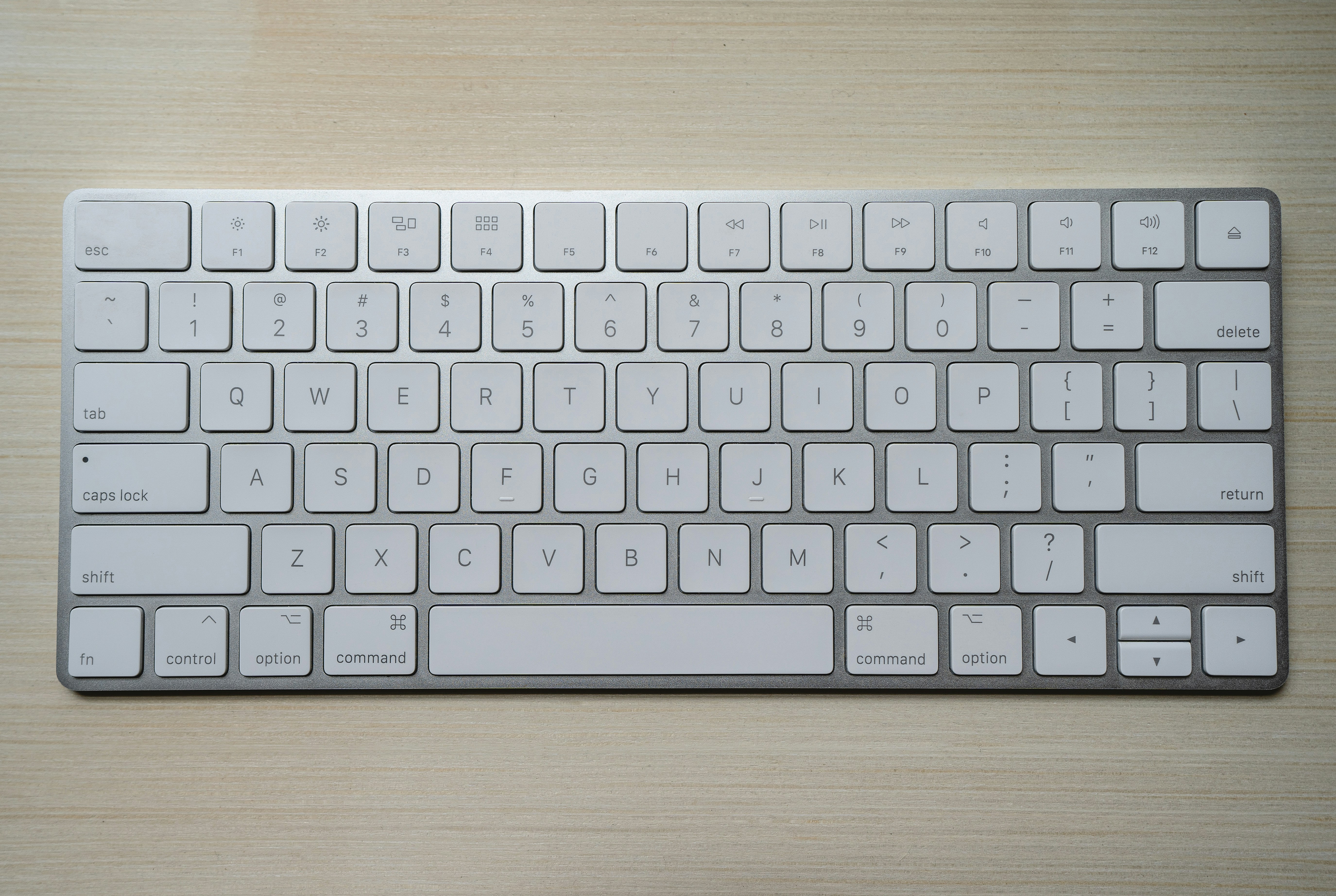
Look closely at your laptop’s function key row (F1 through F12). You are searching for an icon that looks like a miniature touchpad with a diagonal line running through it or a finger pointing to a square box.
What to do
Press the dedicated hotkey directly. If your laptop is configured to use standard function keys by default, you will need to hold down the Fn key (typically located between the left Ctrl and Windows key) and then tap the matching function key. Common layouts include:
- ASUS TUF: Fn + F9
- Acer Nitro: Fn + F7
- Lenovo LOQ: Fn + F6 or F6 alone
- HP Victus: Fn + F11 or F11 alone
Wait three seconds to see if the cursor on your screen unlocks and begins tracking.
How to undo it
Simply press the exact same key combination (Fn + designated function key) a second time to toggle the touchpad back off.
Fix 2: Enabling the Touchpad in Windows Settings
What causes it
Windows Update sometimes resets peripheral profiles to default states, or mistakenly flags the built-in touchpad as an external, redundant pointing device and disables it to prioritize an attached gaming mouse.
How to check
Press the Windows Key, type Touchpad settings, and press Enter. If the toggle at the very top of the menu reads “Off,” your operating system is actively blocking input from the trackpad.
What to do
- Press the Spacebar to flip the main “Touchpad” toggle switch to On.
- If the toggle is already on, press Tab to navigate to the small dropdown arrow next to the toggle and press Enter.
- Ensure the checkbox labeled “Leave touchpad on when a mouse is connected” is checked. If it is unchecked, use your arrow keys to highlight it and press Spacebar to check it.
How to undo it
Navigate back to Settings > Bluetooth & devices > Touchpad and toggle the main switch back to the Off position, or uncheck the mouse override box.
Fix 3: Rolling Back the Touchpad Driver
What causes it
Windows Update often forces generic Microsoft precision touchpad drivers over specialized, OEM-signed Synaptics, ELAN, or Alps drivers. These generic drivers frequently lack the proper I2C bus addressing parameters required by budget gaming laptops.
How to check
Right-click the Start button (or press Windows Key + X) and select Device Manager. Expand the Mice and other pointing devices section. Look for your touchpad device (e.g., “Synaptics Precision Touchpad” or “ELAN Input Device”). If it is missing or lists a generic “PS/2 Compatible Mouse” name with a recent driver installation date, Windows swapped it.
What to do
- Double-click the touchpad device name inside Device Manager to open its Properties window.
- Use your keyboard or mouse to select the Driver tab at the top.
- Click the Roll Back Driver button.
- Choose any reason from the prompt (e.g., “Previous version of the driver performed better”) and click Yes.
- Restart your laptop immediately to finalize the driver reversion.
How to undo it
If rolling back causes other tracking bugs, return to the device’s Properties menu, click the Driver tab, and click Update Driver. Select Search automatically for drivers to retrieve the newer version again.
Fix 4: Re-enabling the I2C HID Device
What causes it
Modern budget gaming laptops route the touchpad through an I2C Serial Bus Controller to minimize input latency. When Windows updates, the motherboard’s Intel Serial IO or AMD I2C Controller driver can crash, causing the underlying I2C HID Device to fail with a Code 10 (This device cannot start) or Code 43 (Device descriptor request failed) error.
How to check
Open Device Manager and expand the Human Interface Devices section. Look for a device named I2C HID Device. If it has a bright yellow triangle next to it, the hardware communication channel is broken.
What to do
- Right-click the flagged I2C HID Device and select Disable device. Click Yes to confirm.
- Wait 10 seconds, then right-click the device again and select Enable device.
- If the yellow triangle remains, right-click the device and select Uninstall device. Do not check the box that says “Attempt to remove the driver for this device” if prompted. Click Uninstall.
- At the top menu bar of Device Manager, click Action and select Scan for hardware changes. The system will reinstall the I2C controller and re-establish the hardware handshake.
How to undo it
Because this process simply refreshes the existing driver handshake, there is no permanent system change to undo. If the device fails again, it indicates a corrupt chipset driver.
Fix 5: Checking the OEM Control Center Software
What causes it
Budget gaming laptops feature custom management utilities like ASUS Armoury Crate, Acer NitroSense, or Lenovo Vantage. These suites feature “Gaming Mode” toggles designed to disable the touchpad during gaming sessions to prevent accidental palm clicks. A system update can cause these programs to launch in an active lock state.
How to check
Open your system’s proprietary control program (e.g., search your Start menu for “Vantage”, “Armoury Crate”, or “NitroSense”). Look for a hardware toggle section, often labeled “System Boost,” “GPU Mode,” or “Quick Settings.”
What to do
- Locate the Touchpad, Trackpad, or Touchpad Lock toggle inside the proprietary app.
- If the app indicates the touchpad is disabled, click the toggle to enable it.
- If the app shows it is already enabled, toggle it Off, wait five seconds, and then toggle it back On to force the background service to refresh its state.
How to undo it
Open the same OEM software suite and switch the touchpad toggle back to the disabled state if you prefer to keep it locked during gaming sessions.
Fix 6: Uninstalling the Offending Windows Update
What causes it
Occasionally, Microsoft releases cumulative updates with unresolved compatibility conflicts for specific budget laptop motherboards. If your touchpad stopped tracking immediately after a scheduled system reboot, a buggy Windows Update package is the prime suspect.
How to check
Press Windows Key + I to open Settings. Click on Windows Update in the sidebar, then click on Update history. Scroll down to see if a Cumulative Update (KB package) was installed on the exact day your touchpad failed.
What to do
- In the Update history menu, scroll to the bottom and click on Uninstall updates.
- Locate the most recent update package (usually labeled “Update for Microsoft Windows” with a KB number) that matches your failure timeline.
- Click the Uninstall button next to it.
- Confirm the prompt and allow your laptop to go through the uninstallation and reboot cycle.
How to undo it
To reinstall the update once Microsoft releases a hotfix, navigate back to Settings > Windows Update and click Check for updates to download the latest, patched package.
Fix 7: Re-enabling the Touchpad in BIOS/UEFI
What causes it
A major Windows firmware update can occasionally flash your motherboard’s BIOS or reset system configurations to their factory defaults, which sometimes turns off the internal pointing device at the hardware level.
How to check
Restart your laptop. As soon as the screen goes dark, repeatedly tap the BIOS entry key (usually F2 or Delete on budget gaming laptops). If your touchpad works to move the cursor inside the BIOS setup screen, your hardware is perfectly fine, and the issue lies entirely within Windows.
What to do
- Using your keyboard’s arrow keys, navigate to the Advanced or Main tab in your BIOS.
- Look for an option named Touchpad, Internal Pointing Device, or 12C Controller.
- If it is set to “Disabled,” change it to Enabled. If it offers choices like “Basic” and “Advanced,” try switching from Advanced to Basic (or vice-versa).
- Press F10 to save your changes and exit the BIOS. Your laptop will boot back into Windows.
How to undo it
Re-enter your BIOS screen, find the exact same option, and change the value back to its previous state (or press F9 to load optimal default settings).
If Nothing Works
If you have tried all seven fixes and your touchpad still refuses to respond, you may be dealing with a physical hardware failure. Budget gaming laptops run hot, and the extreme thermal cycles can occasionally warp or weaken the delicate internal ribbon cable connecting the trackpad to the motherboard.
To rule out a deep operating system corruption, try booting your laptop into a temporary Linux environment via a bootable USB drive. If the touchpad works there, a clean reinstall of Windows is your best path forward. If it fails there too, you will need to contact your manufacturer for a warranty repair or rely on a low-profile USB or Bluetooth gaming mouse as a permanent workaround.
FAQ
Why does my external USB gaming mouse still work when my touchpad is dead?
External USB mice communicate using standard USB HID (Human Interface Device) drivers, which run on a completely separate communication protocol. The touchpad relies on internal motherboard buses (like I2C or SMBus) and specialized precision drivers, meaning one can fail entirely while the other functions perfectly.
Can a BIOS update permanently break my budget laptop’s touchpad?
A BIOS update cannot physically damage the trackpad, but it can disrupt the hardware addresses that Windows uses to identify it. If a BIOS flash breaks the touchpad, flashing the BIOS again with the same version or rolling back to the previous stable BIOS version from your manufacturer’s support site will restore it.
What is the difference between an I2C device and a PS/2 device in Device Manager?
PS/2 is an older legacy standard used for basic pointing devices, while I2C is a modern, high-speed serial bus interface. Modern budget laptops use I2C to support advanced multi-finger gestures and low-latency tracking. If your Device Manager lists your touchpad as a “PS/2 Compatible Mouse,” it is running in a legacy fallback mode because the high-speed I2C driver has failed.
How do I navigate Windows to apply these fixes if I do not have an external mouse?
You can navigate Windows entirely with your keyboard. Press the Windows Key to open the search menu, use the Tab key to jump between different UI sections, the Arrow Keys to scroll through lists, the Spacebar to check boxes or toggle switches, and Enter to click buttons. To close windows or properties menus, use Alt + F4.