Key takeaways
- CPU: The processor that handles game logic and feeds the graphics card. A modern 6 to 8 core chip is plenty for gaming.
- GPU: The graphics card, and the single biggest factor in gaming performance and resolution.
- Motherboard: The backbone that connects everything; it must match your CPU’s socket.
- RAM: Fast memory for smooth multitasking; 32GB of DDR5 is the 2026 sweet spot.
- Storage, PSU, and case: An NVMe SSD for speed, a quality power supply for stability, and a case with good airflow.
Building a gaming PC for the first time feels intimidating, but the process is closer to assembling high-end LEGO than to engineering. Every modern component is keyed to fit only one way, the connectors are labeled, and the hardest part is really just patience and planning. Understanding how the pieces relate to one another, before you order anything, is what separates a smooth first build from an afternoon of frustration and mismatched parts.
This 2026 beginner’s guide walks you through the logic of a gaming build: what each component does, how to make sure your parts are compatible, and the order of assembly that keeps things simple. If you would rather skip the assembly entirely, we will also point out solid prebuilt options, because a good prebuilt is a legitimate choice for plenty of gamers who want to play now and tinker later.
Our top picks
 KOTIN Prebuilt Gaming PC RTX 5070 12GB
- Product Group: Personal Computer
- Binding: Personal Computers
 Alienware Aurora Gaming Desktop
- Product Group: Personal Computer
- Binding: Personal Computers

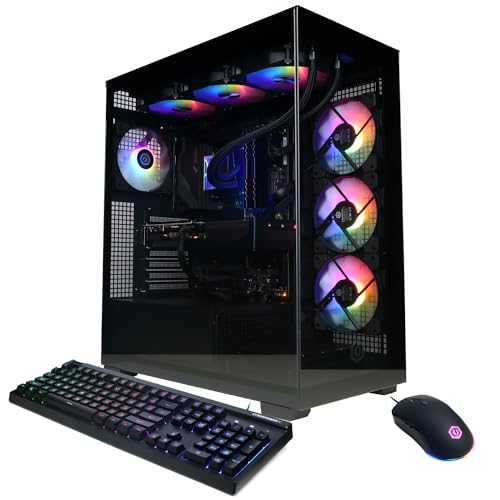
 YAWYORE Gaming PC
- Product Group: Personal Computer
- Binding: Personal Computers


As an Amazon Associate we earn from qualifying purchases at no extra cost to you. Ratings are shown as listed on Amazon.
⚡ Save on Your Next PC — Amazon Prime
Prime members get fast free shipping on the systems above, plus early access to Prime Day & Black Friday PC deals. New members get a 30-day free trial.
Watch: How to Build a Gaming PC (2026 Beginner’s Guide) — Video Review
Know What Each Core Component Does
- CPU: The processor that handles game logic and feeds the graphics card. A modern 6 to 8 core chip is plenty for gaming.
- GPU: The graphics card, and the single biggest factor in gaming performance and resolution.
- Motherboard: The backbone that connects everything; it must match your CPU’s socket.
- RAM: Fast memory for smooth multitasking; 32GB of DDR5 is the 2026 sweet spot.
- Storage, PSU, and case: An NVMe SSD for speed, a quality power supply for stability, and a case with good airflow.
Plan for Compatibility Before You Buy
Most first-build headaches come from mismatched parts, so verify compatibility before ordering. Your CPU and motherboard must share the same socket, your RAM type (DDR5 today) must match what the board supports, and your case must be large enough for your graphics card and cooler. Confirm your power supply provides enough wattage for your GPU with headroom to spare. A build planner tool that flags conflicts automatically is worth using even if you think you have it right.
Assemble in the Right Order
Working in the correct sequence makes assembly far easier. Install the CPU, cooler, and RAM onto the motherboard first while it sits outside the case, since you have the most room to work. Then mount the motherboard in the case, install the power supply, slot in the graphics card, connect storage, and finally attach all the power and front-panel cables. Building outside the case first also lets you test that the system posts before final cable management.
Consider a Prebuilt If Time Matters More Than Tinkering
Not everyone wants to build, and that is fine. Prebuilt desktops like the KOTIN RTX 5070 and Ryzen 7 9700X machine, the Alienware Aurora with an RTX 5070, or the CyberPowerPC Gamer Xtreme with an RTX 5070 deliver strong gaming performance out of the box with a warranty covering the whole system. More budget-focused options such as the KOTIN RTX 5060 Ti build, the YAWYORE Ryzen 7 5700X with an RTX 5060, or the ZOTAC MEK with an RTX 5060 get you gaming quickly without the assembly learning curve.
First Boot and Software Setup
Once assembled, enter the BIOS on first boot to confirm the system detects your CPU, RAM, and storage, and enable the memory profile (XMP or EXPO) so your RAM runs at full speed. Install your operating system from a USB drive, then download the latest graphics driver directly from the GPU maker. Finish by updating your OS and installing your game launchers. Careful driver and BIOS setup prevents the mysterious stutters that plague rushed builds.
Tips
- Build the CPU, cooler, and RAM onto the motherboard outside the case for the easiest access.
- Enable your RAM’s XMP or EXPO profile in BIOS, or it will run slower than advertised.
- Buy a power supply with more wattage than you need now to leave room for future GPU upgrades.
- Keep the case airflow moving front-to-back and bottom-to-top for the best cooling.
Frequently Asked Questions
Is building a PC cheaper than buying a prebuilt?
It often saves some money and lets you pick every part, but the gap has narrowed. Prebuilts add value through warranty coverage and convenience, so weigh your time against the savings.
What is the most important part for gaming?
The graphics card. It has the biggest impact on frame rates and the resolutions you can play at. Match your CPU to it so the GPU is never held back.
How much RAM do I need for a 2026 gaming build?
32GB of DDR5 is the comfortable sweet spot for modern games and multitasking. 16GB still works for lighter titles, but 32GB gives you longer-lasting headroom.
Can I damage parts during assembly?
It is unlikely if you avoid forcing connectors and discharge static by touching a metal surface first. Components are keyed to fit one way, so gentle, deliberate handling keeps everything safe.
Conclusion
Building a gaming PC in 2026 rewards planning over raw technical skill. Understand what each part does, confirm compatibility before you buy, assemble in a sensible order, and take your time with BIOS and driver setup. If assembly is not for you, a quality prebuilt is a perfectly respectable way to start gaming today. Either path gets you to the same goal: a machine tuned to how you actually want to play.