
Key takeaways
- GPU tier: The graphics card determines your frame rates more than anything else. An RTX 5050 or 4050 handles 1080p gaming well, while an RTX 5060 pushes higher settings and 1440p.
- Display refresh rate: A 144Hz–180Hz panel makes fast-paced games feel noticeably smoother than a standard 60Hz screen, especially in competitive titles.
- RAM and upgradability: 16GB DDR5 is the current sweet spot for gaming and multitasking; 8GB will feel cramped in newer titles within a year or two.
- CPU balance: Match your CPU to your GPU. A high-end graphics card paired with a weak processor will bottleneck performance, wasting money on the GPU.
- Storage speed and capacity: A 512GB–1TB Gen4 NVMe SSD loads games faster and gives you room to grow; smaller SSDs fill up quickly with modern game sizes.
What's inside
Buying a gaming laptop in 2026 means wading through a flood of specs, misleading “gaming” labels, and price tags that don’t always match performance. Between RTX 50-series GPUs, DDR5 memory, and displays ranging from 60Hz to 180Hz, it’s easy to overspend on features you won’t use or underspend and end up bottlenecked within a year.
This guide breaks down six of the best value gaming laptops available right now, from budget-friendly AMD builds to RTX 5060-powered powerhouses, so you can match your budget to the right level of performance without guesswork.
As an Amazon Associate we earn from qualifying purchases at no extra cost to you. Product prices and availability are accurate as of the date shown and are subject to change.




🎮 Get More From Your Setup — Free
Prime Gaming gives you free PC games every month, in-game loot, and a free Twitch channel sub — plus fast free shipping on all the gear above. New members get a 30-day free trial.
Watch: Best Value Gaming Laptop — Video Review
How to Choose a Value Gaming Laptop (2026)
- GPU tier: The graphics card determines your frame rates more than anything else. An RTX 5050 or 4050 handles 1080p gaming well, while an RTX 5060 pushes higher settings and 1440p.
- Display refresh rate: A 144Hz–180Hz panel makes fast-paced games feel noticeably smoother than a standard 60Hz screen, especially in competitive titles.
- RAM and upgradability: 16GB DDR5 is the current sweet spot for gaming and multitasking; 8GB will feel cramped in newer titles within a year or two.
- CPU balance: Match your CPU to your GPU. A high-end graphics card paired with a weak processor will bottleneck performance, wasting money on the GPU.
- Storage speed and capacity: A 512GB–1TB Gen4 NVMe SSD loads games faster and gives you room to grow; smaller SSDs fill up quickly with modern game sizes.
The Best Value Gaming Laptop (2026)s Reviewed
ASUS ROG Strix G16
The Strix G16 pairs an RTX 5060 with a Core i7-14650HX and a 165Hz FHD+ display, making it the most well-rounded performer here for players who want strong 1440p-lite performance without stepping into flagship pricing.
ASUS TUF Gaming F16
The TUF F16 trims the budget with an RTX 5050 and Core i5-13450HX, but keeps the 165Hz 16:10 display and DDR5 memory, making it a smart pick for buyers who want ROG-adjacent performance at a lower price point.
Acer Nitro V 16S AI
With an RTX 5060, Ryzen 7 260, and 32GB of DDR5 RAM, the Nitro V 16S punches above its price class, especially for gamers who also run creative or AI-assisted workloads alongside their games.
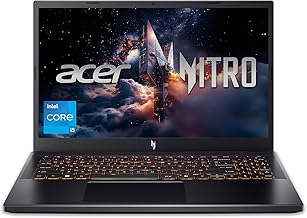
Acer Nitro V (15.6″)
This compact Nitro V pairs an RTX 4050 with a Core i5-13420H and a 165Hz display, delivering dependable 1080p gaming performance for buyers prioritizing affordability over top-tier specs.
MALLRACE Gaming Laptop
Built around a Ryzen 7 5825U and integrated Radeon graphics rather than a discrete GPU, this model suits esports titles and lighter games best, making it a budget entry point rather than a performance pick.
Frequently Asked Questions
What’s the minimum GPU for solid 1080p gaming in 2026?
An RTX 4050 or RTX 5050 comfortably handles most modern titles at 1080p with high settings, while laptops relying only on integrated graphics are better suited to esports and older games.
Is 16GB of RAM still enough for gaming laptops?
Yes, 16GB DDR5 remains the standard for smooth gaming and background multitasking; 8GB configurations are increasingly limiting as games and Windows itself grow more memory-hungry.
Do I need a 165Hz+ display, or is 60Hz fine?
A high refresh rate display noticeably improves the feel of fast-paced and competitive games, but if you mostly play story-driven or turn-based titles, a 60Hz panel is still perfectly playable.
Are AMD Ryzen gaming laptops a good value alternative to Intel?
AMD Ryzen processors, especially in the Ryzen 7 lineup, offer strong multi-core performance and efficiency, making them a solid value choice as long as they’re paired with an adequate discrete GPU for your gaming needs.
Final Thoughts
For most buyers, the ASUS ROG Strix G16 offers the best overall balance of GPU power, display quality, and price, while the Acer Nitro V 16S AI is the strongest pick if you want extra RAM and AI-ready performance. Budget-conscious shoppers should look to the ASUS TUF Gaming F16 for a nearly identical gaming experience at a lower cost.





