Key takeaways
- Architecture: Intel uses a hybrid P-core and E-core design, while AMD Ryzen 9 relies on uniform high-performance cores, often with 3D V-Cache.
- Gaming performance: AMD’s X3D Ryzen 9 chips typically lead in gaming thanks to stacked cache.
- Productivity: Both are excellent, with Intel’s E-cores strong in multitasking and AMD strong in sustained rendering.
- Platform and memory: Intel uses LGA 1851 with DDR5, while AMD uses AM5 with a longer promised upgrade path.
- Power and efficiency: Intel’s Core Ultra generation improves efficiency, though AMD’s X3D chips are often more power-efficient in gaming.
- Value: AMD frequently offers better gaming value, while Intel bundles and platform pricing can shift the equation.
What's inside
At the top of the desktop CPU market in 2026, two names dominate: Intel’s Core Ultra 9 and AMD’s Ryzen 9. Both promise flagship performance for gaming, content creation, and everything in between, but they arrive there with very different architectures, platforms, and priorities. Picking the right one shapes not just performance, but the motherboard, memory, and cooling you build around it.
Intel’s Core Ultra 9 285K leans on a hybrid core design with performance and efficiency cores, while AMD’s Ryzen 9 chips, especially the 3D V-Cache variants, chase gaming supremacy and strong multi-threaded output. This decision matters because the two ecosystems reward different workloads, and knowing which fits your use case saves money and frustration down the line.
As an Amazon Associate we earn from qualifying purchases at no extra cost to you. Product prices and availability are accurate as of the date shown and are subject to change.


⚡ Save on Your Next PC — Amazon Prime
Prime members get fast free shipping on the systems above, plus early access to Prime Day & Black Friday PC deals. New members get a 30-day free trial.
Watch: Intel Core Ultra 9 vs Ryzen 9: 2026 Battle — Video Review
Quick Verdict
Choose the Intel Core Ultra 9 285K if you want strong all-round productivity, efficient multitasking, and a modern LGA 1851 platform. Choose a Ryzen 9 such as the 9950X3D if gaming performance and multi-threaded value are your top priorities. Balanced productivity users lean Intel; gaming-plus-creation users lean AMD.
Key Differences
- Architecture: Intel uses a hybrid P-core and E-core design, while AMD Ryzen 9 relies on uniform high-performance cores, often with 3D V-Cache.
- Gaming performance: AMD’s X3D Ryzen 9 chips typically lead in gaming thanks to stacked cache.
- Productivity: Both are excellent, with Intel’s E-cores strong in multitasking and AMD strong in sustained rendering.
- Platform and memory: Intel uses LGA 1851 with DDR5, while AMD uses AM5 with a longer promised upgrade path.
- Power and efficiency: Intel’s Core Ultra generation improves efficiency, though AMD’s X3D chips are often more power-efficient in gaming.
- Value: AMD frequently offers better gaming value, while Intel bundles and platform pricing can shift the equation.
Intel Core Ultra 9: The Versatile Multitasker
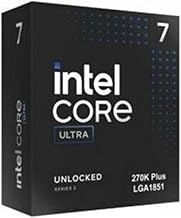
The Intel Core Ultra 9 285K brings twenty-four cores split across eight performance and sixteen efficiency cores, making it a formidable multitasker and content-creation chip. Its hybrid design lets it juggle background tasks and heavy foreground work smoothly, and the new LGA 1851 platform brings modern connectivity. Bundles like the Micro Center Ultra 9 285K with a TUF Gaming Z890-Plus board make it easy to assemble a capable high-end system.
For users who value responsiveness across many applications, strong encoding, and a polished platform, the Core Ultra 9 is a compelling flagship. It also improves on the power efficiency of previous Intel generations, so it runs more sensibly under mixed workloads while still delivering the muscle demanding tasks require.
AMD Ryzen 9: The Gaming and Creation Leader
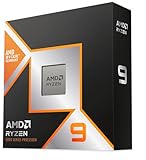
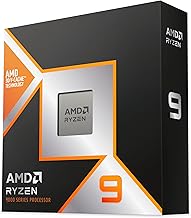
AMD’s Ryzen 9 lineup, led by chips like the Ryzen 9 9950X3D, targets buyers who want elite gaming alongside serious multi-threaded performance. The 3D V-Cache variants routinely top gaming charts, while sixteen high-performance cores handle rendering and encoding with ease. Combos pairing the 9950X3D with premium X870E boards give enthusiasts a powerful, upgrade-friendly foundation on the long-lived AM5 platform.
If your PC is both a gaming machine and a creative workstation, Ryzen 9 offers a rare blend of frame-rate leadership and productivity strength. AMD’s commitment to platform longevity also means an AM5 build today has a clearer upgrade path, adding long-term value for buyers who plan to keep their motherboard for several generations.
Which Should You Buy?
- For top gaming performance: pick a Ryzen 9 X3D because 3D V-Cache leads in games.
- For heavy multitasking and mixed workloads: pick the Core Ultra 9 because its hybrid cores excel at juggling tasks.
- For a future-proof upgrade path: pick Ryzen 9 on AM5 because AMD promises longer platform support.
- For content creation with strong efficiency: pick the Core Ultra 9 for its balanced productivity and improved power use.
- For the best gaming-plus-creation value: pick a Ryzen 9 because it combines frame-rate leadership with rendering power.
Frequently Asked Questions
Which is better for gaming, Core Ultra 9 or Ryzen 9?
AMD’s Ryzen 9 X3D chips generally lead in gaming thanks to 3D V-Cache. The Core Ultra 9 is still an excellent gaming CPU but usually trails the X3D parts in CPU-bound titles.
Do these CPUs use the same motherboards?
No. The Core Ultra 9 uses Intel’s LGA 1851 socket, while Ryzen 9 uses AMD’s AM5 socket. Each requires its own compatible chipset and cannot be swapped between platforms.
Which platform has a better upgrade path?
AMD’s AM5 currently offers a longer promised support window, which may allow future CPU upgrades on the same board. Intel’s platform typically moves to new sockets more frequently.
Which is more power efficient?
It depends on the task. AMD’s X3D chips are often more efficient in gaming, while Intel’s Core Ultra generation has improved efficiency in mixed and productivity workloads.
Final Verdict
The Intel Core Ultra 9 285K is a versatile flagship built for multitasking and content creation on a modern platform, while AMD’s Ryzen 9, especially the X3D variants, leads in gaming and offers a longer upgrade path. Gamers and creators chasing frame rates should lean AMD, while multitaskers who value platform polish will be well served by Intel.