Key takeaways
- Start with full-screen mapping: map the entire tablet to the entire monitor so you learn a consistent hand-to-cursor relationship.
- Use moderate pressure: set the driver curve so normal strokes reach roughly the middle-to-upper portion of the pressure range. If every line becomes thick too easily, make the curve firmer.
- Set a 5–10% stabilization level for sketching: this reduces small shakes without making the cursor feel delayed. Increase it for line art and reduce it for quick gesture drawing.
- Calibrate a pen display after positioning it: viewing angle changes the apparent alignment between the pen tip and cursor.
- Assign one key to undo and one to eyedropper: these are used often enough to justify permanent buttons. Put zoom or brush-size controls on a wheel or dial when available.
The best drawing tablets under $300 are the Huion Kamvas 13 or XP-Pen Artist 12 (2nd Gen) for a built-in screen, and the Wacom Intuos Medium or XP-Pen Deco 01 V3 for a larger, lighter, screenless workspace.
Best Drawing Tablets Under $300: Quick Comparison
| Tablet | Type | Active area or screen | Pressure sensitivity | Tilt support | Shortcut controls | Typical market range |
|---|---|---|---|---|---|---|
| Huion Kamvas 13 | Pen display | 13.3-inch, 1920×1080 | 8,192 levels | Up to 60 degrees | 10 programmable keys | Usually $180–$260 |
| XP-Pen Artist 12 (2nd Gen) | Pen display | 11.9-inch, 1920×1080 | 8,192 levels | Up to 60 degrees | 8 programmable keys | Usually $170–$250 |
| Wacom One 13 | Pen display | 11.6-inch, 1920×1080 | 4,096 levels | Up to 60 degrees | Few or no built-in keys, depending on version | Usually $250–$300 |
| Wacom Intuos Medium | Screenless | 8.5×5.3-inch active area | 4,096 levels | No tilt on common current version | 4 programmable keys | Usually $160–$220 |
| XP-Pen Deco 01 V3 | Screenless | 10×6.25-inch active area | 16,384 levels | Up to 60 degrees | 8 programmable keys | Usually $60–$100 |
| Huion Inspiroy 2 Medium | Screenless | 8.7×5.4-inch active area | 8,192 levels | Up to 60 degrees | 6 keys plus dial controls | Usually $70–$110 |
Head-to-Head: Pen Displays Versus Screenless Tablets
Choose a pen display if direct drawing matters most
A pen display puts the cursor beneath the stylus tip, which feels natural for sketching, painting, and handwriting. The Kamvas 13 and Artist 12 (2nd Gen) provide enough screen space for a full illustration application while remaining small enough for a laptop desk. Their 1920×1080 resolution is adequate at this size, although menus can occupy a noticeable portion of the workspace.
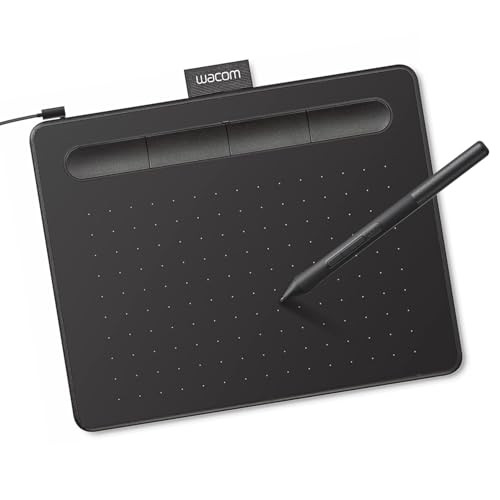
Wacom Intuos Small, Wired Graphic Drawing Tablet with Pen + Software
Included for 'Best Drawing Tablets Under $300' because the listing specifies Wired Graphic Drawing Tablet with Pen + Software, details this guide uses to compare options.
View on Amazon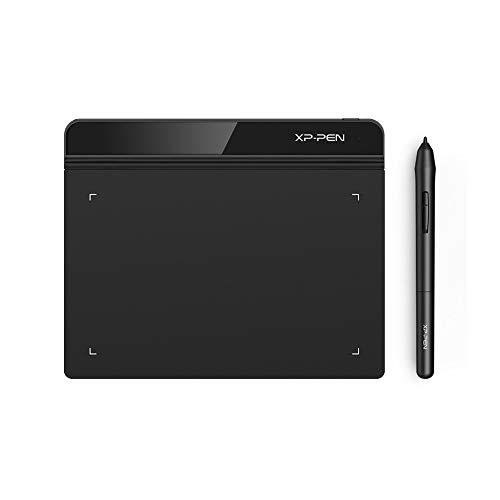
Drawing Tablet XPPen StarG640 Digital Graphic Tablet 6x4 Inch Art Tablet with Battery-Free Stylus Pen Tablet for Mac, Windows and Chromebook (Drawing/E-Learning/Remote-Working)
Included for 'Best Drawing Tablets Under $300' because the listing specifies Windows and Chromebook (Drawing/E-Learning/Remote-Working), details this guide uses to compare options.
View on Amazon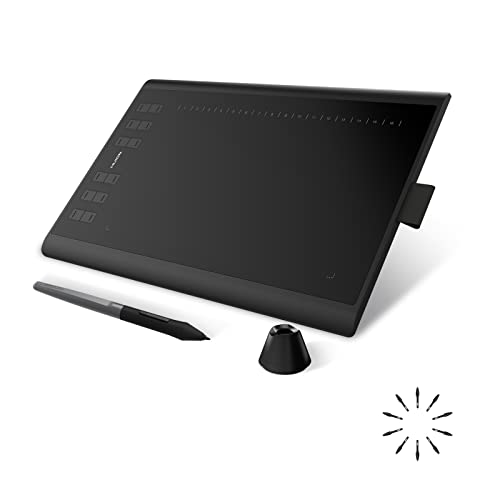
HUION Inspiroy H1060P Graphics Drawing Tablet, 10 x 6.25 in, 12+16 Hot Keys
Included for 'Best Drawing Tablets Under $300' because the listing specifies 10 x 6.25 in and 12+16 Hot Keys, details this guide uses to compare options.
View on Amazon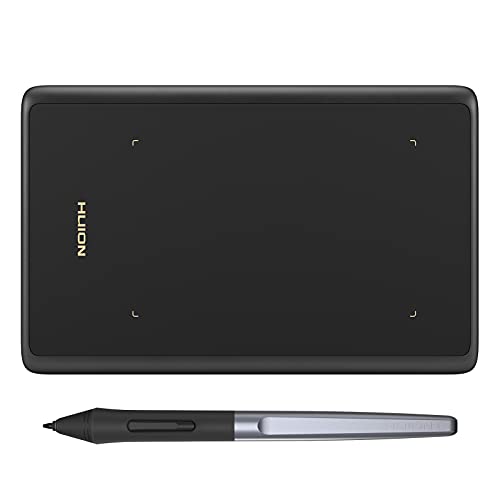
HUION Drawing Tablet H420X Graphics Tablet with 8192 Level Pen Pressure
Included for 'Best Drawing Tablets Under $300' as a relevant option in this category; details come from the product listing.
View on AmazonThe main compromise is connectivity. Most affordable pen displays need video, data, and power. Depending on the computer, that may mean one USB-C cable, a USB-C-to-HDMI cable with USB-A, or a three-in-one cable. They are also less convenient on a sofa or in a backpack because the display, cables, and stand add weight.
Choose a screenless tablet if value and portability matter most
A screenless tablet costs less, uses less power, and is usually easier to carry. The Wacom Intuos Medium has a smaller active area than the Deco 01 V3, but its driver support and established compatibility make it a dependable choice for users who want a conventional drawing setup. The Deco 01 V3 offers a larger 10×6.25-inch work area and more shortcut keys for much less money.
There is a short adjustment period because your hand draws on the tablet while your eyes remain on the monitor. This is not a disadvantage for everyone: the separated hand position can keep the artwork unobstructed, and screenless tablets work particularly well with a large desktop monitor or a dual-monitor setup.
Which Tablet Fits Your Situation?
| Your situation | Best fit | Why |
|---|---|---|
| You are learning digital art and want the most natural transition from paper | Huion Kamvas 13 | Direct-on-screen drawing, tilt support, and programmable keys |
| You travel with a laptop and need a large work area without a screen | XP-Pen Deco 01 V3 | 10×6.25-inch active area with low cable and power requirements |
| You need dependable use across Windows and macOS | Wacom Intuos Medium | Mature drivers and broad software compatibility |
| You use many keyboard shortcuts while painting | Huion Inspiroy 2 Medium | Shortcut keys plus dial-style controls for zoom or brush size |
| Your laptop has limited ports | Screenless tablet | Usually requires only one USB connection and no video output |
| You want a display but have a strict $300 ceiling | XP-Pen Artist 12 (2nd Gen) | Compact FHD display and useful onboard controls at a lower typical price |
What the Specifications Really Mean
Active area is more important than headline pressure levels
Pressure sensitivity affects how easily you can vary line width or opacity, but 4,096 levels is already sufficient for most drawing. The difference between 8,192 and 16,384 levels is less noticeable than the pen calibration, nib friction, and application settings. A larger active area gives your arm more room for broad strokes and usually feels better for detailed illustration.
For a 16:9 monitor, a 10×6.25-inch tablet provides a useful near-screen-shaped drawing surface. If the tablet is much wider or narrower than the monitor, enable proportional mapping in the driver so a circular brush remains circular and the whole tablet does not distort the display.
Tilt support helps with brush behavior, not every tool
Tilt is valuable when a brush simulates a pencil, charcoal stick, or broad marker. It changes the angle, width, or opacity of a stroke as you lean the pen. It has little effect on ordinary hard round brushes, vector paths, or applications that do not expose tilt controls. If you use Krita, Photoshop, Clip Studio Paint, or similar software, check the selected brush’s dynamics settings rather than assuming the hardware alone will activate tilt.
Shortcut keys reduce keyboard reaching
Useful assignments include undo, redo, hand/pan, brush, eraser, eyedropper, zoom in, zoom out, and brush-size decrease or increase. A dial or wheel is particularly useful for brush size and canvas rotation. Do not choose a tablet solely because it has more keys: poorly placed buttons can be slower than a few well-labeled controls or keyboard shortcuts.
Connection and Bandwidth: A Practical Check
A pen display showing 1920×1080 at 60Hz needs approximately 2.98 gigabits per second of active pixel data before blanking and protocol overhead:
1,920 × 1,080 × 60 × 24 bits = 2,985,984,000 bits per second.
That is why these displays commonly use HDMI or DisplayPort for video rather than sending the image through ordinary USB 2.0. HDMI 1.4 has enough theoretical capacity for 1080p at 60Hz, but the computer still needs a separate USB connection for pen input and sometimes extra power.
Before buying a display tablet, check whether your laptop has an HDMI port or a USB-C port that supports DisplayPort Alt Mode. A USB-C port used only for charging or basic USB data will not necessarily drive a pen display. A screenless tablet avoids this issue and normally draws only a small amount of power from one USB port.
Recommended Setup Values
- Start with full-screen mapping: map the entire tablet to the entire monitor so you learn a consistent hand-to-cursor relationship.
- Use moderate pressure: set the driver curve so normal strokes reach roughly the middle-to-upper portion of the pressure range. If every line becomes thick too easily, make the curve firmer.
- Set a 5–10% stabilization level for sketching: this reduces small shakes without making the cursor feel delayed. Increase it for line art and reduce it for quick gesture drawing.
- Calibrate a pen display after positioning it: viewing angle changes the apparent alignment between the pen tip and cursor.
- Assign one key to undo and one to eyedropper: these are used often enough to justify permanent buttons. Put zoom or brush-size controls on a wheel or dial when available.
Compatibility With Drawing Software
The tablets listed here are designed for common Windows and macOS drawing applications, including Krita, Photoshop, Clip Studio Paint, Blender, and other software that accepts standard pen input. Some models also support ChromeOS or Android, but mobile compatibility can require a specific adapter, a compatible app, or a device with USB OTG and the correct display-output support.
On Windows, Windows Ink is usually the correct starting setting for modern creative applications. If pressure is missing or strokes behave erratically, test the tablet’s legacy or WinTab mode in the driver and restart the art application after changing it. Running multiple tablet drivers at once can also cause conflicts, so remove old Wacom, Huion, or XP-Pen drivers before installing a different brand.
Final Buying Advice
Choose the Huion Kamvas 13 when direct drawing and tilt support are more important than a minimalist desk. Choose the XP-Pen Artist 12 (2nd Gen) when you want a compact display and shortcut keys at the lowest practical price. Pick the Wacom Intuos Medium for established driver support, or the XP-Pen Deco 01 V3 for the largest active area and strongest value among screenless options. For a portable setup with physical controls and a dial, the Huion Inspiroy 2 Medium is an especially flexible alternative.
At this budget, prioritize active-area comfort, reliable compatibility, and the connection your computer can actually support. Pressure numbers are useful for comparison, but they should not outweigh a tablet that fits your desk, software, and drawing habits.