Key takeaways
- GPU first, always: The graphics card determines 80% of your gaming performance. At this budget, target an RTX 5060 Ti (12GB) at minimum for 1080p high-refresh, or an RTX 5070 if you plan to game at 1440p. Avoid older cards like the RX 580 unless you’re strictly playing esports titles.
- 16GB RAM is the floor, 32GB is the goal: Modern titles routinely use 12GB+ of system memory. DDR5 is standard in 2026 and worth prioritizing — a machine with 32GB DDR5 will age far better than one with 16GB DDR4.
- Don’t accept less than 1TB of NVMe storage: A single AAA install can exceed 150GB. A 512GB drive fills up almost immediately, and adding storage later means opening the case and buying a second drive.
- Check CPU balance, not just clock speed: A modern 8-core chip like the Ryzen 7 9700X or R7-8700F pairs well with these GPUs. Older i7 designations can mean anything from a recent chip to a decade-old part — always verify the exact model number.
- Look at upgrade headroom: Power supply wattage, case airflow, and free M.2 slots decide whether this PC lasts two years or five. Budget prebuilts often ship with just enough PSU capacity for the stock configuration and nothing more.
What's inside
Building or buying a gaming PC under $1,000 in 2026 means navigating a market where GPU prices swing month to month, prebuilt configurations hide compromises in the parts you can’t see, and the same headline graphics card can appear in machines that perform very differently. Most buyers know they want an RTX 5060 Ti or RTX 5070, but they end up overpaying for a system crippled by 8GB of RAM, a 256GB boot drive, or a power supply that leaves no room to upgrade later.
This guide cuts through that. We’ve focused on prebuilt desktops that stay realistically at or near the $1,000 mark, prioritizing balanced specs over marketing headlines — enough VRAM for 1440p, DDR5 memory where it matters, and storage you won’t outgrow in six months. Below you’ll find our picks, a short buying checklist, and honest notes on where each machine makes its tradeoffs.
As an Amazon Associate we earn from qualifying purchases at no extra cost to you. Product prices and availability are accurate as of the date shown and are subject to change.


⚡ Save on Your Next PC — Amazon Prime
Prime members get fast free shipping on the systems above, plus early access to Prime Day & Black Friday PC deals. New members get a 30-day free trial.
Watch: Best Gaming PC Under $1000 — Video Review
How to Choose Gaming PC Under $1000
- GPU first, always: The graphics card determines 80% of your gaming performance. At this budget, target an RTX 5060 Ti (12GB) at minimum for 1080p high-refresh, or an RTX 5070 if you plan to game at 1440p. Avoid older cards like the RX 580 unless you’re strictly playing esports titles.
- 16GB RAM is the floor, 32GB is the goal: Modern titles routinely use 12GB+ of system memory. DDR5 is standard in 2026 and worth prioritizing — a machine with 32GB DDR5 will age far better than one with 16GB DDR4.
- Don’t accept less than 1TB of NVMe storage: A single AAA install can exceed 150GB. A 512GB drive fills up almost immediately, and adding storage later means opening the case and buying a second drive.
- Check CPU balance, not just clock speed: A modern 8-core chip like the Ryzen 7 9700X or R7-8700F pairs well with these GPUs. Older i7 designations can mean anything from a recent chip to a decade-old part — always verify the exact model number.
- Look at upgrade headroom: Power supply wattage, case airflow, and free M.2 slots decide whether this PC lasts two years or five. Budget prebuilts often ship with just enough PSU capacity for the stock configuration and nothing more.
The Best Picks Reviewed
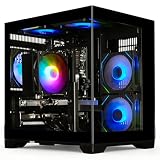
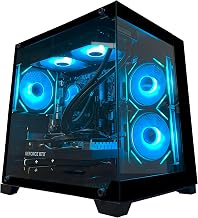
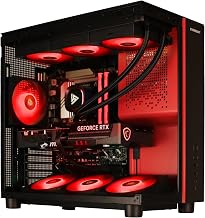
MSI Codex Z2 (RTX 5070, 32GB, 2TB)
This is the most complete package on the list — an RTX 5070 paired with 32GB of DDR5 and a genuinely generous 2TB NVMe drive means you’re not compromising anywhere. The R7-8700F is a strong gaming CPU with no integrated graphics, which is a non-issue in a system with a dedicated GPU and keeps the price down.
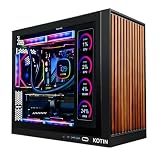
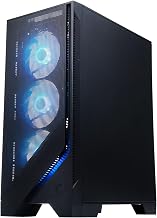
KOTIN Prebuilt RTX 5070 (Ryzen 7 9700X)
KOTIN pairs the RTX 5070 with the newer Ryzen 7 9700X, giving it a modest edge in CPU-bound titles and productivity work over the MSI. The 1TB SSD is the main tradeoff, and boutique-brand support isn’t as robust as a major OEM — but for raw performance per dollar, it’s excellent.
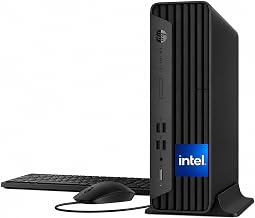
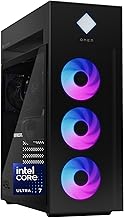
Alienware Aurora (RTX 5070, Core Ultra 7 265F)
The Aurora is the pick if warranty, build quality, and support matter as much as frame rates — Dell’s service network is a real advantage over smaller brands. Expect it to sit at the top of the budget, and note that Alienware’s proprietary chassis design limits some future upgrades compared to a standard ATX build.
MSI Codex Z2 (RTX 5060 Ti, 16GB, 1TB)
The cheaper Codex Z2 swaps to an RTX 5060 Ti and halves the RAM and storage, landing comfortably under $1,000 with room to spare. It’s the smartest choice for 1080p high-refresh gaming, and the DDR5 platform means adding another 16GB later is straightforward and cheap.
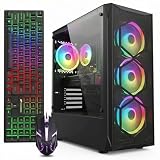
YAWYORE Gaming PC (Ryzen 7 5700X, RTX 5060)
This is the entry point — an RTX 5060 handles 1080p at high settings in nearly everything, and the Ryzen 7 5700X remains a capable eight-core gaming chip despite being an older AM4 part. Buy it if you want to spend closer to $700 and put the savings toward a better monitor.
Frequently Asked Questions
Can a $1,000 gaming PC handle 1440p?
Yes, with an RTX 5070 and DLSS enabled you can expect 80–120 FPS at 1440p high settings in most modern titles. An RTX 5060 Ti will manage 1440p at medium-to-high settings but is better suited to 1080p high-refresh gaming.
Is a prebuilt worse value than building it myself?
In 2026 the gap has narrowed considerably — prebuilts from major brands often match or beat DIY pricing because OEMs buy components in bulk. You give up some control over case, PSU, and cooling quality, but you gain a single warranty covering the whole system.
Should I avoid systems with older GPUs like the RX 580?
For modern AAA gaming, yes. Cards from that generation lack the VRAM, ray tracing hardware, and upscaling support that current titles increasingly assume. They remain viable only for esports games like CS2, Valorant, or League of Legends at 1080p.
How long will a $1,000 PC stay current?
Expect roughly three to four years of comfortable high-settings gaming, longer if you buy a system with 32GB of RAM and a spare M.2 slot. The GPU is typically the first component to feel dated, and it’s also the easiest to swap.
Final Thoughts
For most buyers, the MSI Codex Z2 with the RTX 5070, 32GB of DDR5, and 2TB of storage is the strongest all-around value on this list — it’s the rare budget prebuilt that doesn’t cut corners on memory or storage. If you want the newest CPU alongside that same GPU, the KOTIN build with the Ryzen 7 9700X is the sharper performance play, while the RTX 5060 Ti version of the Codex Z2 is the smart choice if you’re gaming at 1080p and would rather keep a few hundred dollars in your pocket.