Key takeaways
- Prioritise the GPU above everything: The graphics card determines your frame rate more than any other component at this budget. An RX 580 8GB or RTX 2060 will comfortably outrun a system with a faster CPU and a weak GT 1030 or integrated graphics.
- Treat 16GB RAM as the minimum: Modern titles and background apps eat memory quickly. Anything under 16GB will cause stutter in open-world games, and dual-channel configurations (2×8GB) noticeably outperform a single 16GB stick.
- Insist on an SSD, not a hard drive: A 512GB NVMe or SATA SSD is now standard even at this price. Mechanical drives cripple load times and make Windows itself feel sluggish, so treat an HDD-only build as a red flag.
- Check the CPU generation, not just the tier: “Core i7” means very little without a generation number. A 7th-gen i5 from 2017 will bottleneck a modern GPU, while a Ryzen 5 5600GT or Ryzen 7 5700X offers far more headroom for future upgrades.
- Look at the power supply and upgrade path: Budget prebuilts often ship with unbranded PSUs and proprietary cases. Confirm there’s a standard ATX layout and enough wattage headroom if you plan to drop in a better graphics card in a year or two.
What's inside
Shopping for a gaming PC under $500 in 2026 means navigating a market full of vague spec sheets, recycled office towers wearing RGB fans, and listings that quietly swap in weaker parts than the photos suggest. The hard truth is that this budget rarely buys a brand-new, current-generation system — it buys a well-chosen combination of previous-generation or refurbished components, and the difference between a great pick and a waste of money comes down to which specific GPU and CPU pairing you end up with.
This guide cuts through that noise. Below you’ll find prebuilt desktops that genuinely land at or near the $500 mark, ranked by real-world gaming performance rather than headline part names. We cover what each machine can realistically run at 1080p, where each one compromises, and the checklist you should run through before clicking buy — including which specs actually matter at this price and which are marketing filler.
As an Amazon Associate we earn from qualifying purchases at no extra cost to you. Product prices and availability are accurate as of the date shown and are subject to change.




⚡ Save on Your Next PC — Amazon Prime
Prime members get fast free shipping on the systems above, plus early access to Prime Day & Black Friday PC deals. New members get a 30-day free trial.
Watch: Best Gaming PC Under $500 — Video Review
How to Choose Gaming PC Under $500
- Prioritise the GPU above everything: The graphics card determines your frame rate more than any other component at this budget. An RX 580 8GB or RTX 2060 will comfortably outrun a system with a faster CPU and a weak GT 1030 or integrated graphics.
- Treat 16GB RAM as the minimum: Modern titles and background apps eat memory quickly. Anything under 16GB will cause stutter in open-world games, and dual-channel configurations (2×8GB) noticeably outperform a single 16GB stick.
- Insist on an SSD, not a hard drive: A 512GB NVMe or SATA SSD is now standard even at this price. Mechanical drives cripple load times and make Windows itself feel sluggish, so treat an HDD-only build as a red flag.
- Check the CPU generation, not just the tier: “Core i7” means very little without a generation number. A 7th-gen i5 from 2017 will bottleneck a modern GPU, while a Ryzen 5 5600GT or Ryzen 7 5700X offers far more headroom for future upgrades.
- Look at the power supply and upgrade path: Budget prebuilts often ship with unbranded PSUs and proprietary cases. Confirm there’s a standard ATX layout and enough wattage headroom if you plan to drop in a better graphics card in a year or two.
The Best Picks Reviewed
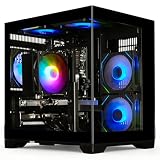
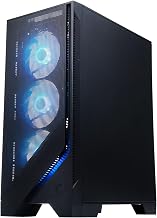
STGAubron Core i7 with RX 580 8GB
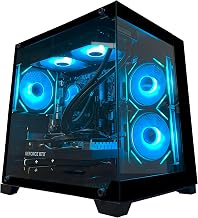
This is the sweet spot for sub-$500 1080p gaming: the RX 580 8GB still handles esports titles at high refresh rates and most AAA games at medium settings, and the 8GB of VRAM ages far better than 4GB cards. The i7 pairing is generous for the price, though expect a previous-generation chip rather than anything recent.
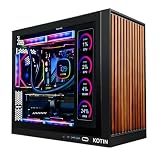
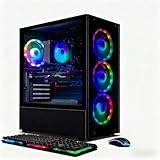
STGAubron Ryzen 5 2600 with RTX 2060 6GB
If you want ray tracing and DLSS support on a tight budget, the RTX 2060 is the cheapest sensible entry point and comfortably beats the RX 580 in modern titles. The Ryzen 5 2600 is showing its age in CPU-heavy games, but for 1080p gaming it remains a well-balanced match.
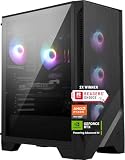
YAWYORE Ryzen 5 5600GT, 16GB, 1TB NVMe
The standout here is storage and platform: a 1TB NVMe drive and a Zen 3 chip on AM4 give you a genuinely modern base with a clear upgrade path. Relying on integrated graphics limits you to esports and older titles out of the box, so budget for a discrete GPU later.
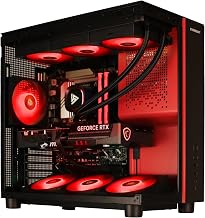
YAWYORE Ryzen 7 5700X with RTX 5060
This is the most capable machine on the list by a wide margin, pairing eight modern cores with a current-generation RTX 5060 for comfortable 1080p high settings and viable 1440p play. It typically sits above the $500 line, so consider it only if your budget can stretch — the performance jump justifies it.
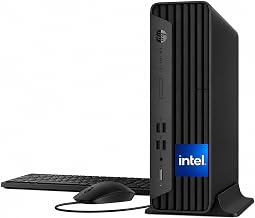
Dell Gaming Tower with Intel Core i5-7500 (Renewed)
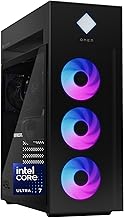
A renewed Dell tower is the safest pick if reliability and build quality matter more than raw speed, and the 16GB of DDR4 plus a 256GB SSD make it perfectly usable as an everyday machine. The GT 1030 is the weak link and only suits older or lightweight titles, so plan a graphics upgrade almost immediately.
Frequently Asked Questions
Can a $500 gaming PC really run modern games?
Yes, at 1080p with medium settings in most cases. Systems with an RX 580 or RTX 2060 will handle the majority of current releases at 60fps if you’re willing to adjust settings, while esports titles like Valorant, CS2 and Fortnite run comfortably above 100fps.
Is it better to build your own PC at this budget?
In 2026, prebuilts using older or surplus components are usually cheaper than sourcing equivalent parts individually, especially once you factor in a licensed copy of Windows. Building yourself makes more sense above roughly $700, where new-part pricing becomes competitive.
Should I buy a renewed or refurbished gaming PC?
Renewed systems offer noticeably better build quality per dollar, particularly from established brands like Dell. Just confirm the listing includes a return window and warranty, and check whether the graphics card was original to the machine or added afterwards.
What should I upgrade first on a budget prebuilt?
The graphics card, almost always. After that, adding a second RAM stick to enable dual-channel mode and swapping in a larger SSD deliver the most noticeable improvements for the least money.
Final Thoughts
For most buyers, the STGAubron Core i7 with RX 580 8GB is the best value under $500, delivering dependable 1080p performance with enough VRAM to stay relevant. If ray tracing and DLSS matter to you, the STGAubron Ryzen 5 2600 with RTX 2060 is the smarter pick, while the YAWYORE Ryzen 5 5600GT makes the strongest foundation for anyone planning to add a graphics card down the line.