Key takeaways
- Resolution and size: 1440p at 27 inches is the value sweet spot in this budget. It delivers roughly 109 pixels per inch — sharp enough that you won’t see individual pixels at a normal desk distance — while remaining far less GPU-demanding than 4K. Avoid 1080p at 27 inches unless your budget is tight elsewhere; text and edges look noticeably soft.
- Refresh rate and response time: Anything from 144Hz upward is genuinely fast, and 180Hz has become the common standard at this price. Be skeptical of “1ms” claims — that’s usually a best-case grey-to-grey figure measured with overdrive cranked up, which often introduces visible overshoot. Real-world motion clarity matters more than the number on the box.
- Panel technology: Fast IPS is the default recommendation for most buyers: strong colors, wide viewing angles, and response times that are now competitive with TN. VA panels offer deeper blacks and are common in curved models, but can smear in dark scenes. QD-OLED delivers the best contrast and pixel response available, with the tradeoff of a higher price and the need for sensible burn-in habits.
- Adaptive sync and HDR: FreeSync Premium or G-SYNC Compatible certification eliminates tearing and is effectively standard now — check that it’s supported over your intended connection. Treat HDR claims cautiously: entry-level HDR certification on an LCD often means little more than a brightness boost. Genuine HDR impact at this price generally requires an OLED panel.
- Connectivity and ergonomics: Confirm the DisplayPort version supports your target refresh rate at full resolution, and check for HDMI 2.1 if you’re connecting a current-generation console. A stand with height, tilt, swivel, and pivot adjustment matters more than most buyers expect — a monitor at the wrong height causes real discomfort over long sessions. USB-C with power delivery is a significant bonus for laptop users.
What's inside
Shopping for a gaming monitor in the sub-$500 bracket has never been more confusing. Panel technology has advanced fast, and the same $400 that bought a basic 1080p 144Hz screen a few years ago now buys a genuinely high-end 1440p display — or, if you shop carelessly, a corner-cut panel with washed-out colors, mediocre response times, and a refresh rate that only hits its advertised numbers under specific conditions. The spec sheets have gotten longer while the meaningful differences have gotten harder to spot.
This guide cuts through that. We’ve focused on 27-inch 1440p monitors, which remain the sweet spot for value in 2026: high enough resolution to look sharp without demanding a flagship GPU, and large enough to feel immersive without forcing you to move your head. Every pick below sits realistically within a $500 budget, and each one earns its place for a specific reason — whether that’s raw motion clarity, color accuracy, connectivity, or simply being the most monitor you can get for the least money.
As an Amazon Associate we earn from qualifying purchases at no extra cost to you. Product prices and availability are accurate as of the date shown and are subject to change.




⚡ Save on Your Next PC — Amazon Prime
Prime members get fast free shipping on the systems above, plus early access to Prime Day & Black Friday PC deals. New members get a 30-day free trial.
Watch: Best Gaming Monitor Under $500 — Video Review
How to Choose Gaming Monitor Under $500
- Resolution and size: 1440p at 27 inches is the value sweet spot in this budget. It delivers roughly 109 pixels per inch — sharp enough that you won’t see individual pixels at a normal desk distance — while remaining far less GPU-demanding than 4K. Avoid 1080p at 27 inches unless your budget is tight elsewhere; text and edges look noticeably soft.
- Refresh rate and response time: Anything from 144Hz upward is genuinely fast, and 180Hz has become the common standard at this price. Be skeptical of “1ms” claims — that’s usually a best-case grey-to-grey figure measured with overdrive cranked up, which often introduces visible overshoot. Real-world motion clarity matters more than the number on the box.
- Panel technology: Fast IPS is the default recommendation for most buyers: strong colors, wide viewing angles, and response times that are now competitive with TN. VA panels offer deeper blacks and are common in curved models, but can smear in dark scenes. QD-OLED delivers the best contrast and pixel response available, with the tradeoff of a higher price and the need for sensible burn-in habits.
- Adaptive sync and HDR: FreeSync Premium or G-SYNC Compatible certification eliminates tearing and is effectively standard now — check that it’s supported over your intended connection. Treat HDR claims cautiously: entry-level HDR certification on an LCD often means little more than a brightness boost. Genuine HDR impact at this price generally requires an OLED panel.
- Connectivity and ergonomics: Confirm the DisplayPort version supports your target refresh rate at full resolution, and check for HDMI 2.1 if you’re connecting a current-generation console. A stand with height, tilt, swivel, and pivot adjustment matters more than most buyers expect — a monitor at the wrong height causes real discomfort over long sessions. USB-C with power delivery is a significant bonus for laptop users.
The Best Picks Reviewed
Samsung Odyssey OLED G6 (G61SH)
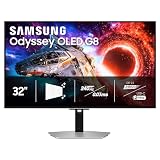
This is the closest thing to a no-compromise gaming panel you’ll find near this budget, pairing QD-OLED’s near-instant pixel response and effectively infinite contrast with a very high refresh rate. Motion clarity is in a different class from any LCD here, and while it sits at the top of the price range and requires basic burn-in hygiene, it’s the pick if outright image quality is your priority.
ASUS ROG XG27ACS
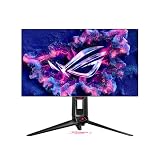
The XG27ACS is the most well-rounded LCD on this list, combining a 180Hz Fast IPS panel with G-SYNC compatibility and — crucially — USB-C connectivity with power delivery. That last feature makes it a genuinely excellent dual-purpose display for anyone who games on a desktop and works from a laptop on the same desk.
ASUS TUF Gaming VG27AQ3A
A long-standing favorite that continues to deliver, offering 180Hz, Fast IPS, 130% sRGB coverage, and ASUS’s Extreme Low Motion Blur Sync for backlight strobing on top of variable refresh rate. Built-in speakers and a fully adjustable stand round out a package that consistently punches above its price.
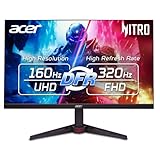
Acer Nitro KG271U N3bmiipx
Acer’s Nitro line has built its reputation on delivering the essentials without inflating the price, and this 27-inch 180Hz IPS panel is a clear example. You give up some refinement in stand quality and on-screen menus compared to pricier rivals, but the core gaming experience is close to identical for meaningfully less money.
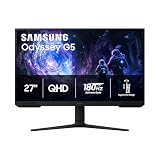
Samsung Odyssey G5 (G51F)
The G51F is the budget anchor of this roundup, delivering 1440p at a high refresh rate for a price that regularly dips well below the rest of the field. It’s the sensible choice for anyone upgrading from 1080p who wants the resolution jump without stretching their budget.
Frequently Asked Questions
Is 1440p worth it over 1080p for gaming?
At 27 inches, yes — clearly. The pixel density difference is immediately visible in text sharpness and edge detail, and modern mid-range GPUs handle 1440p comfortably in most titles. If you’re running older or entry-level hardware, you can always render at a lower resolution or use upscaling while keeping the sharper desktop experience.
Do I need more than 144Hz?
The jump from 60Hz to 144Hz is transformative; the jump from 144Hz to 180Hz is noticeable but incremental. Competitive players will appreciate the extra frames, but most people should prioritize panel quality and response time consistency over chasing the highest refresh number.
Should I be worried about OLED burn-in?
Modern QD-OLED panels include pixel-shifting, logo dimming, and automatic refresh cycles that make burn-in unlikely under normal mixed use. Risk rises if you display static elements — taskbars, HUDs, spreadsheets — at high brightness for many hours daily. Most gaming monitors also ship with a multi-year burn-in warranty.
Is a curved monitor better for gaming?
It’s a matter of preference rather than performance. At 27 inches, curvature offers a modest immersion benefit but can introduce slight distortion in straight lines, which bothers some users and matters for design work. Flat panels remain the safer default unless you’ve tried a curved display and preferred it.
Final Thoughts
For most buyers, the ASUS ROG XG27ACS is the smartest all-around choice in this bracket, delivering 180Hz Fast IPS performance alongside USB-C connectivity that few competitors match. If image quality is your priority and you can stretch to the top of the budget, the Samsung Odyssey OLED G6 offers contrast and motion clarity that no LCD here can approach. And for anyone upgrading from 1080p on a tighter budget, the Samsung Odyssey G5 remains the best value entry point into 1440p gaming — a genuine upgrade at a price that leaves room for the rest of your setup.