Key takeaways
- Seamless whole-home coverage that eliminates dead zones.
- Simple app setup and management for any user.
- Scalable, so you can add nodes as coverage needs grow.
- Wi-Fi 7 options with 2.5G ports for fast modern plans.
What's inside
A mesh network router system solves the oldest problem in home Wi-Fi: one router simply cannot reach every corner of a house. By linking several units into a single seamless network, mesh systems spread strong, reliable coverage across floors and rooms, so your devices stay connected wherever you roam. The options here center on TP-Link’s popular Deco range alongside a NETGEAR Orbi alternative.
This review looks at how these mesh systems perform, how much area they cover, and which fits your home and internet plan. Whether you want an affordable Wi-Fi 6 upgrade or a future-proof Wi-Fi 7 setup, there is a strong choice below.
As an Amazon Associate we earn from qualifying purchases at no extra cost to you. Product prices and availability are accurate as of the date shown and are subject to change.


🎮 Get More From Your Setup — Free
Prime Gaming gives you free PC games every month, in-game loot, and a free Twitch channel sub — plus fast free shipping on all the gear above. New members get a 30-day free trial.
Watch: Mesh Network Router: Review & Buyer’s Guide — Video Review
Design & Build
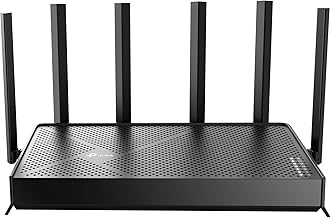
Mesh nodes are meant to sit out in the open, and the Deco lineup keeps a clean, unobtrusive cylindrical shape that suits any room. The three-pack systems give you units to distribute across a home, eliminating dead zones as you go. The Deco X55 and S4 include multiple Gigabit ports per unit for wired devices, while the newer Deco BE23 and BE25 Wi-Fi 7 systems and the NETGEAR Orbi 370 step up to faster 2.5G ports for high-speed plans. Setup runs through a friendly app that helps with placement, and build quality is solid across the range.
Performance
Coverage and speed define these systems, and they deliver at different tiers. The Deco X55 three-pack blankets up to around 6,500 square feet with dependable Wi-Fi 6, ideal for larger homes on a budget, while the single-pack X55 suits smaller spaces. The value-focused Deco S4 handles compact homes with reliable AC1900 speeds. For future-proofing, the Wi-Fi 7 Deco BE23 and BE25 bring MLO, AI-roaming, and 2.5G wired backhaul that keep the network fast under heavy load. The NETGEAR Orbi 370 rounds things out with strong coverage and support for many devices at once. Wired backhaul, where practical, noticeably boosts stability.
Pros & Cons
- Seamless whole-home coverage that eliminates dead zones.
- Simple app setup and management for any user.
- Scalable, so you can add nodes as coverage needs grow.
- Wi-Fi 7 options with 2.5G ports for fast modern plans.
- Wi-Fi 7 systems cost more and need compatible devices to shine.
- Wireless backhaul is convenient but wired is faster and steadier.
- Some security features may require a subscription.
Alternatives to Consider
If coverage and value are your priorities, the Deco X55 three-pack is the easy recommendation for larger homes, with the single-pack X55 and the Deco S4 covering smaller spaces affordably. Buyers with fast internet who want to future-proof should choose the Wi-Fi 7 Deco BE23 or BE25, and the NETGEAR Orbi 370 is a strong alternative for busy homes with many connected devices.
Frequently Asked Questions
How many nodes does a mesh network need?
A three-pack suits most medium to large homes. Smaller spaces may need only one or two units, and you can add more later.
Is wired backhaul worth it?
Yes, if you can run a cable. Wired backhaul improves speed and stability, though wireless backhaul still works well when wiring is impractical.
Do I need Wi-Fi 7?
Only with a very fast internet plan and modern devices. Wi-Fi 6 systems like the Deco X55 remain excellent for most households.
Will a mesh system replace my router and extenders?
Yes. A mesh system replaces both your router and any range extenders, creating one unified network across the whole home.
Verdict
A mesh network router system is the most reliable path to strong Wi-Fi in every room. The TP-Link Deco X55 is the value pick for large homes, the Deco S4 covers smaller spaces affordably, and the Wi-Fi 7 Deco BE23 and BE25 along with the NETGEAR Orbi 370 are the future-proof choices for fast internet and busy networks. Match the system to your home and plan, use wired backhaul where you can, and dead zones become a thing of the past.