Our Top Picks
Pros & cons
- 180Hz WUXGA display offers 100% sRGB color accuracy
- 32GB DDR5 memory supports heavy multitasking alongside gaming
- DLSS 4 support helps boost frame rates on the RTX 5060
- Only one of two RAM slots is left open for upgrades
- Weighs over 4.6 pounds for a 16-inch laptop
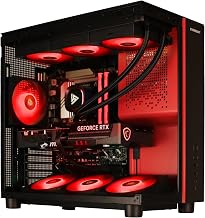
Buy a gaming desktop if the machine will live on one desk and you want the most performance, quietest cooling and easiest upgrades for your money. Buy a gaming laptop if you need to move it, share a small space or want a screen, keyboard and battery included in one purchase. The catch is that an RTX 5060 in a laptop is not the same product as an RTX 5060 card in a desktop, and the difference comes down to power. This guide compares the two on the factors that actually change the decision and then looks at four 16-inch RTX 5060 laptops.
Quick Verdict
| Your situation | Our verdict |
|---|---|
| One fixed desk, want the most frames and easy upgrades | Desktop. More performance per unit of heat and noise, and parts can be swapped later. |
| Dorm, small apartment or you travel between locations | Laptop. A single device with screen, keyboard and battery solves the space problem. |
| You already own a monitor, keyboard and mouse | Desktop gains an advantage, since you only pay for the tower. |
| You study or work away from a desk and game at home | Laptop, with a bag, a charger and a clear idea of its power limits. |
| You like tinkering and plan to upgrade the GPU in two to three years | Desktop. Laptop graphics chips are almost never replaceable. |
| You only game occasionally and want one machine for everything | Laptop, if you accept that sustained performance varies with cooling. |
What You Need to Know
The same GPU name is not the same performance
NVIDIA sells both a desktop GeForce RTX 5060 and an RTX 5060 Laptop GPU. They share the Blackwell architecture and carry 8 GB of GDDR7 memory on a 128-bit bus, but the laptop version has 3,328 CUDA cores while the desktop card has 3,840, roughly 15 percent fewer. More important is the power budget. NVIDIA lists the desktop card at 145 W total graphics power. The laptop chip is configurable from about 45 W to 100 W, and some designs add up to 25 W of Dynamic Boost for a higher peak. Because a laptop maker chooses the limit, two laptops with the same GPU name can perform noticeably differently. Always look for the stated wattage on the spec sheet rather than the model name alone.

Acer Nitro V 16S AI Gaming Laptop | AMD Ryzen 7 260 Processor | NVIDIA GeForce RTX 5060 Laptop GPU (572 AI Tops) | 16" WUXGA IPS 180Hz Display | 32GB DDR5 | 1TB Gen 4 SSD | Wi-Fi 6 | ANV16S-41-R2AJ
Chosen because it specifies AMD Ryzen 7 260 Processor and NVIDIA GeForce RTX 5060 Laptop GPU (572 AI Tops).
View on Amazon
MECHREVO Aurora 16X Gaming Laptop, i7-14650HX, RTX 5060, 16'' 2.5K 180Hz | 16:10 IPS, 100% sRGB, 16GB DRR5 RAM, 512 GB SSD, RGB Keyboard, Ice Shark Cooling, Windows 11 Home
Chosen because it specifies i7-14650HX and RTX 5060.
View on Amazon
ASUS ROG Strix G16 (2025) Gaming Laptop, 16” FHD+ 16:10 165Hz/3ms, NVIDIA® GeForce RTX™ 5060, Intel® Core™ i7 Processor 14650HX, 16GB DDR5, 1TB Gen 4 SSD, Wi-Fi 7, Windows 11 Home, G615JMR-AS74
Chosen because it specifies 16” FHD+ 16:10 165Hz/3ms and NVIDIA® GeForce RTX™ 5060.
View on Amazon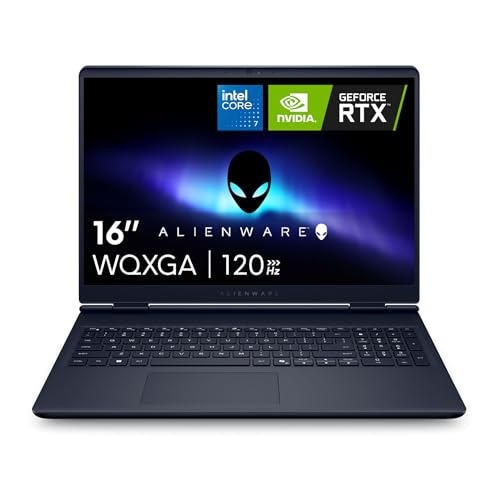
Alienware 16 Aurora Gaming Laptop, NVIDIA RTX 5060, Intel Core 7 240H | 2560x1600 Display, 120Hz, 16:10, 16GB DDR5 RAM, 1TB SSD, Windows 11 Home, Backlit Keyboard, Blue
Chosen because it specifies NVIDIA RTX 5060 and Intel Core 7 240H.
View on AmazonReal power limits in the laptops below
Published figures show the spread. Tom’s Hardware lists the Acer Nitro V 16S AI at an 85 W maximum graphics power and the Alienware 16 Aurora at 80 W. ASUS rates the ROG Strix G16 with an RTX 5060 at 115 W (100 W plus 15 W Dynamic Boost). The MECHREVO listing quotes up to 115 W of dynamic power. Those numbers do not translate directly into frame rates, and no benchmark results are quoted here, but the higher-wattage designs have more thermal and electrical headroom to hold their clocks. Check the exact SKU, since manufacturers sell several variants of one chassis.
Cooling, noise and sustained performance
A desktop has a large case, big fans and room for tower coolers, which lets the same silicon run cooler and quieter. A laptop packs the CPU, GPU, battery and screen into a few centimeters, so the chassis, heat pipes and fan curve decide how long it sustains its boost. ASUS lists a vapor chamber, three fans and liquid metal on the ROG Strix G16, and the MECHREVO listing describes dual fans, 10 mm heat pipes and support for up to 170 W combined CPU and GPU power. Better thermals mean more consistent frame rates, but also more fan noise under load. Use a hard, flat surface, never a bed or blanket, because blocked intake vents are the most common reason a laptop throttles or overheats.
Upgrades and repairs
Desktop parts are standardized. You can replace the graphics card, add storage, change the power supply or move everything into a new case. In a laptop, the CPU and GPU are normally soldered, and you can usually upgrade only memory and storage. The Alienware 16 Aurora supports up to 64 GB of DDR5 across two SO-DIMM slots according to Dell, and the Acer listing shows two DDR5 slots. Treat these as the main upgrade paths and confirm the slot layout for your SKU. This matters for longevity: a desktop owner can add a new GPU in a few years, while a laptop owner must replace the whole machine.
Portability, battery and display
A laptop includes a screen. The four examples here are 16-inch panels, with refresh rates from 120Hz to 180Hz, which is sufficient for smooth play on a mid-range GPU. Battery life while gaming is short compared with browsing, and heavy gaming runs best plugged in. Published battery capacities include 76 Wh for the Acer and 96 Wh for the Alienware, with a manufacturer-quoted battery runtime of up to 6 hours for the Alienware; real gaming runtime will be much shorter. A desktop needs a separate monitor, which can be better and bigger than a laptop panel, and lets you pick refresh rate and resolution independently.
Comparison summary
| Factor | Gaming desktop | Gaming laptop |
|---|---|---|
| GPU power (RTX 5060 class) | 145 W total graphics power, 550 W system requirement per NVIDIA | About 45 W to 100 W, plus optional boost, set by the maker |
| CUDA cores (RTX 5060) | 3,840 | 3,328 |
| Upgrade path | GPU, CPU, memory, storage, PSU, case | Usually memory and storage only |
| Included peripherals | None; needs monitor, keyboard, mouse | Screen, keyboard, webcam and battery |
| Noise and cooling | Easier to keep quiet and cool | Louder under load, needs clear vents |
| Portability | Fixed location | Carry it anywhere with its charger |
How to Decide
- Count where you play. If it is one desk, the laptop’s portability is unused. If it is two or more places, the desktop’s advantage shrinks, because a second desktop plus monitor adds cost and bulk.
- Price the whole setup, not just the box. A desktop tower plus monitor, keyboard, mouse and speakers is the real comparison. A laptop already includes those parts, though not an external monitor if you want a larger screen.
- Compare power numbers. For a laptop, prefer a listing that states the GPU wattage. As a rough rule of thumb, treat the 80 W to 85 W designs as the value tier and the 100 W to 115 W designs as the performance tier for the same GPU.
- Plan the power supply for a desktop. NVIDIA’s requirement for an RTX 5060 system is 550 W. A common practice is to buy a reputable unit with comfortable headroom above that and a certification such as 80 PLUS, which indicates efficiency rather than quality. Use the supplied 8-pin PCIe cable and seat connectors fully, because a loose power plug is a real fire and damage risk.
- Check memory and storage. 16 GB of RAM is workable for many games, while 32 GB gives more headroom. Look at whether the laptop’s slots are free for later upgrades.
- Mind laptop charging safety. Use the charger supplied with the laptop, or a replacement rated for the same wattage. A 135 W adapter and a 250 W adapter are not interchangeable. Stop using any laptop whose battery swells or whose case bulges.
Worked example: you play at 1080p to 1440p, share a room with a roommate and take the machine home on weekends. A 16-inch laptop with a 100 W to 115 W GPU and a 165Hz to 180Hz screen fits that life, and you can plug into a larger monitor later. If you have a permanent desk and want to keep the system for five years, a desktop with an upgradeable GPU is the better long-term plan.
Products That Fit
All four are 16-inch laptops with an RTX 5060 Laptop GPU. They illustrate the laptop side of this comparison, and each has a different power and display trade-off. Specifications come from listing fields and manufacturer data; items not stated are marked “confirm on listing”.
Acer Nitro V 16S AI – value-focused laptop with plenty of memory
As an Amazon Associate we earn from qualifying purchases at no extra cost to you.

This model suits the shopper who wants a lighter, simpler laptop and is comfortable with a lower GPU power limit. Tom’s Hardware lists its RTX 5060 at 85 W maximum, which puts it in the value tier for this GPU. The listing emphasizes 32 GB of DDR5-5600 memory and a 1 TB SSD, which is generous for the class.
- AMD Ryzen 7 260 and RTX 5060 Laptop GPU
- 16-inch WUXGA (1920×1200) IPS at 180Hz, 100 percent sRGB
- 32 GB DDR5-5600 across two slots, 1 TB PCIe SSD per listing
- About 4.63 pounds; 76 Wh battery per third-party specs
Caveat: Acer sells several variants of this name with different CPUs and RAM, so confirm the exact configuration, and note the 85 W GPU limit means it will trail higher-wattage designs.
MECHREVO Aurora 16X – higher-resolution screen and a larger power ceiling

This laptop fits the player who wants a sharper 16:10 screen and a higher-wattage GPU in a value-oriented package. The listing quotes up to 115 W of dynamic power for the RTX 5060 and a 250 W adapter, with dual-fan cooling and up to 170 W combined CPU and GPU performance.
- Intel Core i7-14650HX and RTX 5060 Laptop GPU
- 16-inch 2560×1600 IPS, 180Hz, 100 percent sRGB
- 16 GB DDR5 and 512 GB SSD in the listed configuration; larger options are shown in other listings
- 250 W power adapter; confirm weight and battery capacity on listing
Caveat: the brand is less established than the big OEMs, so check warranty and service coverage in your region, and the base configuration has modest storage.
ASUS ROG Strix G16 (2025) – high-power build for sustained play

The Strix G16 fits the “performance tier” in the how-to-decide list. ASUS rates the RTX 5060 here at 115 W including Dynamic Boost, and the chassis uses a vapor chamber, three fans and liquid metal on the processor. A MUX switch with NVIDIA Advanced Optimus lets the GPU drive the display directly.
- Intel Core i7-14650HX and RTX 5060 Laptop GPU
- 16-inch FHD+ (1920×1200) at 165Hz with 3 ms response
- 16 GB DDR5-5600 and 1 TB PCIe Gen 4 SSD
- About 5.84 pounds per listing specs
Caveat: it is the heaviest of the four and will be louder under sustained load, and the 16 GB of memory is the baseline you may want to upgrade.
Alienware 16 Aurora – larger battery and a taller display

This laptop suits the user who games, studies and travels, and who values battery capacity and a taller 16:10 screen over maximum GPU power. Tom’s Hardware lists its RTX 5060 at 80 W, and the battery is 96 Wh with a manufacturer-stated runtime of up to 6 hours in light use.
- Intel Core 7 240H and RTX 5060 Laptop GPU
- 16-inch 2560×1600, 120Hz, 16:10
- 16 GB DDR5 and 1 TB SSD in the listed configuration; two SO-DIMM slots up to 64 GB per Dell
- Windows 11 per listing
Caveat: the 120Hz screen and lower GPU power suit single-player and mixed use better than competitive high-frame-rate play.
Common Mistakes
- Comparing a laptop and a desktop by GPU name alone instead of by wattage.
- Forgetting to budget for a monitor, keyboard and mouse when pricing a desktop.
- Buying a laptop expecting to upgrade the GPU later.
- Using a laptop on a bed or sofa so the air intake is blocked.
- Buying the cheapest power supply for a desktop, or forgetting that the GPU needs its own PCIe power cable.
- Assuming the battery runtime on the product page applies to gaming.
Questions
Is a gaming laptop slower than a desktop with the same GPU name?
Usually yes. The laptop chip has fewer cores and a lower power limit, so the same name delivers less performance than the desktop card. The gap varies by the wattage the laptop maker allows.
Can I upgrade a gaming laptop later?
Typically only memory and storage. The graphics chip and processor are normally soldered to the motherboard, so major upgrades mean replacing the machine.
How much power supply do I need for a desktop RTX 5060?
NVIDIA lists 550 W as the required system power for the RTX 5060. Choose a quality unit at or above that with the right 8-pin PCIe connector, and add headroom if you plan a more power-hungry GPU later.
Is it safe to game while a laptop charges?
Yes, if you use the original or an equivalent-rated charger and keep the vents clear. Heat is the issue to watch, so use a hard surface and stop if the case becomes uncomfortably hot or the battery swells.
Which is better for school or work and gaming?
A laptop covers both in one device, while a desktop forces you to stay in one place. If you move between locations, the laptop’s convenience usually outweighs the extra performance of a desktop.
Update History
- October 14, 2026 – Initial publication.
- Check the product page for current specifications and availability before buying.
Sources
- NVIDIA GeForce RTX 5060 family page and laptop GPU specifications
- Notebookcheck and VideoCardz coverage of RTX 5060 Laptop GPU specifications and power range
- Tom’s Hardware reviews for the Acer Nitro V 16S AI and Alienware 16 Aurora power figures
- ASUS ROG Strix G16 specification page
- Retailer listing fields for each laptop