Key takeaways
- CPU pairing: The RTX 4050 performs best when paired with a capable processor like an Intel Core i5-13420H, Core 5 210H, or AMD Ryzen 7 7735HS/7445HS — avoid pairing it with older or budget CPUs that will bottleneck it.
- Display refresh rate: Look for at least 144Hz at 1080p; higher refresh rates make competitive titles feel noticeably smoother and are worth prioritizing over resolution bumps.
- RAM and storage: 16GB of RAM is the practical minimum for modern games plus background apps, and a 512GB Gen4 SSD gives you room for a handful of large titles without constant uninstalling.
- Cooling and chassis design: Sustained performance depends heavily on thermal design — laptops with larger vents and dual-fan setups will maintain higher clock speeds during long sessions.
- Port selection and extras: Check for enough USB ports, an SD card slot if you need one, and whether the laptop includes useful bundled accessories like a USB hub.
What's inside
Shopping for a gaming laptop today means wading through a swamp of near-identical spec sheets, inflated marketing claims, and confusing GPU naming conventions. The RTX 4050 has become the go-to mid-range mobile GPU for a reason: it delivers solid 1080p performance, handles ray tracing in most titles, and keeps prices reasonable compared to its 4060 and 4070 siblings. But not every RTX 4050 laptop is built the same, and small differences in cooling, display quality, and RAM configuration can make a big difference in real-world gaming.
This guide breaks down six of the most popular RTX 4050 gaming laptops on the market right now, from HP’s Victus lineup to ASUS TUF and Acer Nitro V. We’ll cover what actually matters when choosing between them, give you honest takes on the top contenders, and answer the questions we hear most often from buyers trying to decide.
As an Amazon Associate we earn from qualifying purchases at no extra cost to you. Product prices and availability are accurate as of the date shown and are subject to change.




🎮 Get More From Your Setup — Free
Prime Gaming gives you free PC games every month, in-game loot, and a free Twitch channel sub — plus fast free shipping on all the gear above. New members get a 30-day free trial.
Watch: Best RTX 4050 Gaming Laptops — Video Review
How to Choose a RTX 4050 Gaming Laptop
- CPU pairing: The RTX 4050 performs best when paired with a capable processor like an Intel Core i5-13420H, Core 5 210H, or AMD Ryzen 7 7735HS/7445HS — avoid pairing it with older or budget CPUs that will bottleneck it.
- Display refresh rate: Look for at least 144Hz at 1080p; higher refresh rates make competitive titles feel noticeably smoother and are worth prioritizing over resolution bumps.
- RAM and storage: 16GB of RAM is the practical minimum for modern games plus background apps, and a 512GB Gen4 SSD gives you room for a handful of large titles without constant uninstalling.
- Cooling and chassis design: Sustained performance depends heavily on thermal design — laptops with larger vents and dual-fan setups will maintain higher clock speeds during long sessions.
- Port selection and extras: Check for enough USB ports, an SD card slot if you need one, and whether the laptop includes useful bundled accessories like a USB hub.
The Best RTX 4050 Gaming Laptops Reviewed
HP Victus RTX 4050 (13420H)
The HP Victus pairs a capable Intel Core i5-13420H with the RTX 4050 in a chassis that keeps costs reasonable without feeling cheap. It’s a strong all-around pick for players who want dependable 1080p performance and don’t need a flashy design.
ASUS TUF Gaming F16
With a 16″ 144Hz IPS-level display and Intel’s newer Core 5 210H processor, the TUF F16 offers one of the sharpest, most fluid screens in this lineup. TUF’s rugged build quality also makes it a smart choice for anyone who travels with their laptop frequently.
ASUS TUF Gaming A16
The AMD-powered A16 swaps in a Ryzen 7 7445HS for excellent multi-threaded performance and efficient power draw, paired with a 145Hz display that keeps pace with fast-moving games. It’s a great option for buyers who lean toward Ryzen over Intel.
Lenovo LOQ-E
The LOQ-E combines a Ryzen 7 7735HS with the RTX 4050 in Lenovo’s clean, understated Luna Gray chassis, and its 144Hz FHD panel delivers smooth motion for the price. It’s a particularly good fit for buyers who want gaming performance without a loud, aggressive aesthetic.
Acer Nitro V
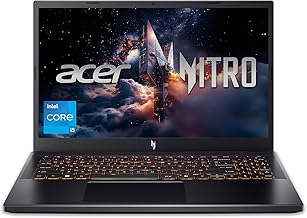
The Nitro V’s standout feature is its 165Hz display, the fastest panel in this roundup, which gives it an edge in fast-paced shooters and competitive titles. Its Core i5-13420H and Wi-Fi 6 support round out a well-balanced budget-friendly build.
Frequently Asked Questions
Can the RTX 4050 handle 1440p gaming?
The RTX 4050 is primarily built for 1080p gaming at high settings and frame rates. It can run 1440p in less demanding titles, but you’ll typically need to lower settings or enable upscaling to maintain smooth performance in newer AAA games.
Does 8GB vs 16GB of RAM matter for gaming?
Yes — 16GB is the more future-proof choice, since many modern games and background applications together can exceed 8GB, leading to stuttering. If you plan to stream, multitask, or play memory-intensive titles, prioritize a 16GB configuration.
Is AMD Ryzen or Intel Core better for RTX 4050 laptops?
Both platforms pair well with the RTX 4050 and perform similarly in most games. Ryzen chips like the 7735HS and 7445HS tend to offer strong multi-core efficiency, while Intel’s Core i5-13420H and Core 5 210H are competitive in single-core gaming workloads — the difference is rarely a deciding factor.
How important is refresh rate compared to resolution?
For most gamers, a higher refresh rate (144Hz or 165Hz) makes a bigger difference in perceived smoothness than a resolution increase, especially in fast-paced genres like shooters and racing games. Sticking with 1080p at a high refresh rate is generally the better trade-off on an RTX 4050.
Final Thoughts
If you want the sharpest display and best build quality, the ASUS TUF Gaming F16 is our top pick, with the Acer Nitro V as a strong runner-up thanks to its class-leading 165Hz panel. For buyers who prefer AMD platforms, the ASUS TUF Gaming A16 rounds out our top recommendations with excellent efficiency and a fast display of its own.