Key takeaways
- For creative pros: The MacBook Pro’s sustained performance and display accuracy make it the default for editors and colorists.
- For Windows and gaming: The Dell Premium 16 with RTX graphics is the only one that plays modern PC games seriously.
- For maximum battery on a budget: The Snapdragon XPS 13 9345 offers exceptional runtime at a lower entry price.
- For touch and flexibility: Dell wins outright; Apple offers no touchscreen option.
- For ecosystem harmony: If you already use iPhone and iPad, the MacBook Pro slots in seamlessly.
What's inside
Choosing between the Dell XPS line and Apple’s MacBook Pro is one of the most common cross-platform decisions premium buyers face in 2026. Both are flagship thin-and-light machines built around excellent displays and all-day battery, yet they pull in genuinely different directions once you look past the aluminum shells.
This comparison breaks down where each family wins, drawing on the current XPS 13 and Dell Premium 16 (the rebranded XPS 16) against Apple’s silicon. If you’re weighing raw creative horsepower against Windows flexibility, the answer depends heavily on your workflow rather than a single spec sheet.
As an Amazon Associate we earn from qualifying purchases at no extra cost to you. Product prices and availability are accurate as of the date shown and are subject to change.




🎮 Get More From Your Setup — Free
Prime Gaming gives you free PC games every month, in-game loot, and a free Twitch channel sub — plus fast free shipping on all the gear above. New members get a 30-day free trial.
Watch: Dell Xps Laptop Vs Macbook Pro: Full Comparison — Video Review
Quick Verdict
The MacBook Pro is the safer pick for sustained creative work, battery longevity, and a polished single-vendor experience. The Dell XPS wins on price flexibility, Windows-native software, touchscreen and 2-in-1 options, and configurations like the Snapdragon X Elite XPS 13 9345 or the RTX-equipped Dell Premium 16. Pick the platform your key apps and ecosystem already live in.
The Dell XPS Case
Dell’s strength is breadth. The XPS 13 9350 with Intel Ultra 7 256V is a genuinely thin Copilot+ machine with a bright 120Hz FHD+ panel and quoted battery figures that finally rival Apple, while the Snapdragon-based 9345 pushes efficiency even further for people who mostly live in a browser and productivity suite.
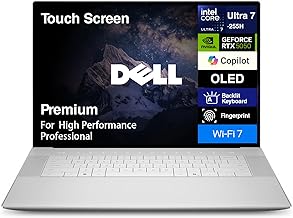
Step up to the Dell Premium 16 (formerly XPS 16) and you get discrete NVIDIA RTX 5050 or 5060 graphics plus a stunning 4K OLED touchscreen. That’s something no MacBook Pro offers: real Windows gaming, CUDA acceleration, and touch input in one chassis.
The trade-offs are familiar. Windows on ARM still has occasional app-compatibility quirks, and the smaller XPS models throttle under long, heavy loads compared to a MacBook Pro’s larger cooling budget.
The MacBook Pro Case
Apple silicon remains the benchmark for performance-per-watt. A MacBook Pro sustains high clocks during video exports and compiles without the fan noise or battery drop-off that plagues most Windows ultraportables, and its Liquid Retina XDR display is superb for color-critical work.
The macOS ecosystem is the other draw. Tight integration with iPhone, Final Cut, Logic, and a stable Unix underpinning make it a favorite for developers and editors who value consistency over configurability.
Where it loses ground: no touchscreen, no 2-in-1, limited gaming, pricier upgrades for RAM and storage, and far fewer port and form-factor choices than Dell’s lineup.
Head-to-Head: Which Should You Buy?
- For creative pros: The MacBook Pro’s sustained performance and display accuracy make it the default for editors and colorists.
- For Windows and gaming: The Dell Premium 16 with RTX graphics is the only one that plays modern PC games seriously.
- For maximum battery on a budget: The Snapdragon XPS 13 9345 offers exceptional runtime at a lower entry price.
- For touch and flexibility: Dell wins outright; Apple offers no touchscreen option.
- For ecosystem harmony: If you already use iPhone and iPad, the MacBook Pro slots in seamlessly.
Frequently Asked Questions
Is the Dell XPS good for video editing?
Yes, especially the Dell Premium 16 with RTX 5060 and 4K OLED. The 13-inch models handle light editing but lack the thermal headroom for long 4K timelines.
Does the Snapdragon XPS run all Windows apps?
Most mainstream apps run natively or via emulation now, but some niche or older x86 software and certain games may still have compatibility gaps.
Which has better battery life?
Both are excellent. Apple silicon generally edges ahead under mixed workloads, while the Snapdragon XPS 13 is remarkably close in real-world browsing use.
Can I upgrade the RAM later?
Generally no. Both platforms solder memory, so buy the configuration you’ll need for the machine’s lifespan up front.
Final Verdict
If your work lives in macOS or demands the longest sustained performance, the MacBook Pro is the smarter long-term buy. If you need Windows, touch, gaming, or simply more configuration choices for the money, the Dell XPS 13 9350 covers premium portability while the Dell Premium 16 handles serious graphics work Apple can’t match.