Key takeaways
- For your main system drive: Pick an SSD. Faster boots and app launches make it the most impactful upgrade for daily use.
- For huge affordable storage: A hard drive gives you the most gigabytes per dollar for backups and media libraries.
- For gaming load times: An SSD like the Crucial BX500 cuts the wait between menu and gameplay significantly.
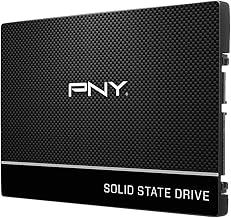
- For a modest budget: A small SATA SSD such as the PNY CS900 as your boot drive offers the best bang for the buck.
- For portable use: An external SSD like the SSK travels safely and transfers files far quicker than a portable hard drive.
What's inside
Choosing between a hard drive and a solid state drive is one of those decisions that quietly defines how enjoyable your computer is to use. It touches everything from how long the machine takes to start up to how quickly your favorite game drops you into the action. Hard drives have been the backbone of storage for years and still win on price per gigabyte, but solid state drives have become the default for anyone who values speed and a responsive system.
To make the comparison concrete, we lean on popular real-world SSDs like the Samsung 870 EVO, the Crucial BX500, the Patriot P220, and the budget-friendly PNY CS900. These are exactly the kind of drives shoppers weigh against a classic hard drive, and seeing them side by side makes the strengths of each format clear.
As an Amazon Associate we earn from qualifying purchases at no extra cost to you. Product prices and availability are accurate as of the date shown and are subject to change.


🎮 Get More From Your Setup — Free
Prime Gaming gives you free PC games every month, in-game loot, and a free Twitch channel sub — plus fast free shipping on all the gear above. New members get a 30-day free trial.
Watch: Hard Drive Vs Solid State Drive: Full Comparison — Video Review
Quick Verdict
A solid state drive is the better choice for your system drive, games, and any files you use often, thanks to its dramatic speed edge. A hard drive still shines when you need enormous, affordable capacity for backups and media. Combining a fast SSD with a spacious hard drive is a smart, budget-conscious approach.
Hard Drives
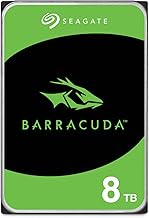
A hard drive keeps your data on spinning magnetic platters, with a mechanical head sweeping across them to read and write. That mature technology is remarkably cheap at large capacities, which keeps hard drives relevant for storing bulky video files, full-system backups, and games you play only occasionally.
The catch is responsiveness. Waiting for platters to spin and the head to seek makes hard drives noticeably slower for booting, launching apps, and loading levels. Their moving parts also make them more sensitive to drops and can produce a faint hum or click during use.
Solid State Drives
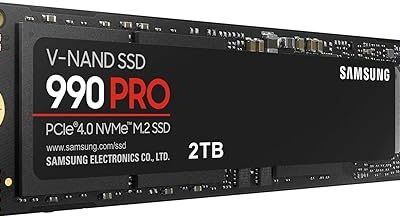
A solid state drive stores everything in flash memory chips, so there is nothing physical to move and data is available almost instantly. SATA models like the Samsung 870 EVO and Crucial BX500 hit read speeds near 560MB/s, which is enough to make boot-ups and game loads feel dramatically quicker.
SSDs also run cool, quiet, and efficient, and their lack of moving parts makes drives like the Patriot P220 and PNY CS900 tougher in the face of knocks. For fast external storage, a portable option such as the SSK SSD brings that same speed and durability to files you carry between machines.
Head-to-Head: Which Should You Buy?
- For your main system drive: Pick an SSD. Faster boots and app launches make it the most impactful upgrade for daily use.
- For huge affordable storage: A hard drive gives you the most gigabytes per dollar for backups and media libraries.
- For gaming load times: An SSD like the Crucial BX500 cuts the wait between menu and gameplay significantly.
- For a modest budget: A small SATA SSD such as the PNY CS900 as your boot drive offers the best bang for the buck.
- For portable use: An external SSD like the SSK travels safely and transfers files far quicker than a portable hard drive.
Frequently Asked Questions
Does an SSD improve gaming performance?
An SSD slashes load times and reduces stutter from texture streaming, though frame rates still depend on your graphics card and processor. The smoother, faster experience makes it well worth the upgrade.
Can I keep my hard drive after adding an SSD?
Yes. A common setup is installing your operating system and main games on the SSD while keeping the hard drive for backups, photos, and less-played titles.
What capacity SSD should I get?
A 500GB to 1TB SSD suits most gamers as a primary drive. If your library is large, pair a 1TB SSD like the Samsung 870 EVO with a bigger hard drive for overflow.
Is upgrading to an SSD complicated?
Not at all. A 2.5-inch SATA SSD uses the same connections as a hard drive, and cloning software or a clean OS install makes the transition straightforward for most users.
Final Verdict
When it comes to the drive you rely on every day, the solid state drive is the obvious winner. Options like the Samsung 870 EVO, Crucial BX500, and Patriot P220 deliver a speed boost that a hard drive simply cannot match, improving every startup and load. Keep a hard drive for cheap bulk storage if you need it, and let the SSD power the tasks you care about most.