
Key takeaways
- Single 8GB DDR4-3200 stick: about $25–$60 upfront, nothing after. Likely outcome: adequate for browsing and office work; may feel tight by year four or five as software grows.
- Matched 16GB pair (2x8GB): about $60–$90 upfront, nothing after. Comfortable for the full five years for most home users, including light gaming and photo editing.
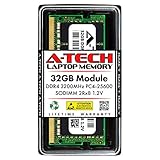
- Single 32GB stick: about $180–$220 upfront, nothing after. Overkill for most homes, but future-proof for creators and power users — and it still leaves a second slot open if your laptop has one.
What's inside
Upgrading a laptop’s memory sounds simple until you hit the checkout page and see two options: one stick, or two. That’s the real decision behind dual channel vs single channel laptop ram — not which is “better” in the abstract, but which fits your machine, your budget, and how you actually use your laptop at home. Get it right and you’ll spend less and see smoother performance in the tasks that matter. Get it wrong and you may leave performance on the table or buy memory your laptop can’t even use. This guide walks through both configurations side by side, with real prices, so you can decide with confidence heading into 2026.
One quick note before we start: you may see the phrase “dual channel” attached to unrelated products, like dual channel TENS units for pain relief (a popular category, typically $23–$35 online). Those have nothing to do with computer memory. Everything below is about RAM only.
As an Amazon Associate we earn from qualifying purchases at no extra cost to you. Product prices and availability are accurate as of the date shown and are subject to change.



Quick Verdict
If your laptop has two memory slots and your budget allows, buy two matched sticks for dual channel. It costs roughly $10–$30 more than a single stick of the same total capacity and delivers noticeably better performance in integrated graphics, video editing, and heavy multitasking. Single channel is the right call if your laptop has only one slot, if you need maximum capacity per dollar (one 32GB stick instead of two 16GB), or if you’re a light user who browses and streams. For most home users buying in 2026, though, a matched pair wins.
Side by Side
| Factor | Dual Channel | Single Channel |
|---|---|---|
| Everyday comfort (browsing, office work) | Smooth; barely distinguishable in light use | Smooth; fine for web and documents |
| Gaming / integrated graphics | Often 15–30% higher frame rates on Intel/AMD iGPUs | Weakest area; noticeable stutter in GPU-bound tasks |
| Video editing & heavy multitasking | Noticeably faster previews and exports | Workable, but slower on large files |
| Price range (16GB total, DDR4 SODIMM) | Roughly $60–$90 for a matched 2x8GB pair | Roughly $25–$60 for one 8GB or 16GB stick |
| Max capacity flexibility | Limited by pairing; two 16GB sticks for 32GB | Easy — a single 32GB SODIMM runs about $180–$220 |
| Upgrade path | Both slots filled; future upgrade means replacing both | One slot filled; one slot free for a drop-in upgrade |
| Installation effort | Two sticks to seat, same 10-minute job | One stick; slightly simpler |
| Power draw | Negligible difference (both DDR4 SODIMMs run at 1.2V) | Negligible difference |
| Resale value | Slightly better; buyers like complete, matched configs | Neutral; capacity matters more than configuration |
| Best for | Gamers, editors, iGPU laptops, multitaskers | Budget buyers, single-slot laptops, light users |
Where Dual Channel Wins
Dual channel means two identical (or at least matched-capacity) memory sticks, each in its own slot. The memory controller can read from both simultaneously, doubling theoretical bandwidth — 25.6 GB/s per channel on DDR4-3200 instead of 12.8 GB/s on a single stick.
In practice, that bandwidth matters most when your laptop’s processor shares memory with its graphics. If your laptop has no dedicated GPU (most budget and midrange laptops don’t), the integrated graphics pull data from the same RAM your programs use. Dual channel can lift integrated-graphics frame rates by 15–30% in many games and makes video playback, light editing, and window management feel snappier. Content creators see it too: scrubbing 1080p or 4K timelines in DaVinci Resolve or Premiere feels noticeably smoother.
Dual channel also costs very little extra. A pair of 8GB DDR4-3200 SODIMMs typically runs $60–$90 total, versus $25–$35 for a single 8GB stick. You’re paying roughly $30 more for double the capacity and double the bandwidth — one of the best value propositions in PC hardware.
Installation is the same basic job either way: power down, unplug, remove the bottom panel (usually a Phillips #0 or #00 screwdriver, sometimes a plastic pry tool), ground yourself, and seat each stick at a 30-degree angle before pressing it flat until the clips click. Plan on 10–15 minutes.
Where Single Channel Laptop Ram Wins
Single channel isn’t a compromise in every case — sometimes it’s the only correct answer.
Your laptop has one slot. Many thin-and-light and budget laptops solder some memory to the board and provide a single SODIMM slot, or provide just one slot at all. If that’s your machine, the debate ends before it starts: you buy one stick, and capacity matters far more than configuration.
You need maximum capacity per dollar. If you run virtual machines, large datasets, or memory-hungry creative suites, a single 32GB module (around $180–$220 for DDR4-3200 SODIMMs) may be cheaper and simpler than hunting for two matched 16GB sticks. Capacity you have beats bandwidth you don’t — if you’re constantly hitting 100% memory use, adding RAM helps far more than doubling bandwidth on too little of it.
You’re on a strict budget. Jumping a basic laptop from 4GB to a single 8GB stick for $25–$30 transforms everyday usability. That upgrade path — cheap, simple, immediately felt — is single channel’s home turf.
You’re keeping a slot free. If you buy one 8GB stick now, you can drop in a second later and flip to dual channel then. Starting single channel isn’t a dead end.
Cost Over 5 Years
Memory is a buy-it-once component. DDR4 SODIMMs carry no subscription, no software fees, and draw the same ~1–3 watts per stick regardless of configuration, so your electricity cost is a rounding error over five years. The real math looks like this:
- Single 8GB DDR4-3200 stick: about $25–$60 upfront, nothing after. Likely outcome: adequate for browsing and office work; may feel tight by year four or five as software grows.
- Matched 16GB pair (2x8GB): about $60–$90 upfront, nothing after. Comfortable for the full five years for most home users, including light gaming and photo editing.
- Single 32GB stick: about $180–$220 upfront, nothing after. Overkill for most homes, but future-proof for creators and power users — and it still leaves a second slot open if your laptop has one.
Per year of use, a $70 dual channel pair costs about $14/year — less than a month of most streaming subscriptions. The main “hidden” cost is labor: if you underbuy now and upgrade later, you’ll open the laptop a second time and possibly sell the old stick at a loss.
Which One for Your Home
Small Apartment / Minimalist Setup
Space isn’t the issue here — noise and longevity are. A thin laptop used for browsing, streaming, and remote work is the classic single-stick candidate, especially if it only has one slot. Start with a single 16GB DDR4-3200 SODIMM (roughly $35–$60): quiet, cool, plenty of headroom, and it keeps one slot free. If your machine has two slots and you game or edit on it, spend the extra $20–$30 on a matched pair instead.
Family with Kids or Pets
Family laptops take abuse: dozens of open browser tabs, video calls, streaming in the background, the occasional juice-box incident. Go dual channel with a matched 2x8GB pair ($60–$90) on any two-slot machine. The bandwidth headroom keeps shared use smooth, and 16GB total absorbs the tab-hoarding that comes with households. Consider a single 16GB stick instead if your laptop has one slot — and keep drinks off the desk either way.
Rental or Temporary Home
If you move often or the laptop is a stopgap, keep it cheap and flexible: one 8GB stick ($25–$35) now, upgrade when you settle in. Frequent moves mean the laptop may get sold or handed down, so minimizing sunk cost makes sense. A single stick is also easier to pull out and reuse in another machine if the laptop dies.
Long-Term Home
If this laptop is your five-year machine, buy for the finish line, not the starting line: a matched 2x16GB dual channel kit ($110–$160) if you create content or game, or a single 32GB module if your laptop has one slot and you run heavy software. Memory prices are the one constant in PC hardware — buy enough now and you’ll never think about it again.
FAQ
Can I mix a new stick with my laptop’s existing RAM?
Often yes, with a caveat. If the existing stick matches your new one in capacity, speed, and voltage, the laptop will run in dual channel. Mismatched capacities usually work but may run in “flex mode,” giving you partial dual channel. Check that both sticks are the same DDR generation (DDR4 with DDR4, DDR5 with DDR5) — mixed generations physically won’t fit.
How do I know if my laptop supports dual channel?
It needs two SODIMM slots. Check the manufacturer’s spec page or a teardown guide for your model, or look at Task Manager’s Performance tab: it lists “Slots used.” Note that some slim laptops solder their RAM to the motherboard with no slots at all — those can’t be upgraded, so verify before buying anything.
How much faster is dual channel really?
It depends on the workload. Browsing, email, and office apps: little to no difference you’d notice. Integrated-graphics gaming: commonly 15–30% higher frame rates. Video editing and memory-bandwidth-heavy tasks: noticeable but workload-dependent. Treat dual channel as free performance when you’re buying new sticks anyway — not as a reason to overspend.
Should I buy DDR4 or DDR5 for my laptop?
Whichever your laptop supports — they’re not interchangeable. Most laptops sold before 2022 and many budget models through 2026 use DDR4 SODIMMs (260-pin, 1.2V, like the TEAMGROUP Elite 8GB module); newer machines use DDR5 (262-pin, 1.1V). Match the generation, speed, and capacity to your existing stick or spec sheet, and buy from brands with solid warranty support — reputable DDR4 SODIMMs carry limited lifetime warranties at these prices.





