Key takeaways
- Genuinely portable: sub-750g options fit alongside a laptop with room to spare.
- One-cable convenience: USB-C Alt Mode delivers video and power together on supported machines.
- Solid IPS image: accurate colors and wide angles make these fine for editing and media.
- Console-friendly: HDMI input means Switch, PlayStation, and Xbox work out of the box.
What's inside
A laptop’s built-in screen is fine until you try to juggle a spreadsheet, a chat window, and a game guide at the same time. That’s where a portable second display earns its keep. Slim USB-C panels now weigh less than a hardcover book, draw power from a single cable, and turn any laptop into a genuine dual-screen workstation you can pack in a sleeve.
This guide looks at the current crop of 14- to 15.6-inch portable monitors aimed at gamers and mobile professionals, focusing on panel quality, connectivity, and how painless they are to actually set up on the road.
As an Amazon Associate we earn from qualifying purchases at no extra cost to you. Product prices and availability are accurate as of the date shown and are subject to change.




🎮 Get More From Your Setup — Free
Prime Gaming gives you free PC games every month, in-game loot, and a free Twitch channel sub — plus fast free shipping on all the gear above. New members get a 30-day free trial.
Watch: Laptop 2nd Display: Review & Buyer’s Guide — Video Review
Design & Build
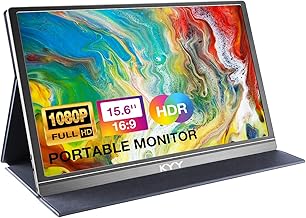
Most of these panels share a similar DNA: a 15.6-inch IPS sheet in an aluminum or magnesium-alloy frame roughly 0.3 inches thick, with a folding cover that doubles as a kickstand. The MNN 15.6″ USB-C HDR panel is a standout for portability at 694 grams, thin enough to slip behind a laptop lid without adding meaningful bulk. The Anyuse and VILVA models take a similar zero-frame approach with integrated kickstands, while the ForHelp panel leans on a magnetic smart cover that props the screen at a couple of viewing angles. Build quality across the category has matured; flex is minimal and the hinges hold their position instead of drooping mid-session.
Performance
For a travel display, image quality is better than the price suggests. These are 1080p IPS panels with wide viewing angles and, on HDR-badged units like the MNN and KYY, punchier highlights and a slightly wider color gamut. They run at 60Hz, so they’re aimed at productivity, indie titles, and console play rather than competitive shooters. The KYY’s built-in speakers and the VILVA’s speaker-plus-cover combo are handy when you don’t want to fish out headphones. The single biggest usability factor is the USB-C connection: if your laptop’s port supports DisplayPort Alt Mode, you get video and power over one cable. If not, you’ll need the bundled HDMI cable plus a separate USB power feed, which the ForHelp and Anyuse panels accommodate.
Pros & Cons
- Genuinely portable: sub-750g options fit alongside a laptop with room to spare.
- One-cable convenience: USB-C Alt Mode delivers video and power together on supported machines.
- Solid IPS image: accurate colors and wide angles make these fine for editing and media.
- Console-friendly: HDMI input means Switch, PlayStation, and Xbox work out of the box.
- 60Hz ceiling: not built for high-refresh competitive gaming.
- Power draw: non-Alt-Mode laptops need a second cable, cluttering the setup.
- Speakers are basic: onboard audio is convenient but thin.
Alternatives to Consider
If you want more than one extra screen, laptop-clamp extenders that mount directly to your lid offer dual or triple panels in a single attachment, though they’re heavier and pricier. Gamers chasing fast motion should look at dedicated 120Hz+ portable monitors instead. And if the display rarely leaves your desk, a standard 24-inch monitor delivers more screen real estate per dollar. But for travel, the MNN and KYY panels hit the sweet spot of size, weight, and value.
Frequently Asked Questions
Will a portable monitor work with just one USB-C cable?
Only if your laptop’s USB-C port supports DisplayPort Alt Mode. Many modern ultrabooks and gaming laptops do. If yours doesn’t, use the HDMI input for video and a USB port or wall charger for power.
Can I use one of these with a game console?
Yes. Panels with HDMI input, including the ForHelp, KYY, and VILVA, work with the Nintendo Switch, PS4/PS5, and Xbox. Just supply power separately since consoles don’t push power over the video cable.
Is 1080p enough for a 15.6-inch screen?
For most work and casual gaming, yes. At normal viewing distance, text stays crisp and media looks clean. If you do color-critical work, prioritize a panel with a wider gamut and HDR support like the MNN or KYY.
Do these need a driver or software?
Standard single-panel USB-C and HDMI monitors are plug-and-play on Windows, macOS, and most phones. Driver-based multi-screen extenders are a different category and do require software.
Verdict
A portable second display is one of the highest-value upgrades a mobile gamer or remote worker can make. For pure portability and image quality, the MNN 15.6″ USB-C HDR panel and the KYY with its speakers and travel cover are the easiest to recommend, while the ForHelp and Anyuse zero-frame models are strong picks if you value a clean look and flexible connectivity. Match the panel to your laptop’s ports and you’ll wonder how you managed on one screen.