Key takeaways
- A huge DPI claim with no sensor model, polling-rate information, or software details.
- Unclear dimensions or weight, especially when the product photos do not show the mouse beside a hand.
- Wireless packaging that does not clearly include the receiver or state battery life.
- “Silent click” or “million-click” claims without warranty information.
- Excessive RGB emphasis while basic specifications such as lift-off distance and connectivity are missing.
- Reviews mentioning disconnects, double-clicking, scroll-wheel failures, or shell creaking that appear repeatedly.
What's inside
Shopping for a gaming mouse can look deceptively simple: choose a comfortable shape, check the DPI number, and pick the model with the most buttons. That approach often leads to paying for specifications you will never use—or buying a mouse whose sensor, weight, or cable does not suit your games.
The most common mistake is treating maximum DPI as a quality score. A 25,000-DPI sensor is not automatically more accurate than a 6,400-DPI sensor, especially when most players use a setting between 800 and 3,200 DPI. Buyers also overlook lift-off distance, tracking consistency, polling rate, weight, and the way the mouse fits their grip. In 2026, even inexpensive models can offer respectable sensor performance, so the goal is to match the sensor and design to your habits rather than chase the biggest number.
As an Amazon Associate we earn from qualifying purchases at no extra cost to you. Product prices and availability are accurate as of the date shown and are subject to change.


Decide These 3 Things First
- Choose your sensitivity style. Low-sensitivity players need more desk space and often prefer a lighter mouse for broad arm movements. High-sensitivity players may value a compact shape and precise small adjustments. A practical starting range is 800 to 1,600 DPI for many first-person shooter players, 1,600 to 3,200 DPI for general gaming, and higher settings for large or high-resolution displays.
- Choose wired or wireless. Wired mice usually cost less and never need charging. Wireless models add convenience and reduce cable drag, but check battery life, charging method, and whether the mouse supports a dedicated 2.4 GHz receiver rather than relying only on Bluetooth.
- Choose your grip and hand size. Palm, claw, and fingertip grips place different demands on the shape. Measure from the tip of your middle finger to the crease at your wrist. Hands under about 7 inches often suit smaller mice; hands around 7 to 8 inches fit many medium designs; hands above 8 inches may need a longer or wider shell.
Sensor Type and Tracking
The sensor is the component that converts movement into cursor motion. Most current gaming mice use optical sensors, which illuminate the surface and track changes in texture. For a buying decision, consistent tracking matters more than the headline DPI maximum.
Look for a sensor that supports adjustable DPI, dependable tracking at your preferred speed, and a low lift-off distance. Lift-off distance is how far you can raise the mouse before the sensor stops reading movement. A setting near 1 to 2 millimeters is generally useful for low-sensitivity players who frequently reposition their mouse. If a manufacturer does not state the lift-off distance, look for software that provides calibration or surface-tuning controls.
Be cautious with very cheap listings that advertise “high precision” without identifying the sensor or providing a clear specification sheet. An adjustable DPI button and RGB lighting do not prove that tracking is reliable. The $9.99 generic wired mouse in this category may be suitable for casual play, office use, or a first experiment, but it deserves more scrutiny than a model with a named sensor and established support.
DPI, Polling Rate, and Motion Performance
DPI, or dots per inch, describes how far the pointer moves for a given physical movement. It is not the same as accuracy. A mouse offering 12,000 or 25,600 DPI gives you a wide adjustment range, but many players will never use the top end.
Polling rate describes how often the mouse reports its position to the computer. A 1,000Hz polling rate reports every 1 millisecond, while 500Hz reports every 2 milliseconds. A 125Hz office mouse reports every 8 milliseconds. For gaming, 500Hz is workable, and 1,000Hz is a sensible target for most buyers. Rates above 1,000Hz can increase processor activity and battery drain, so they are not automatically better.
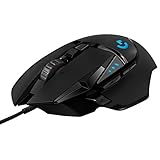
Also check for angle snapping, acceleration, and smoothing controls. Competitive players often prefer these features disabled because they can alter the relationship between hand movement and cursor movement. The Logitech G305 Lightspeed, for example, is known for pairing a wireless connection with a sensor specification that is more than sufficient for mainstream gaming. The Logitech G502 Hero Wired offers a much higher advertised DPI ceiling, but that extra range should be viewed as flexibility—not proof of superior results at ordinary settings.
Size and Weight
Size affects control as much as the sensor does. A mouse that is too short can force your fingers into a cramped claw position, while one that is too tall may make fingertip control uncomfortable. As a rough guide, look for a length of about 4.5 to 4.8 inches for small-to-medium hands, 4.8 to 5.1 inches for medium hands, and more than 5.1 inches for larger hands. Widths around 2.4 to 2.8 inches cover many conventional shapes.
Weight is another decisive number. Lightweight mice commonly fall below 75 grams, balanced general-purpose models often weigh 75 to 100 grams, and heavier designs can exceed 100 grams. The G305 uses a replaceable AA battery and is generally heavier than ultralight wireless models, while the G502 Hero includes additional buttons and a more substantial shell. Neither is inherently better: heavier mice can feel planted, while lighter mice require less effort during long, low-sensitivity movements.
Do not compare weight without considering the cable, battery, and removable weights. A wired mouse listed at 90 grams may feel different from a wireless mouse listed at 90 grams because the wireless model has no cable pulling across the desk.
Material and Surface Finish
Most gaming mice use injection-molded ABS plastic. That is normal and can be durable when the shell is well supported. Look for a surface that provides enough grip without feeling sticky. Matte plastic tends to hide fingerprints better than glossy plastic, while rubberized side panels can improve control but may wear or become tacky over time.
Texture matters most on the thumb and outer finger areas. Smooth sides are easy to clean but may require more grip pressure. Deep texturing can help during fast movements but may collect dust. If your hands sweat during long sessions, prioritize ventilation in your setup and a finish that can be wiped with a lightly damp cloth. Avoid soaking the mouse or using harsh solvents.
RGB lighting has little to do with performance. It can be useful as a visual accent, but it should not justify paying an extra $20 to $50 unless you also want the additional buttons, shape, or software controls.
Construction and Switches
Inspect the shell for flex, uneven seams, and a rattling scroll wheel. A sturdy mouse should not creak when you apply ordinary hand pressure. The main buttons should feel consistent from left to right, and the scroll wheel should move in defined steps without excessive side-to-side play.
Switch specifications are often expressed as a rated number of clicks, such as 10 million, 20 million, or 50 million. Treat those figures as durability ratings under test conditions, not guarantees for every unit. Switch feel is equally important: some are crisp and loud, while others are softer and quieter.
Extra buttons are useful for push-to-talk, reload, media controls, or productivity shortcuts. Seven programmable buttons, as advertised on some budget models, can be helpful, but poorly placed buttons are more annoying than useful. Make sure the thumb buttons are reachable without shifting your palm.
Comfort and Performance
Match the shape to your grip. Palm users typically prefer a taller rear hump and full-length support. Claw users often want a raised back with room for the fingertips to arch. Fingertip users usually prefer a shorter, lower-profile design that can be moved without dragging the palm.
For long sessions, consider cable flexibility, button force, and surface glide. A braided cable is not automatically better, but a flexible cable that bends easily is less distracting. PTFE feet can reduce friction; check whether replacement feet are available if you expect several years of use. A mouse pad at least 12 by 10 inches is workable for moderate sensitivity, while low-sensitivity play may benefit from a 16-by-18-inch or larger pad.
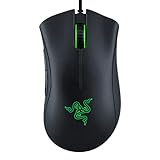
Ergonomics should not be confused with a right-handed shape. The Razer DeathAdder Essential is an example of a right-handed ergonomic design, while a symmetrical mouse may suit either hand or users who frequently switch grip positions. Test how your wrist, thumb, and ring finger rest after 20 to 30 minutes—not just how the mouse feels for the first minute.
Price Tiers
At roughly $10 to $25, budget mice can provide adjustable DPI, basic optical tracking, and programmable buttons. Expect simpler software, more basic cables, and greater variation in shell quality. The $20.98 DeathAdder Essential sits near the upper end of this entry range and may appeal to buyers who want a recognizable ergonomic shape without wireless connectivity.
In the $30 to $70 range, you can usually find stronger sensors, better feet, improved switches, and dependable 2.4 GHz wireless. The Logitech G305 at $29.99 is close to the lower edge of this tier, while the $37.99 wired Logitech G502 Hero adds a larger shape and more controls.
Premium mice commonly cost $80 to $160 or more. They may offer lower weights, advanced wireless systems, higher polling rates, better cables, and more refined software. Those upgrades are worthwhile mainly if you play competitively, know your preferred shape, or want a specific feature—not simply because the DPI number is larger.
Warranty, Delivery, and Assembly
A gaming mouse requires no assembly beyond plugging in a receiver, cable, or battery. Still, delivery details matter. Check whether the package includes the wireless receiver, extension adapter, charging cable, replacement feet, and any required battery. A missing receiver can make a wireless mouse unusable until a compatible replacement is found.
Look for at least a one-year limited warranty, and save the receipt and serial number. Confirm who handles returns and whether opened electronics qualify for the retailer’s return window. For wireless models, inspect the battery compartment and test the connection immediately. For wired models, check for intermittent disconnects and cable damage during the first few days.
Spec Checklist
| Spec | Budget | Mid | Premium |
|---|---|---|---|
| Typical price | $10–$30 | $30–$80 | $80–$160+ |
| Sensor | Named optical sensor preferred | Consistent optical sensor with calibration | High-end optical sensor with advanced controls |
| DPI range | 800–8,000 | 800–20,000 | 800–30,000+ |
| Polling rate | 125–1,000Hz | 500–1,000Hz | 1,000–8,000Hz, depending on model |
| Weight | 80–120g | 65–105g | 45–90g |
| Connectivity | Wired or Bluetooth | Wired or 2.4GHz wireless | 2.4GHz wireless, wired backup, or both |
Red Flags
- A huge DPI claim with no sensor model, polling-rate information, or software details.
- Unclear dimensions or weight, especially when the product photos do not show the mouse beside a hand.
- Wireless packaging that does not clearly include the receiver or state battery life.
- “Silent click” or “million-click” claims without warranty information.
- Excessive RGB emphasis while basic specifications such as lift-off distance and connectivity are missing.
- Reviews mentioning disconnects, double-clicking, scroll-wheel failures, or shell creaking that appear repeatedly.
FAQ
What DPI should I use for gaming?
Start between 800 and 1,600 DPI for many shooter games, then adjust in small steps. There is no universal best setting. Your in-game sensitivity, desk space, mouse shape, and preferred arm movement matter more than the maximum DPI printed on the box.
Is a higher polling rate always better?
No. A 1,000Hz polling rate is a practical target for most players. Rates above 1,000Hz can make cursor updates more frequent, but they may increase power use and computer workload. Choose them for a specific need rather than as a substitute for a good sensor or comfortable shape.
Is wired or wireless better for a gaming mouse?
Both can perform well. Wired is simpler and usually less expensive. Wireless is more convenient and eliminates cable drag, but it adds charging or battery management. For gaming, a dedicated 2.4 GHz connection is generally a better priority than Bluetooth alone.
Do I need an expensive gaming mouse?
No. A $20 to $40 mouse can be entirely adequate if its shape fits your hand and its sensor tracks consistently. Spend more for a preferred ergonomic design, lower weight, better wireless performance, extra controls, or stronger long-term support—not merely for a higher DPI number.