Key takeaways
- Headsets: Wireless audio is where convenience wins most. You stand up, grab a drink, and stay connected. The latency of good 2.4GHz headsets is inaudible for gaming, though pure audiophiles still favor wired for zero compression.
- Keyboards: Wireless keyboards are excellent for a clean desk, but the benefit is cosmetic rather than performance. A keyboard sits still, so cable drag is a non-issue. Choose wireless here for tidiness, not for any competitive edge.
For years the wired-versus-wireless debate had an easy answer: if you cared about winning, you plugged in. That answer no longer holds. In 2026, the gap in latency between a good wireless gaming mouse and a wired one is measured in fractions of a millisecond, far below what any human reflex can register. The real decision now comes down to how you play, how you manage batteries, and how much cable clutter you are willing to tolerate on your desk.
This guide breaks down where wired still wins, where wireless has genuinely caught up, and how to pick gear that fits your setup instead of following marketing hype. By the end you will know which connection type matters for your mouse, headset, and keyboard, and which trade-offs are worth paying for. Below are the wireless mice we keep coming back to for a reference point.
Our top picks
 Logitech G305 Lightspeed Wireless Gaming Mouse
- Formats: DVD-ROM
- Product Group: Personal Computer
- Binding: Personal Computers


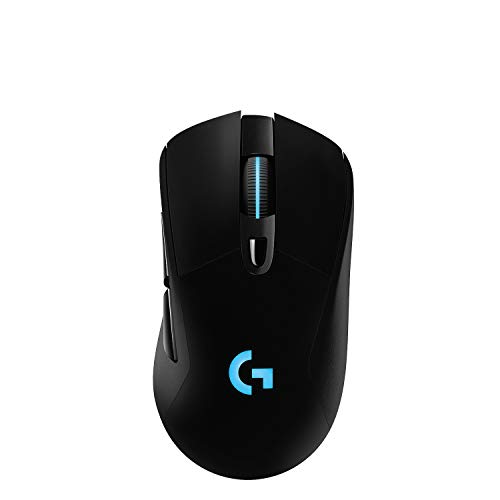 Logitech G703 Lightspeed Wireless Gaming Mouse
- Formats: DVD-ROM
- Product Group: Personal Computer
- Binding: Personal Computers

 Logitech G502 Lightspeed Wireless Gaming Mouse
- Product Group: Personal Computer
- Binding: Personal Computers


As an Amazon Associate we earn from qualifying purchases at no extra cost to you. Ratings are shown as listed on Amazon.
⚡ Save on Your Next PC — Amazon Prime
Prime members get fast free shipping on the systems above, plus early access to Prime Day & Black Friday PC deals. New members get a 30-day free trial.
Watch: Wired vs Wireless Gaming Gear: Which Is Better? — Video Review
How Modern Wireless Latency Actually Compares
The fear that wireless adds noticeable lag is a holdover from early Bluetooth peripherals. Today’s dedicated 2.4GHz wireless like Logitech’s Lightspeed or Razer’s HyperSpeed uses a low-latency USB dongle, not Bluetooth, and independent testing routinely shows click-to-photon delays within a millisecond of a wired connection. A mouse like the Logitech G305 Lightspeed Wireless Gaming Mouse or the Razer Viper V3 HyperSpeed feels indistinguishable from a cable in a blind test. Bluetooth is the exception: keep it for travel and productivity, not for competitive matches, because it prioritizes power savings over responsiveness.
Battery Life vs. Never Thinking About Power
The honest downside of wireless is that it can die mid-session. The upside is that modern battery life makes that rare. Lightweight competitive mice often run 70 to 90 hours per charge, and many support charging over a normal USB-C cable so you can keep playing while topping up. A wired mouse never needs a thought about power, which is why some players still prefer it for marathon sessions or shared machines. If you go wireless, build a simple habit: charge overnight once a week, or pick a mouse with a charging dock if you forget easily.
Weight, Cable Drag, and Feel
Cable drag is the quiet reason many players switch to wireless. Even a soft paracord cable tugs slightly as you flick, and that inconsistency is exactly what you do not want when aiming. Cutting the cable removes that variable entirely. Wireless designs have also gotten lighter, some ultralight models like the Razer Viper V3 HyperSpeed sit around 82 grams with no cable at all. If you prefer heft and a planted feel, a mouse like the Logitech G502 Lightspeed offers adjustable weight while keeping the wireless freedom.
Headsets and Keyboards: A Different Calculation
- Headsets: Wireless audio is where convenience wins most. You stand up, grab a drink, and stay connected. The latency of good 2.4GHz headsets is inaudible for gaming, though pure audiophiles still favor wired for zero compression.
- Keyboards: Wireless keyboards are excellent for a clean desk, but the benefit is cosmetic rather than performance. A keyboard sits still, so cable drag is a non-issue. Choose wireless here for tidiness, not for any competitive edge.
Matching the Connection to How You Play
Competitive FPS players benefit most from wireless mice because flick consistency matters and the latency penalty is gone. Casual and single-player gamers can go either way and might prefer the set-and-forget nature of wired. If your setup is a laptop that moves between rooms, wireless keeps the desk uncluttered and the number of dongles low. Think about your primary use case first, then let battery habits and budget settle the rest.
Tips
- Always use the included 2.4GHz dongle for gaming and save Bluetooth for phone or tablet pairing.
- Keep the wireless receiver close to your mouse, an extension dock near the mousepad beats a dongle hidden behind the tower.
- Charge wireless peripherals on a fixed schedule so you never get caught at a low battery during a match.
- Buy a spare charging cable and leave it permanently at your desk so topping up never interrupts play.
Frequently Asked Questions
Is wireless gaming gear still slower than wired in 2026?
Not in any way you can feel. Dedicated 2.4GHz wireless sits within a millisecond of wired, which is far below human reaction time. Only Bluetooth adds meaningful lag, and no one should use it for competitive play.
Do professional esports players use wireless mice?
Many do. The move to wireless among top FPS players accelerated once latency was solved, because removing cable drag improves aim consistency. Wired holdouts exist mostly out of preference and battery paranoia, not measurable advantage.
How long do gaming mouse batteries last?
Lightweight competitive models typically run 70 to 90 hours on 2.4GHz, and heavier feature-rich mice vary. RGB lighting and higher polling rates drain faster, so dimming lights extends life considerably.
Will a wireless mouse work if the battery dies mid-game?
Most modern wireless mice charge over USB-C and remain fully usable while plugged in, so a dead battery just turns it into a temporary wired mouse until it tops back up.
Conclusion
The wired-versus-wireless question has quietly flipped. For mice, wireless now matches wired performance while removing cable drag, making it the better default for most players who can keep a battery charged. Wired remains a fine, worry-free choice for casual play and shared machines. For keyboards and headsets, pick wireless for convenience and a clean desk rather than any competitive gain. Choose based on your habits, not on outdated fears about lag, and you will not go wrong either way.