Key takeaways
- Capacity first, speed second: At this budget, 1TB should be your target. A 1TB Gen 4 drive will feel identical to a 2TB flagship in-game, and running out of space is a far bigger daily annoyance than a 200ms difference in load screens.
- PCIe 4.0 is the sweet spot: Gen 4 drives hit 5,000–7,000 MB/s, which is well past the point of diminishing returns for game loading. Gen 5 drives cost significantly more, run hotter, and deliver almost no real-world gaming benefit today.
- Check for DRAM and controller class: DRAM-less drives using Host Memory Buffer are fine for game libraries and general use, but drives with onboard DRAM hold up better under sustained writes and heavy multitasking. Know which you’re buying.
- Confirm the form factor and slot: Nearly every drive here is M.2 2280, but verify your motherboard has a free M.2 slot wired for PCIe 4.0 (not just PCIe 3.0 or SATA), and check PS5 users need a heatsink.
- Look at endurance and warranty: TBW ratings and a five-year warranty signal a manufacturer’s confidence. For a boot and game drive, anything above 600 TBW per terabyte is comfortable for years of use.
What's inside
Storage has quietly become the most confusing part of a gaming PC build. Drive listings shout about 14,700 MB/s sequential reads and PCIe 5.0 support, but game load times barely budge between a mid-range Gen 4 drive and a flagship, while prices swing by hundreds of dollars for capacities that fill up after four or five modern installs. Under $100, the calculus gets even tighter: you’re choosing between more space at moderate speed, or less space at flagship speed, and picking wrong means uninstalling games every few weeks.
This guide focuses on drives that genuinely land under $100 at typical 2026 street pricing, with an emphasis on the 1TB and 500GB tiers where the value sits. We cover what actually matters for gaming performance (spoiler: it’s rarely sequential throughput), which drives deliver the best cost-per-gigabyte, and where it’s worth stretching the budget if you can. We also flag a couple of higher-capacity and PCIe 5.0 options for context, so you can see exactly what your $100 is — and isn’t — buying you.
As an Amazon Associate we earn from qualifying purchases at no extra cost to you. Product prices and availability are accurate as of the date shown and are subject to change.


⚡ Save on Your Next PC — Amazon Prime
Prime members get fast free shipping on the systems above, plus early access to Prime Day & Black Friday PC deals. New members get a 30-day free trial.
Watch: Best SSD Under $100 — Video Review
How to Choose SSD Under $100
- Capacity first, speed second: At this budget, 1TB should be your target. A 1TB Gen 4 drive will feel identical to a 2TB flagship in-game, and running out of space is a far bigger daily annoyance than a 200ms difference in load screens.
- PCIe 4.0 is the sweet spot: Gen 4 drives hit 5,000–7,000 MB/s, which is well past the point of diminishing returns for game loading. Gen 5 drives cost significantly more, run hotter, and deliver almost no real-world gaming benefit today.
- Check for DRAM and controller class: DRAM-less drives using Host Memory Buffer are fine for game libraries and general use, but drives with onboard DRAM hold up better under sustained writes and heavy multitasking. Know which you’re buying.
- Confirm the form factor and slot: Nearly every drive here is M.2 2280, but verify your motherboard has a free M.2 slot wired for PCIe 4.0 (not just PCIe 3.0 or SATA), and check PS5 users need a heatsink.
- Look at endurance and warranty: TBW ratings and a five-year warranty signal a manufacturer’s confidence. For a boot and game drive, anything above 600 TBW per terabyte is comfortable for years of use.
The Best Picks Reviewed
Kingston NV3 1TB
The NV3 is the clearest value play under $100 — a full terabyte of PCIe 4.0 storage hitting up to 6,000 MB/s, which is more than enough headroom for DirectStorage titles and fast level loading. It’s DRAM-less, so sustained large file transfers slow down toward the end, but as a dedicated game library drive it’s very hard to beat on cost per gigabyte.
SanDisk Optimus 5100 500GB
At 500GB with up to 6,600 MB/s reads, the Optimus 5100 is the pick for anyone adding a fast secondary drive or upgrading a compact system where a handful of active games live alongside the OS. The capacity is limiting for a primary drive in 2026, but the read speeds and build quality punch well above the price.
Samsung 990 PRO 1TB
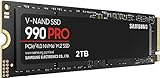
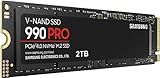
Samsung’s 990 PRO remains the benchmark for Gen 4 performance, with up to 7,450 MB/s reads, genuine onboard DRAM, and excellent random 4K performance that shows up in shader compilation and asset streaming. It typically sits at or slightly above the $100 line depending on sales, making it the stretch pick worth watching for a discount.
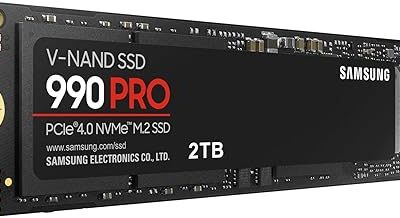
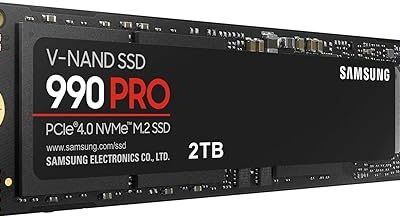
Samsung 990 PRO 2TB
The 2TB 990 PRO is the drive most enthusiasts eventually land on, pairing flagship Gen 4 speeds with enough room for a serious library without constant uninstalls. It sits comfortably above a $100 budget, but it’s the natural upgrade path once you’re ready to spend more.
Samsung 9100 PRO 1TB
The 9100 PRO brings PCIe 5.0 and up to 14,700 MB/s sequential reads, which is genuinely impressive on paper and useful for large-scale content work. For gaming specifically, however, the real-world gains over a good Gen 4 drive are minimal, and the price sits well outside this guide’s budget.
Frequently Asked Questions
Will a faster SSD actually improve my frame rate?
No. Sequential read speed affects load times, texture streaming smoothness, and shader compilation, but sustained frame rate is determined by your GPU and CPU. A Gen 4 drive removes storage as a bottleneck entirely for gaming.
Is 1TB enough for a gaming PC in 2026?
For most people, yes — though it’s tight. Windows plus a few AAA titles at 100–150GB each will fill a terabyte quickly, so plan on either rotating your library or adding a second drive later.
Do I need a heatsink for these drives?
For desktop use, most motherboard M.2 slots include a heatsink that’s more than adequate for Gen 4 drives. PlayStation 5 installations do require a heatsink, and PCIe 5.0 drives generally need active or substantial passive cooling.
Is DRAM-less a dealbreaker?
Not for gaming. DRAM-less drives with Host Memory Buffer perform nearly identically to DRAM-equipped drives when loading games. The difference appears during large sustained writes, like moving hundreds of gigabytes at once.
Final Thoughts
For most gamers shopping under $100, the Kingston NV3 1TB is the smart buy — it delivers the capacity you actually need at Gen 4 speeds that are functionally indistinguishable from flagship drives during gameplay. If you only need a fast secondary drive or you’re working in a smaller system, the SanDisk Optimus 5100 500GB offers excellent read performance for less. And if you can catch the Samsung 990 PRO 1TB on sale near the $100 mark, it’s the best-engineered drive in this bracket and worth the wait.