Key takeaways
- Multitasking headroom: 32GB comfortably runs a game plus browser, Discord, and streaming software; 16GB gets tight with the same load.
- Modern AAA games: some 2026 titles push past 16GB usage with high textures, causing stutter on 16GB systems.
- Streaming and creation: 32GB is strongly recommended if you stream, record, or edit alongside gaming.
- Future-proofing: 32GB will stay comfortable for years longer as memory demands keep rising.
- Cost: the price gap between quality 16GB and 32GB DDR5 kits is now modest.
- Diminishing returns: beyond 32GB, gaming sees little benefit, so there is rarely a reason to buy 64GB just to play.
For years, 16GB of RAM was the undisputed sweet spot for gaming, but the landscape has shifted. Games are bigger, background apps like Discord and browsers eat more memory, and streaming or modding pushes usage higher still. So in 2026, the real question is whether 16GB is still enough or whether it is finally time to step up to 32GB. The answer depends on exactly how you use your PC.
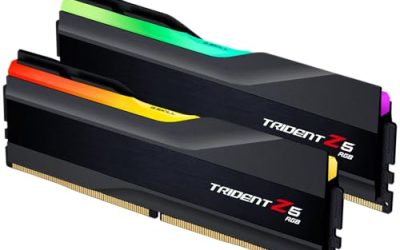
This comparison gives you a clear, practical breakdown of 32GB versus 16GB for gaming: how much modern games actually use, when 16GB starts to hold you back, and whether the extra capacity is worth the cost. Whether you are choosing a DDR4 kit like the CORSAIR Vengeance LPX 32GB or a fast DDR5 set such as the Silicon Power Value Gaming DDR5 32GB, this guide helps you buy the right amount of memory the first time.
Our top picks
 CORSAIR Vengeance LPX DDR4 RAM 32GB
- Product Group: Personal Computer
- Binding: Personal Computers


As an Amazon Associate we earn from qualifying purchases at no extra cost to you. Ratings are shown as listed on Amazon.
⚡ Save on Your Next PC — Amazon Prime
Prime members get fast free shipping on the systems above, plus early access to Prime Day & Black Friday PC deals. New members get a 30-day free trial.
Watch: 32GB vs 16GB RAM for Gaming — Video Review
Quick Verdict
For a new gaming PC in 2026, 32GB is now the smart default. While 16GB still runs most games fine on its own, the moment you add a browser, Discord, a game launcher, and background apps, 16GB gets tight and can cause stutter. 32GB gives comfortable headroom for modern titles, multitasking, streaming, and future games, and DDR5 kits are affordable enough that the small premium is easily worth it. Choose 16GB only on the tightest budget or for a dedicated esports machine.
Key Differences
- Multitasking headroom: 32GB comfortably runs a game plus browser, Discord, and streaming software; 16GB gets tight with the same load.
- Modern AAA games: some 2026 titles push past 16GB usage with high textures, causing stutter on 16GB systems.
- Streaming and creation: 32GB is strongly recommended if you stream, record, or edit alongside gaming.
- Future-proofing: 32GB will stay comfortable for years longer as memory demands keep rising.
- Cost: the price gap between quality 16GB and 32GB DDR5 kits is now modest.
- Diminishing returns: beyond 32GB, gaming sees little benefit, so there is rarely a reason to buy 64GB just to play.
16GB of RAM
16GB remains genuinely playable and is still the minimum for gaming. On its own, running a single game with nothing else open, 16GB handles the majority of titles without issue, and for competitive esports games with modest memory needs it is perfectly adequate. It is also the budget-friendly choice, letting you put more money toward the GPU that matters most for frame rate.
The problem is real-world usage. Few people game with everything else closed. Add a browser with a dozen tabs, Discord, Steam, and a music app, and 16GB fills up fast, forcing Windows to page memory to disk and producing the exact frame-time stutter that ruins immersion. If you notice hitching with apps open in the background, 16GB is your bottleneck.
32GB of RAM
32GB is the new comfortable standard for gaming builds. It absorbs modern AAA games that flirt with the 16GB ceiling, and it leaves generous room for all the background apps, overlays, and browser tabs people actually keep open. A quality kit like the CORSAIR Vengeance LPX 32GB (DDR4) or a Silicon Power DDR5 32GB set delivers that headroom without breaking the bank.
It is also the clear pick if you do anything beyond gaming: streaming, video capture, content creation, or heavy multitasking all benefit immediately from the extra capacity. And because memory demands only ever grow, 32GB extends the useful life of your build by years, making it the more future-proof, less regret-prone choice for most buyers.
Which Should You Buy?
- Choose 32GB for any new gaming build where you want comfortable headroom and longevity.
- Choose 32GB if you stream, record, edit, or keep many apps open while gaming.
- Choose 16GB only on the tightest budget, ideally to redirect funds to a better GPU.
- Choose 16GB for a dedicated esports PC that runs lightweight competitive titles and little else.
- Whichever you pick, buy a matched dual-channel kit (2 sticks) and enable XMP/EXPO to hit rated speed.
Frequently Asked Questions
Is 16GB still enough for gaming in 2026?
For running games alone, largely yes. But with typical background apps open, 16GB gets tight and some newer titles exceed it, causing stutter. For a smooth experience with real-world multitasking, 32GB is the safer bet.
Will 32GB give me more FPS than 16GB?
Not directly if 16GB is not your bottleneck; in a game that fits within 16GB, adding more RAM does not raise average frame rate. The benefit of 32GB is eliminating the stutter and slowdowns that occur when you run out of memory.
Should I buy one 32GB stick or two 16GB sticks?
Two matched 16GB sticks, so you run in dual-channel mode, which significantly improves memory bandwidth and gaming performance versus a single stick. Always buy RAM as a matched kit designed to run together.
Is 64GB worth it for gaming?
Rarely for gaming alone, as games do not benefit much beyond 32GB. 64GB makes sense only if you do heavy content creation, run virtual machines, or use memory-intensive professional apps alongside your games.
Final Verdict
In 2026, 32GB has become the sensible default for a gaming PC, offering the headroom that real-world usage, background apps, and newer games demand, plus years of future-proofing, all for a modest price premium. Stick with 16GB only on a strict budget or for a lean esports machine. For everyone else, a good 32GB dual-channel kit is the memory upgrade you will not regret.