
Key takeaways
- Unclear dimensions: A screen-size claim without platform width and depth makes fit difficult to judge.
- Huge fan-count claims with no controls: Nine small fans may be noisy and less useful than one well-positioned, speed-adjustable fan.
- No rubber grips: A raised laptop can slide forward or vibrate against a hard plastic surface.
- Blocked ports: Review product photos for USB, charging, HDMI, and headphone access on your laptop.
- Overstated temperature promises: Avoid guarantees of massive temperature drops without test conditions, laptop details, or workload information.
- Very thin hinges: Excessive flex, loose height supports, or a narrow front lip suggest poor stability.
- No warranty or return details: This is especially concerning for a fan-based product with moving parts.
What's inside
Buying a laptop cooling pad can seem simple: choose the one with the most fans, the brightest RGB lighting, or the lowest price. Those shortcuts often lead to a bulky stand that blocks ports, makes more noise than expected, or barely changes how the laptop feels in use. The key is matching the cooler to your laptop’s size, airflow design, desk setup, and workload.
When deciding what to look for in laptop cooling, remember that a cooling pad is usually better at improving airflow underneath the computer than dramatically lowering internal temperatures. It can help a laptop maintain performance during gaming, video editing, or long work sessions, but it cannot compensate for clogged vents, dried thermal paste, or an undersized power adapter. The best choice in 2026 is the one that combines a stable fit, sensible airflow, comfortable positioning, and useful features rather than the highest fan count.
As an Amazon Associate we earn from qualifying purchases at no extra cost to you. Product prices and availability are accurate as of the date shown and are subject to change.



Decide These 3 Things First
- Measure the laptop. Check the screen-size category, but also measure the actual width and depth. A 15.6-inch laptop may have a deep gaming chassis that needs more room than a slim office model.
- Identify the main problem. Do you need better airflow for gaming, a more comfortable typing angle, or a simple stand to keep the laptop off a soft surface? Your answer determines whether fans, height adjustment, or portability matter most.
- Set a realistic budget. Basic pads typically cost $15 to $30, better-adjustable models run about $30 to $60, and premium metal or feature-heavy options can cost $60 to $100 or more. Spending more does not guarantee better cooling.
Size and Laptop Fit
Start with compatibility. A pad rated for 12- to 17-inch laptops may technically support a large computer, but the usable cooling area and front retaining lip still need to match the chassis. Measure the laptop’s width and depth in inches, then compare those numbers with the pad’s platform dimensions.
For a 13- or 14-inch laptop, a platform around 12 to 14 inches wide and 9 to 11 inches deep is usually sufficient. A 15.6-inch laptop often needs approximately 14 to 16 inches of width and 10 to 12 inches of depth. Larger gaming systems may require 16 to 18 inches of width and at least 12 inches of depth. Leave about 1 inch of clearance around the laptop when possible so the computer is not perched on an edge.
Check the location of the intake vents, too. A fan placed under a solid section of the laptop base will do less than one aligned with the vents. A full-size pad can still be useful as a ventilated platform, but do not assume every fan lines up perfectly with every laptop.
Material and Surface Design
Plastic is common in affordable cooling pads because it keeps weight and price down. Look for thick plastic that does not flex noticeably when you press the center. A metal mesh surface can improve ventilation and resist heat buildup, while an aluminum body may feel more rigid and premium. Metal can also add weight and transmit fan vibration, so construction quality matters more than the material name alone.
The surface should provide grip without scratching the laptop. Rubber strips or silicone pads at the top and bottom edges help prevent sliding, especially when the stand is raised. A front retaining lip should be large enough to stop the laptop from moving but not so tall that it presses against the wrists. For heavier gaming laptops, look for a stated load capacity of at least 10 pounds; 15 pounds or more provides a safer margin for large machines.
A mesh or perforated surface is preferable to a fully solid platform when the laptop’s bottom intake vents need broad airflow. However, holes that are too large can create an uneven typing surface and may catch cables or collect dust.
Construction, Stability, and Adjustability
Cooling pads often double as laptop stands, so stability is as important as fan output. Examine the hinge points, height supports, and front stop. A stand with five or more height positions gives useful flexibility, while premium ergonomic models may offer six to eight positions. The lowest setting should keep the laptop reasonably flat; the highest should not feel unstable when you type.
For everyday typing, a rise of about 2 to 4 inches at the back is generally comfortable. A greater lift can improve posture when paired with an external keyboard, but it may be awkward if you type directly on the laptop. If the pad will move between rooms, aim for a weight under 3 pounds. A stationary metal stand can weigh 3 to 5 pounds and feel more secure.
Look for a wide base and feet with rubber grips. A narrow base may wobble when you use the trackpad. Also check whether the cooling pad folds flat. Folded thickness of roughly 2 inches or less is easier to store in a backpack, though extra hinges and folding parts can introduce more points of wear.
Comfort and Cooling Performance
Fan count is not a reliable performance rating. One large fan can move air more effectively and quietly than several tiny fans, depending on the design. Instead of focusing only on the number of fans, look for adjustable fan speed, broad vent coverage, and a surface that does not block the laptop’s intake.
For general office work, a cooling pad with one to three fans and a claimed noise level around 30 dB to 40 dB may be adequate. Gaming and creative work may justify four or more fans, but expect a louder setting. A practical target is under 45 dB for routine use, with the understanding that manufacturer noise figures are not always measured in identical conditions.
Most USB cooling pads draw about 1 to 5 watts. They usually connect through USB-A and may include a pass-through port so you do not permanently lose a laptop port. A two-port design is useful for a mouse or keyboard, but do not expect it to replace a powered USB hub. Avoid models that require an unusual power supply unless you specifically need higher airflow.
Lighting is optional. RGB effects can look appealing in a gaming setup, but they do not improve cooling. Prioritize speed control, low vibration, and a comfortable angle before paying extra for lighting.
Price Tiers: What You Actually Get
Budget: $15 to $30. Expect a plastic body, one to five fans, basic height adjustment, and USB power. The Havit HV-F2056, listed at $27.99, represents this straightforward category for larger laptops. The Kootek five-fan pad, listed at $29.99, adds multiple fans and adjustable positioning at a similar price. Budget models can be effective for lifting a laptop off a desk, but they may have fixed fan speeds, shorter cables, or more noticeable vibration.
Midrange: $30 to $60. This tier generally offers stronger hinges, better grip, more height positions, speed controls, and improved cable management. It is often the best value for a gaming laptop used several hours a week. Pay for a sturdier platform and better controls rather than decorative features alone.
Premium: $60 to $100 or more. Premium models may use aluminum, larger fans, quieter motors, powered hubs, or more substantial stands. They make the most sense for large, heavy laptops or a fixed desk setup. A higher price still does not guarantee a dramatic temperature reduction, so verify the return policy and warranty.
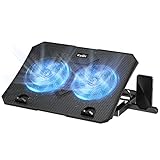
The KeiBn S039, listed at $16.98, is an example of a low-cost adjustable design with two fans and two USB ports. The ChillCore A21, listed at $34.98, targets larger gaming laptops with nine fans, RGB lighting, and eight height settings. Treat these feature lists as starting points: fit, noise, and stability determine whether the features are useful in practice.
Warranty and Long-Term Reliability
Fans are moving parts, so warranty coverage matters. Look for at least a one-year limited warranty, clear replacement terms, and a seller that provides customer support. A two-year warranty is preferable for a more expensive metal or gaming model.
Read the exclusions. Some warranties cover the motor but not cosmetic damage, USB cables, or accidental spills. Keep the receipt and note the return window, especially when buying online. A 30-day return period gives you time to test fit, noise, port access, and stability at your actual desk.
Maintenance also affects longevity. Choose a design that allows dust to be brushed or blown away without disassembly. Clean the laptop’s intake vents separately; a cooling pad cannot make up for restricted internal airflow.
Delivery and Assembly
Most laptop cooling pads arrive ready to use, requiring only the installation of a detachable support bar or the connection of a USB cable. Assembly should take less than 10 minutes and should not require tools. If a product needs screws, check that the instructions include all hardware and that the frame does not wobble after assembly.
Before ordering, check the packed dimensions and shipping weight if you live in a small space or plan to travel. A pad measuring about 16 by 12 inches may be too large for a narrow desk even if it fits the laptop. Confirm that the included USB cable is long enough—roughly 24 to 36 inches is more convenient for a rear or side port.
Spec Checklist
| Spec | Budget | Mid | Premium |
|---|---|---|---|
| Typical price | $15–$30 | $30–$60 | $60–$100+ |
| Supported laptop size | 12–17 inches | 13–17 inches | 15–19 inches |
| Platform width | 12–16 inches | 14–17 inches | 16–19 inches |
| Fan setup | 1–5 fans | 1–6 fans | 1–9 or more fans |
| Height positions | 1–5 | 4–7 | 5–8 |
| Weight | 1–2.5 pounds | 2–4 pounds | 3–6 pounds |
| Power draw | About 1–3 watts | About 2–5 watts | About 3–10 watts |
| Useful extras | USB pass-through | Speed control, stronger grip | Metal frame, hub, advanced controls |
Red Flags
- Unclear dimensions: A screen-size claim without platform width and depth makes fit difficult to judge.
- Huge fan-count claims with no controls: Nine small fans may be noisy and less useful than one well-positioned, speed-adjustable fan.
- No rubber grips: A raised laptop can slide forward or vibrate against a hard plastic surface.
- Blocked ports: Review product photos for USB, charging, HDMI, and headphone access on your laptop.
- Overstated temperature promises: Avoid guarantees of massive temperature drops without test conditions, laptop details, or workload information.
- Very thin hinges: Excessive flex, loose height supports, or a narrow front lip suggest poor stability.
- No warranty or return details: This is especially concerning for a fan-based product with moving parts.
FAQ
Does every laptop need a cooling pad?
No. A cooling pad is most useful when the laptop’s intake vents sit close to a desk, when the computer gets hot during sustained workloads, or when you need a more ergonomic angle. A clean, hard surface may be enough for a lightly used office laptop.
Are more fans always better?
No. Fan placement, airflow coverage, speed control, and noise are more important than the raw count. Choose a pad that lines up with the laptop’s intake vents and remains comfortable to use.
Can a cooling pad damage a laptop?
A standard USB cooling pad should not damage a laptop when used correctly. Use the supplied cable, keep the pad on a hard level surface, and avoid blocking the laptop’s exhaust vents. Stop using it if you notice unusual heat, buzzing, or a burning smell.
What is the best cooling pad size for a 15.6-inch laptop?
Look for a platform about 14 to 16 inches wide and 10 to 12 inches deep, then compare those measurements with the laptop itself. Large gaming laptops may need a pad rated for 17 to 19 inches, while slim 15.6-inch models can fit comfortably on a smaller, lighter stand.


