
Key takeaways
- Minimum laptop-only space: 24 by 18 inches (61 by 46 cm), including a little front and side clearance.
- Comfortable laptop setup: 30 to 36 inches wide by 20 to 24 inches deep (76 to 91 by 51 to 61 cm).
- Laptop with mouse and notebook: about 36 by 24 inches (91 by 61 cm).
- Laptop with monitor: 48 to 60 inches wide by 24 to 30 inches deep (122 to 152 by 61 to 76 cm).
What's inside
How much desk space does a laptop need? Most laptops need less room than a desktop computer, but the comfortable footprint is larger than the computer itself. A compact 13-inch laptop may fit in a 24-by-18-inch area, while a 15- or 16-inch model is more comfortable with about 30 by 24 inches. Add space for a mouse, notebook, coffee, charging cable, and comfortable arm movement, and a useful laptop workstation usually needs at least 36 inches of desk width.
The Short Answer
A laptop alone typically needs a surface about 12 to 16 inches wide and 8 to 11 inches deep, depending on screen size and bezel design. That is the minimum footprint—not the recommended working area.
As an Amazon Associate we earn from qualifying purchases at no extra cost to you. Product prices and availability are accurate as of the date shown and are subject to change.


- Minimum laptop-only space: 24 by 18 inches (61 by 46 cm), including a little front and side clearance.
- Comfortable laptop setup: 30 to 36 inches wide by 20 to 24 inches deep (76 to 91 by 51 to 61 cm).
- Laptop with mouse and notebook: about 36 by 24 inches (91 by 61 cm).
- Laptop with monitor: 48 to 60 inches wide by 24 to 30 inches deep (122 to 152 by 61 to 76 cm).
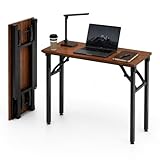
For most people, a desk at least 36 inches wide and 24 inches deep is the best small-space target. It leaves room to open the laptop without pushing it against the back edge and provides enough space for a mouse or writing pad.
Plan for extra room if you use a laptop stand. A stand raises the screen and improves posture, but the keyboard moves to the desk in front of it. That can require 8 to 12 additional inches of depth. A basic metal riser such as the Gogoonike adjustable laptop stand generally costs about $14 to $25, while lap desks and compact folding tables commonly fall between $25 and $55.
Standard Sizes
The measurements below describe practical desk areas, not just the laptop’s outside dimensions. Actual computer dimensions vary by manufacturer, screen bezels, hinge design, and whether the model has a number pad.
| Laptop or setup | Typical laptop size | Minimum usable desk area | More comfortable area |
|---|---|---|---|
| 11- to 13-inch compact laptop | 10 to 12 in wide × 7 to 9 in deep (25 to 30 × 18 to 23 cm) |
24 × 18 in (61 × 46 cm) |
30 × 20 in (76 × 51 cm) |
| 14-inch laptop | 12 to 13 in wide × 8 to 9 in deep (30 to 33 × 20 to 23 cm) |
28 × 20 in (71 × 51 cm) |
36 × 24 in (91 × 61 cm) |
| 15- to 16-inch laptop | 13 to 15 in wide × 9 to 11 in deep (33 to 38 × 23 to 28 cm) |
30 × 20 in (76 × 51 cm) |
36 × 24 in (91 × 61 cm) |
| 17-inch laptop | 15 to 16 in wide × 10 to 12 in deep (38 to 41 × 25 to 30 cm) |
36 × 24 in (91 × 61 cm) |
48 × 24 in (122 × 61 cm) |
| Laptop plus external monitor | Varies by monitor | 48 × 24 in (122 × 61 cm) |
60 × 30 in (152 × 76 cm) |
Desk height matters too. A typical desk is about 28 to 30 inches high (71 to 76 cm), while a lap desk is designed for seated use on a bed, sofa, or recliner. If your laptop has a large power brick, leave roughly 2 to 4 inches (5 to 10 cm) behind or beside the computer so the cable does not bend sharply.
How to Measure Your Space
- Measure the laptop. Close the computer and measure its width from side to side and its depth from the front edge to the rear hinge. Open it and check that the screen does not hit a wall, shelf, or window ledge.
- Add operating clearance. Add at least 2 inches (5 cm) on each side and 3 to 4 inches (8 to 10 cm) in front. This prevents the laptop from hanging over the edge and gives your wrists somewhere to rest.
- Allow for accessories. A wireless mouse needs roughly 8 by 6 inches (20 by 15 cm) of clear space. A notebook may need another 10 by 8 inches (25 by 20 cm).
- Check the depth. Measure from the wall or rear edge to the front edge. A 20-inch-deep desk can hold a laptop, but 24 inches is more forgiving, especially with a stand.
- Check the width. A 24-inch-wide surface is workable for a laptop alone. Choose 30 to 36 inches if you want a mouse, headphones, lamp, or papers beside it.
- Measure the chair area. Leave approximately 30 inches (76 cm) of clear space behind the chair for pulling it out and moving comfortably.
- Plan cable access. Identify the nearest outlet and measure the charger cable. Avoid placing the laptop where the cord crosses a walkway or pulls the computer toward an edge.
By Room or Use Case
Bedroom or Small Home Office
A 36-by-24-inch desk is a strong all-purpose choice for a bedroom or compact office. It accommodates a 13- to 16-inch laptop, mouse, notebook, and a small desk lamp. If the desk must fit in a narrow alcove, a 30-by-20-inch surface can work, but organization becomes more important. Use a vertical stand or wall shelf for accessories rather than sacrificing typing space.
Living Room
For occasional work, a small folding table between 30 and 36 inches wide is usually enough. The Frylr folding computer desk, listed at 35.8 inches wide, represents this category and can be stored when not in use. Look for a stable frame and a surface at least 20 inches deep. A lightweight table is convenient, but do not place a hot laptop on a soft cushion where air vents may be blocked.
Bed or Sofa
A lap desk is useful when a standard desk is not practical. The BUYIFY model measures 23.4 inches wide, which provides room for many laptops plus a small accessory area. A portable lap desk such as the AboveTEK design may add a retractable mouse tray, increasing usable working area without requiring a wider main surface. These products commonly cost about $25 to $35. Use a lap desk with a firm underside and heat-conscious design, and take regular breaks from an awkward seated posture.
Student or Craft Area
Students who alternate between typing, handwriting, and textbooks should aim for at least 40 by 24 inches (102 by 61 cm). A 48-inch desk is better for a laptop and open book side by side. If the laptop is used for drawing, crafting, or a second display, prioritize width over depth. A laptop stand can free the built-in keyboard area, but it does not replace the need for a separate keyboard when the screen is raised.
Dual-Screen Workstation
A laptop beside a 24-inch monitor generally needs 48 to 60 inches of width and at least 24 inches of depth. A monitor arm can reclaim some rear surface, but leave enough depth for the laptop, keyboard, and mouse. For two monitors or a large 27-inch display, a 60-by-30-inch desk is a safer choice.
Common Sizing Mistakes
- Measuring only the closed laptop: The computer may fit, but there may be no room for your hands, mouse, or charger.
- Ignoring hinge clearance: A wall directly behind the laptop can prevent the screen from opening fully.
- Choosing a shallow stand setup: A riser plus external keyboard often needs more depth than a laptop used flat.
- Forgetting the power brick: Chargers can occupy several inches and may need ventilation around them.
- Using a tiny table for full-time work: A 24-inch surface is convenient for occasional use but can feel cramped for several hours daily.
- Blocking ventilation: Keep air intakes clear and avoid soft beds, blankets, and pillows beneath the laptop.
- Buying by width alone: A 36-inch-wide desk that is only 12 inches deep is less useful than a 30-by-20-inch desk.
FAQ
Is a 24-inch desk wide enough for a laptop?
Yes, a 24-inch-wide desk can hold a compact or standard laptop, particularly for short sessions. It will be tight if you also need a mouse, notebook, lamp, or external keyboard. For daily work, 30 to 36 inches wide is more comfortable.
Is 20 inches of desk depth enough for a laptop?
Usually. Twenty inches of depth can accommodate most 11- to 16-inch laptops with front and rear clearance. Choose 24 inches or more if you use a laptop stand, a large gaming laptop, an external keyboard, or a monitor.
How much space does a laptop and monitor need?
Plan on at least 48 inches of width and 24 inches of depth. A 60-by-30-inch desk provides better separation between the laptop and monitor and leaves room for a keyboard, mouse, speakers, and paperwork.
What is the smallest desk for a 15-inch laptop?
A 30-by-20-inch desk is a practical minimum for a 15-inch laptop. A 24-by-18-inch surface may hold the computer, but it leaves little room for accessories or comfortable arm movement. For regular work in 2026, a 36-by-24-inch desk is the more flexible choice.





