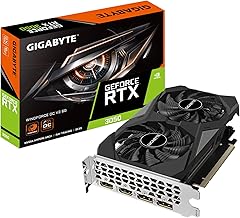
Key takeaways
- Rasterization performance: The RX 9070 XT generally posts higher native-resolution frame rates at 1440p, while the RTX 5070 closes the gap once upscaling is enabled.
- Ray tracing: NVIDIA still leads in heavy RT titles, where the RTX 5070 holds playable frame rates that the AMD card can struggle to match without upscaling.
- VRAM: Both cards ship with 16GB, but AMD’s memory configuration tends to hold up better in texture-heavy scenarios and future-proofs high-detail workloads.
- Upscaling and features: DLSS with frame generation remains more widely supported and often cleaner than AMD’s FSR, giving the RTX 5070 a software edge.
- Power and efficiency: The RTX 5070 typically draws less power under load, which can mean a quieter build and a smaller PSU requirement.
- Value: AMD usually offers more raw frames per dollar, making the RX 9070 XT the stronger pick for budget-conscious raster gamers.
What's inside
Choosing a mid-range graphics card in 2026 almost always comes down to the AMD Radeon RX 9070 XT versus the NVIDIA GeForce RTX 5070. Both target the sweet spot of 1440p high-refresh gaming, both launched into a market hungry for value, and both promise to carry a modern build for years without forcing a compromise on settings. Yet they take noticeably different paths to get there.
The RX 9070 XT leans on its 16GB GDDR6 frame buffer and raw rasterization muscle, while the RTX 5070 counters with DLSS, superior ray tracing, and NVIDIA’s mature software stack. In 2026 that split matters more than ever, because the games you play and the features you actually use decide which card feels faster in your rig. Here is how the two stack up.
As an Amazon Associate we earn from qualifying purchases at no extra cost to you. Product prices and availability are accurate as of the date shown and are subject to change.




⚡ Save on Your Next PC — Amazon Prime
Prime members get fast free shipping on the systems above, plus early access to Prime Day & Black Friday PC deals. New members get a 30-day free trial.
Watch: RX 9070 XT vs RTX 5070: 2026 Comparison — Video Review
Quick Verdict
Buy the RX 9070 XT if you want maximum rasterized frames per dollar and a larger VRAM buffer for high-texture 1440p and entry-level 4K gaming. Choose the RTX 5070 if ray tracing, DLSS frame generation, and streaming/creator features are central to how you use your PC. Pure raster gamers lean AMD; feature-first and RT-heavy players lean NVIDIA.
Key Differences
- Rasterization performance: The RX 9070 XT generally posts higher native-resolution frame rates at 1440p, while the RTX 5070 closes the gap once upscaling is enabled.
- Ray tracing: NVIDIA still leads in heavy RT titles, where the RTX 5070 holds playable frame rates that the AMD card can struggle to match without upscaling.
- VRAM: Both cards ship with 16GB, but AMD’s memory configuration tends to hold up better in texture-heavy scenarios and future-proofs high-detail workloads.
- Upscaling and features: DLSS with frame generation remains more widely supported and often cleaner than AMD’s FSR, giving the RTX 5070 a software edge.
- Power and efficiency: The RTX 5070 typically draws less power under load, which can mean a quieter build and a smaller PSU requirement.
- Value: AMD usually offers more raw frames per dollar, making the RX 9070 XT the stronger pick for budget-conscious raster gamers.
AMD Radeon RX 9070 XT: Raw Power and Big VRAM
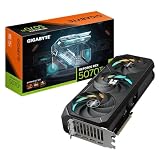
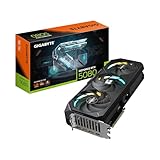
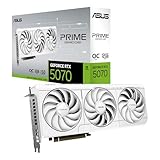
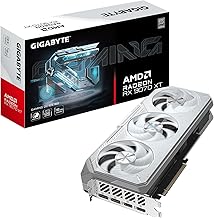
The RX 9070 XT built on RDNA 4 is the frame-rate champion of this matchup when you disable upscaling. Board partners like the GIGABYTE Radeon RX 9070 XT Gaming OC, the ASUS Prime RX 9070 XT OC Edition, and the Sapphire Pulse RX 9070 XT all pair the GPU with beefy triple-fan coolers that keep clocks high and noise reasonable, so you get consistent 1440p performance across demanding titles.
Its 16GB of GDDR6 gives it real headroom for maxed-out textures and entry-level 4K, and models like the XFX Swift RX 9070 XT and PowerColor Reaper RX 9070 XT make it easy to find a version that fits your case and budget. If you rarely touch ray tracing and simply want the most raw performance for your money, this is the card that delivers it.
NVIDIA GeForce RTX 5070: Features and Ray Tracing
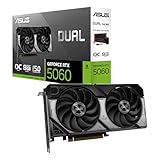
The RTX 5070 is the more well-rounded option for players who want the full modern feature set. Its ray tracing hardware handles heavy RT lighting far more gracefully, and DLSS with frame generation can dramatically boost frame rates while keeping image quality crisp, effectively letting the card punch above its native weight in supported games.
Beyond gaming, NVIDIA’s ecosystem shines for creators and streamers thanks to superior encoding, broad application support, and stable drivers. If you split your time between gaming, content creation, and RT-showcase titles, the RTX 5070 gives you a more flexible card even when its raw raster numbers trail the RX 9070 XT.
Which Should You Buy?
- For pure 1440p raster gaming: pick the RX 9070 XT because it delivers the highest native frame rates per dollar.
- For ray-tracing showcases: pick the RTX 5070 because its RT hardware and DLSS keep demanding titles smooth.
- For streaming and content creation: pick the RTX 5070 because NVIDIA’s encoder and software support are more mature.
- For future-proof texture headroom on a budget: pick the RX 9070 XT because you get big raster performance and a generous VRAM buffer for less.
- For a quieter, lower-power build: pick the RTX 5070 because it generally runs cooler and draws less wattage under load.
Frequently Asked Questions
Is the RX 9070 XT faster than the RTX 5070?
In native rasterized gaming at 1440p, the RX 9070 XT is usually faster. Once DLSS or ray tracing enters the picture, the RTX 5070 narrows or reverses that lead depending on the title.
Do both cards have enough VRAM for 2026 games?
Yes. Both ship with 16GB, which is comfortable for maxed 1440p and entry-level 4K. AMD’s memory setup tends to feel slightly more comfortable in the most texture-heavy titles.
Which card is better for ray tracing?
The RTX 5070 is the better ray tracing card. NVIDIA’s dedicated RT hardware and DLSS upscaling keep heavy RT games playable where the RX 9070 XT may need more aggressive upscaling.
Which is the better value in 2026?
For raw frames per dollar, the RX 9070 XT is typically the better value. For feature completeness and ray tracing, the RTX 5070 justifies its price for the right buyer.
Final Verdict
Both cards are excellent 1440p performers, so the right choice depends on priorities: pick the RX 9070 XT for the best raw rasterization and VRAM value, or the RTX 5070 for stronger ray tracing, DLSS, and creator features. Match the card to how you actually play, and either one will serve a modern build well into the coming years.