Key takeaways
- Restart the PC and tap Delete (most boards) or F2 repeatedly during the boot logo to enter BIOS/UEFI.
- If you land in an “EZ Mode” screen, look for a dropdown or toggle labeled XMP, EXPO, D.O.C.P, or A-XMP.
- Select Profile 1 (the primary rated speed). Some kits offer a slower Profile 2 for stability.
- Save and exit (usually F10). The system will reboot, possibly training memory for 15-30 seconds with a black screen.
You bought a fast DDR5 kit rated at 6000MT/s, but if you never touched a single BIOS setting it is almost certainly running at the JEDEC baseline of 4800MT/s. Out of the box, every stick of RAM boots at a safe default speed regardless of what the box promises. XMP (Intel Extreme Memory Profile) and EXPO (AMD Extended Profiles for Overclocking) are the one-click profiles that unlock the advertised speed and tight timings, and turning them on is the single easiest free performance upgrade a gamer can make in 2026.
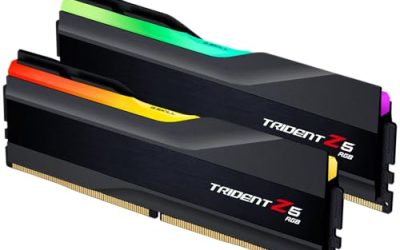
Enabling a memory profile takes about three minutes, requires no tools, and can add anywhere from 5% to 15% average FPS in CPU-bound titles, with even larger gains to 1% lows. Kits like the G.SKILL Trident Z5 Neo (AMD EXPO) and the Corsair Vengeance DDR5 series ship with these profiles baked into the SPD chip, so the whole job is really just telling your motherboard to read them. This guide walks you through it step by step and explains what to check if the system refuses to boot afterward.
Our top picks


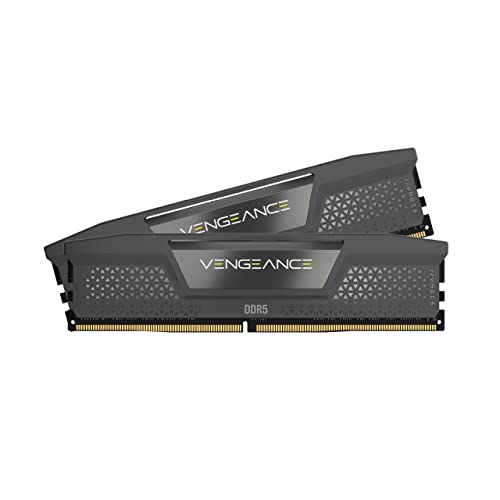
 CORSAIR Vengeance DDR5 32GB
- Product Group: Personal Computer
- Binding: Personal Computers
 CORSAIR Vengeance RGB DDR5 32GB
- Product Group: Personal Computer
- Binding: Personal Computers

As an Amazon Associate we earn from qualifying purchases at no extra cost to you. Ratings are shown as listed on Amazon.
⚡ Save on Your Next PC — Amazon Prime
Prime members get fast free shipping on the systems above, plus early access to Prime Day & Black Friday PC deals. New members get a 30-day free trial.
Watch: How to Enable XMP / EXPO for Faster RAM — Video Review
What XMP and EXPO Actually Do
A memory profile is a stored table of three things: frequency, timings (like CL30-40-40-96), and voltage. When you enable XMP or EXPO, the motherboard stops using conservative JEDEC values and instead applies the manufacturer-tested overclock. XMP is Intel’s standard and works on both Intel and AMD boards; EXPO is AMD’s equivalent and is tuned specifically for Ryzen memory controllers. A kit like the G.SKILL Trident Z5 Neo carries an EXPO profile, while most Corsair Vengeance DDR5 kits carry both.
Step-by-Step: Enabling the Profile in BIOS
- Restart the PC and tap Delete (most boards) or F2 repeatedly during the boot logo to enter BIOS/UEFI.
- If you land in an “EZ Mode” screen, look for a dropdown or toggle labeled XMP, EXPO, D.O.C.P, or A-XMP.
- Select Profile 1 (the primary rated speed). Some kits offer a slower Profile 2 for stability.
- Save and exit (usually F10). The system will reboot, possibly training memory for 15-30 seconds with a black screen.
Verifying It Worked
Once Windows loads, open Task Manager, go to the Performance tab, and click Memory. The “Speed” field should now show your rated frequency (note DDR is double data rate, so a 6000MT/s kit reports as 3000MHz here, which is normal). For full confirmation of timings and voltage, download CPU-Z and check the Memory tab against your kit’s spec sheet.
When the System Won’t Boot
If the PC fails to post after enabling a profile, do not panic. Most motherboards will automatically revert to defaults after two or three failed boot attempts. You can also clear CMOS by pressing the dedicated button on the rear I/O, or by removing the coin-cell battery for 30 seconds. Then re-enter BIOS and try Profile 2, or manually bump DRAM voltage by 0.02V. Four-stick configurations are harder to stabilize than two-stick kits, which is why single-kit purchases like the Corsair Vengeance DDR5 32GB (2x16GB) are the safe choice.
Tips
- Update your motherboard BIOS to the latest version first; memory compatibility improves dramatically with newer AGESA (AMD) or microcode (Intel) releases.
- On Ryzen, aim for a 6000MT/s EXPO kit; it hits the sweet spot where the memory clock and Infinity Fabric stay in sync for lowest latency.
- Buy RAM as a single matched kit rather than two separate 2x8GB packs, which the board must train together and may not stabilize.
- Run MemTest86 for at least one full pass after enabling a profile to confirm the overclock is genuinely stable before gaming.
Frequently Asked Questions
Does enabling XMP or EXPO void my warranty?
Technically memory profiles are a form of overclocking, but in practice every major RAM and CPU vendor supports them as intended features. Intel and AMD both officially list XMP/EXPO support, and using a rated profile has never been a real-world warranty issue for gamers.
Is XMP safe for my hardware?
Yes. Rated profiles use voltages the manufacturer already validated. A 6000MT/s DDR5 kit running at 1.35-1.40V is well within safe limits, and the memory controller in modern CPUs is designed to handle it.
Why does my 6000MT/s kit only show 3000MHz?
That is expected. DDR stands for Double Data Rate, so the effective transfer rate is twice the clock frequency. 3000MHz clock equals 6000MT/s effective, so nothing is wrong.
Can I enable a profile on a laptop?
Almost never. Laptop BIOS menus rarely expose memory profile toggles, and laptop SO-DIMMs usually run at fixed JEDEC speeds. This is primarily a desktop feature.
Conclusion
Enabling XMP or EXPO is the closest thing to free performance you will ever find in PC gaming. It takes three minutes, needs no tools, and turns the speed you already paid for into real frames on screen. Update your BIOS, load Profile 1, verify with CPU-Z, run a quick memory test, and you are done. If your current kit refuses to stabilize, a quality single-kit purchase like the G.SKILL Trident Z5 Neo or Corsair Vengeance DDR5 will make the process painless.