Key takeaways
- Consumer lines (Dell 14 Plus, G-series): typically one year of hardware warranty with mail-in service. Extending to a three-year plan usually adds a three-figure amount.
- Alienware: usually ships with one year of Premium Support including in-home service, which is a meaningful upgrade over mail-in if you only own one machine.
- Dell Pro and Pro Max: the value play — ProSupport and ProSupport Plus tiers are purchasable at order time, and ProSupport Plus adds accidental damage coverage. On a five-year machine, this is often the single best line item on the invoice.
- Upgradeability: Dell’s spec sheets state “memory soldered” where it applies. SO-DIMM slots on Pro models, dual M.2 on Alienware and Pro Max, single M.2 on Plus models.
For most shoppers, the best Cyber Monday Dell laptop deals this year fall into four separate lanes: an Alienware 16 Aurora or a Dell G-series 16 for gaming, a Dell Pro 14 for work, a Dell 14 Plus or 16 Plus for students, and a Dell Pro Max 16 (or the Premium-tier model that replaced the XPS 16) for creators. The deepest discounts land on previous-generation GPU and CPU configurations Dell is clearing, not on the newest silicon. If you only check one number before buying, check total graphics power (TGP) on gaming configs and watt-hours (Wh) on thin-and-light configs — those two figures separate a real deal from a cheap-looking one.
Quick comparison: the Dell deals worth targeting
| Pick | Best for | Key specs to look for | Typical Cyber Monday range |
|---|---|---|---|
| Alienware 16 Aurora (or 16X Aurora) | Gaming above $1,000 | Core Ultra 9 HX-class CPU, RTX 5060–5070-class laptop GPU, 16″ 2560×1600 240 Hz, 2× M.2 slots | Usually $1,300–$1,900 |
| Dell G-series 16 (G16 7630 and later G-branded configs) | Gaming under $1,000 | Core i7 / Core Ultra 7 H-class, RTX 4050/5050-class GPU, 15.6–16″ 1080p 165 Hz | Usually $750–$1,000 |
| Dell Pro 14 (Latitude 5000/7000 lineage) | Work and business | Core Ultra 5/7 vPro option, 16 GB DDR5 in SO-DIMM slots, 3-year ProSupport available | Usually $900–$1,400 |
| Dell 14 Plus / 16 Plus | Students | Core Ultra 5 or Snapdragon X-class, 16 GB LPDDR5X (soldered), 1920×1200, 54–65 Wh | Usually $550–$850 |
| Dell Pro Max 16 / Premium 16 | Creators and 3D work | Core Ultra 9, RTX 2000/3000 Ada or RTX 5070-class, 4K or OLED panel option, 90–99 Wh | Usually $1,600–$2,600 |
Best Dell gaming laptop deal: Alienware 16 Aurora
The Alienware 16 Aurora is the pick if your budget clears $1,000 and you want a machine that will still hold up in three years. Per Dell’s spec sheet it takes Core Ultra 9 HX-class processors and RTX 50-series laptop graphics, and it gives you two M.2 slots plus a 2560×1600 panel at up to 240 Hz — the resolution-and-refresh combination that makes a 16-inch gaming laptop feel current rather than compromised.
Who it suits: players who want 1440p-class frame rates on high presets and who upgrade storage themselves rather than buying it pre-installed. Main trade-off: weight and heat. A 16-inch Alienware with a discrete GPU typically lands around 2.5–2.8 kg with the power brick, and fan noise under load is noticeable in shared rooms.
Best Dell gaming deal under $1,000: the G-series 16
Dell’s G-series is where the sub-$1,000 Cyber Monday value sits. Configurations typically pair a Core i7 or Core Ultra 7 H-class chip with an RTX 4050/5050-class GPU and a 1080p 165 Hz panel. Published reviews of this class generally put modern titles in the 60–90 fps range at 1080p on high presets — figures that vary substantially with settings, resolution, CPU, and patch level, so treat them as a band rather than a promise.
Main trade-off: 8 GB of VRAM. That is enough for 1080p with high textures, but it becomes the limiter at 1440p with ultra texture packs, and it is soldered to the board — you cannot fix it later.
Best Dell work laptop deal: Dell Pro 14
For work, the Dell Pro 14 (the line that absorbed the Latitude 5000 and 7000 naming) is the deal to chase. Its advantage over a consumer Dell is not speed — it is serviceable memory and a warranty you can extend to three years of on-site ProSupport. Dell’s spec sheets list SO-DIMM slots explicitly on the 14- and 16-inch Pro models, which means 16 GB today can become 32 GB or 64 GB in two years for the price of a pair of modules.
Who it suits: anyone whose laptop is a work tool with a five-year horizon, especially if IT needs vPro management or a business-grade keyboard and hinge. Main trade-off: integrated graphics only, and business-line discounts are usually smaller in percentage terms than consumer-doorbuster pricing.
Best Dell student laptop deal: Dell 14 Plus and 16 Plus
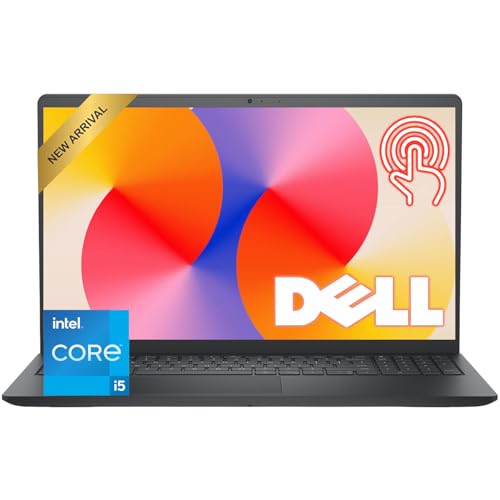
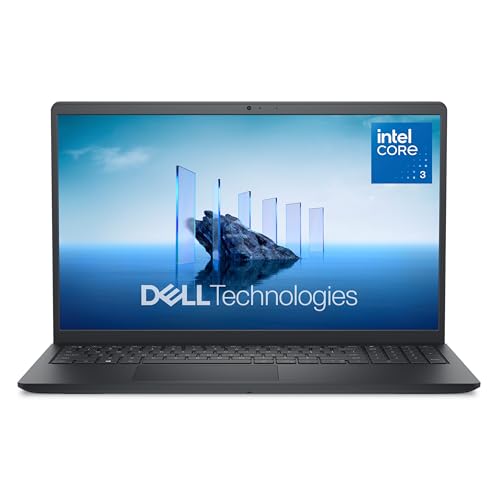
The Dell 14 Plus and 16 Plus are the student sweet spot — light, quiet, and usually discounted into the $550–$850 band on Cyber Monday. A 16 GB LPDDR5X configuration with a 1920×1200 panel handles essays, browser tabs, video calls, and light coding comfortably.
Main trade-off: soldered memory and a single M.2 slot. Buy the RAM you want on day one, because you will not be adding it later. If your course involves CAD, video editing, or game development, skip this lane and look at the creator picks instead.
Best Dell creator laptop deal: Dell Pro Max 16 / Premium 16
Creators should target the Dell Pro Max 16 or the Premium-tier 16-inch model that replaced the XPS 16. Two things justify the price: ISV-certified graphics drivers (certification matters for stability in CAD and DCC applications, and it is listed on Dell’s workstation spec sheets), and a panel option that reaches 4K or OLED with full DCI-P3 coverage.
Main trade-off: the OLED panel and the discrete GPU both drain battery. A 99 Wh configuration that lasts nine hours on documents may last three hours rendering. Who it suits: photographers, video editors, and 3D artists who bill for their time and cannot afford a driver crash mid-project.
How to choose: match the deal to your workload
| Your situation | Priority spec | What to avoid | Lane |
|---|---|---|---|
| Play modern AAA titles, budget under $1,000 | GPU TGP rating and panel refresh | 60 Hz panels and 8 GB VRAM configs priced above $1,000 | Dell G-series 16 |
| Spreadsheets, email, video calls, 5-year horizon | SO-DIMM slots + ProSupport eligibility | Soldered LPDDR5X on a machine you plan to keep | Dell Pro 14 |
| Undergrad coursework, carry every day | Weight under 1.6 kg and 16 GB minimum | Configs with 8 GB RAM, even if cheap | Dell 14 Plus / 16 Plus |
| Colour-accurate editing or CAD | Panel gamut + ISV-certified GPU drivers | Consumer panels with no stated coverage figure | Dell Pro Max 16 / Premium 16 |
| Mixed gaming and school, one machine | Two M.2 slots, 12 GB+ VRAM | Thin chassis rated below ~80 W TGP | Alienware 16 Aurora |
Three calculations that tell you if a deal is real
1. Power budget: will the GPU run at its rated wattage?
Add the GPU’s total graphics power, the CPU’s sustained package power, and roughly 20–30 W of platform overhead. A config with a 115 W GPU, a 55 W CPU, and 25 W of overhead needs about 195 W. If the bundle ships a 180 W adapter, the battery will slowly drain during long sessions even while plugged in — a sign the chassis is thermally limited. Dell lists TGP on gaming spec sheets; if a listing does not state it, assume the thin-chassis floor of roughly 60–80 W rather than the headline maximum.
2. Battery runtime: watt-hours ÷ average draw
A 99 Wh battery (the ceiling for airline carry-on) drawing 12 W on documents gives roughly 8.3 hours. The same battery drawing 45 W under a sustained GPU load gives about 2.2 hours. This is why a 54 Wh student laptop and a 99 Wh workstation can post similar light-use numbers: the student machine draws 9 W while the workstation idles near 15 W.
3. Display bandwidth: pixels × refresh × colour depth
2560 × 1600 at 240 Hz is about 983 million pixels per second; at 24 bits per pixel that is roughly 23.6 Gbit/s, which exceeds HDMI 2.0’s 18 Gbit/s ceiling and requires DisplayPort 1.4 with DSC or HDMI 2.1 (48 Gbit/s) to run without chroma subsampling. Practical takeaway: if you plan to drive an external 1440p 240 Hz monitor, confirm the laptop’s port spec on Dell’s spec sheet rather than assuming any USB-C port will do it.
Warranty and upgradeability: where Dell deals quietly differ
- Consumer lines (Dell 14 Plus, G-series): typically one year of hardware warranty with mail-in service. Extending to a three-year plan usually adds a three-figure amount.
- Alienware: usually ships with one year of Premium Support including in-home service, which is a meaningful upgrade over mail-in if you only own one machine.
- Dell Pro and Pro Max: the value play — ProSupport and ProSupport Plus tiers are purchasable at order time, and ProSupport Plus adds accidental damage coverage. On a five-year machine, this is often the single best line item on the invoice.
- Upgradeability: Dell’s spec sheets state “memory soldered” where it applies. SO-DIMM slots on Pro models, dual M.2 on Alienware and Pro Max, single M.2 on Plus models.
Frequently Asked Questions
Are Cyber Monday Dell laptop deals better than Black Friday?
They are usually comparable in depth but narrower in selection, because the strongest configurations sell out during Black Friday. Cyber Monday tends to favour remaining stock — often the mid-tier GPU and higher-RAM variants. If a specific configuration you want is still listed at the same price on Cyber Monday, there is rarely a reason to wait longer.
Which Dell laptop is best for gaming under $1,000?
The Dell G-series 16 with an RTX 4050/5050-class GPU and a 165 Hz 1080p panel is the realistic answer. It plays modern titles comfortably at 1080p, but the 8 GB of VRAM limits high-texture 1440p play, and the GPU is not upgradeable, so buy the fastest graphics option your budget allows at checkout.
Does Dell’s Cyber Monday sale include Alienware?
Yes — Alienware is sold through Dell’s own storefront, and 16-inch Aurora models typically see their largest discounts of the year around this period. Discounts concentrate on configurations with previous-generation CPUs or mid-tier GPUs, while the newest top-tier configs usually stay close to list price.
How much RAM do I need in a Dell laptop in 2026?
16 GB is the practical floor for anything you plan to keep for three or more years; 8 GB configurations will feel constrained under browser-heavy work. For video editing, virtual machines, or large CAD assemblies, 32 GB is worth the premium — and on Dell Pro models you can add it yourself later if the spec sheet lists SO-DIMM slots.
Is Dell ProSupport worth adding to a Cyber Monday laptop?
On business-line machines you intend to keep for years, it usually is: on-site service and accidental damage coverage remove the biggest risk of a single-laptop household. On a cheap student laptop bought as a secondary device, the standard one-year warranty is often sufficient, and the extension money is better spent on more RAM or storage up front.
Can you upgrade the RAM and SSD in a Dell laptop?
It depends on the line, not the price. Dell Pro 14 and 16 models generally use SO-DIMM slots; Alienware 16 Aurora and Pro Max 16 offer two M.2 storage slots. The Plus-series consumer models typically solder memory and provide one M.2 slot. Always read the “memory” line on Dell’s spec sheet before ordering, because it states soldered versus slot-based configurations explicitly.