Key takeaways
- Architecture work on a laptop under $600 is about compromise management. You will not get smooth real-time rendering in Lumion, Twinmotion, or heavy Revit models at this price. What you can get is a machine that runs AutoCAD 2D drafting,…
Architecture work on a laptop under $600 is about compromise management. You will not get smooth real-time rendering in Lumion, Twinmotion, or heavy Revit models at this price. What you can get is a machine that runs AutoCAD 2D drafting, SketchUp, Rhino for small to medium models, Photoshop, and Revit for student-scale projects without constant freezing — if you pick the right CPU, RAM, and screen.
Most architecture students I talk to overbuy GPU and underbuy RAM and screen quality. Under $600, that is backwards. An RTX card at this price usually means everything else was cut to hit the price: 8GB soldered RAM, dim 250-nit screen, tiny 256GB drive. For studio work, 16GB RAM and a decent 1080p IPS panel will help you every single day. A low-end discrete GPU will only help you occasionally, and often not much.
What to prioritize for architecture under $600
CPU first: Look for AMD Ryzen 5 7530U / 7730U / 8640HS or Intel Core i5-1335U / 13420H or better. The key is 6+ cores and recent integrated graphics (Radeon 680M / 780M, or Intel Iris Xe / Arc). Those integrated GPUs can handle SketchUp, AutoCAD 2D/3D navigation, and Enscape at low settings for learning. Avoid older Celeron, Pentium, Athlon, N100/N305, and Ryzen 3 5300U-class chips for architecture. They will open the programs, but orbiting a textured SketchUp model becomes painful.
RAM second: 16GB is the real minimum for Revit + Chrome + PDF + Spotify open at once. 8GB will technically launch Revit 2024/2025, but you will hit stutter when switching views, and Windows will start paging to the SSD. If you must buy 8GB to stay under $500, buy only if the laptop has an open SODIMM slot you can upgrade later. Many thin budget laptops now have soldered RAM with no upgrade path — that is a failure mode that kills a laptop for a 3-year degree.
Screen third: You will stare at linework for hours. Get 15.6-inch 1080p IPS, preferably 300 nits or better and close to 100% sRGB. Most sub-$600 laptops ship with 220-250 nit panels with washed-out color. That is usable for CAD, but poor for Photoshop, InDesign portfolios, and material selection. If you do presentation boards on the laptop screen, color coverage matters more than a slightly faster CPU.
Storage fourth: 512GB SSD minimum. Revit, AutoCAD, Rhino, Adobe apps, and one semester of project files will eat 256GB fast. Check that the SSD is replaceable (M.2 2280) and not eMMC or soldered UFS, which still shows up on the cheapest machines.
The 3 types of laptops worth buying under $600
1. Ryzen 7 16GB thin-and-light for school and studio. This is the best pick for most architecture students. A machine like a Ryzen 7 16GB RAM laptop with Radeon graphics gives you 8 cores, good battery life, and enough GPU power for SketchUp and Rhino 7/8 student models. Trade-off: no real CUDA rendering. V-Ray GPU and Lumion walkthroughs will be slow or will need to run in CPU mode. Who it suits: first- and second-year students doing drafting, modeling, Adobe work, and light Revit. Failure mode: single-fan cooling on some ultra-thins causes sustained clock drops after 20 minutes in Enscape. Use a stand for airflow and cap render resolution at 1080p.
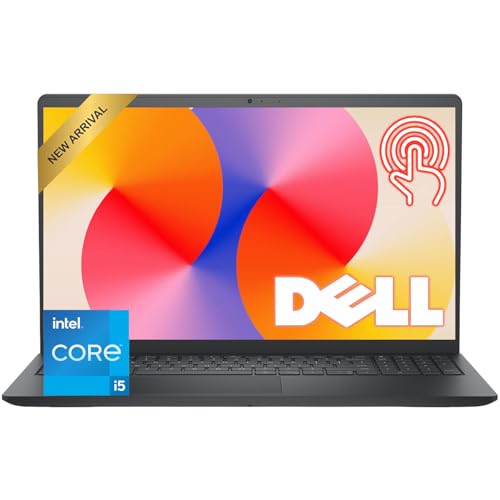
2. Intel Core i5/H-series 16GB 15.6-inch for Revit and AutoCAD stability. Intel H-series chips like the i5-13420H run hotter and get worse battery life than U-series, but hold higher clocks in single-thread tasks, which helps Revit regeneration and AutoCAD object snaps. Look for a Intel i5 16GB 512GB 15.6-inch laptop with an IPS screen and numeric keypad. That keypad matters more than people admit for entering dimensions. Trade-off: integrated Intel graphics are weaker than Radeon 780M for 3D orbiting, and fan noise is higher. Who it suits: students whose coursework is Revit-heavy and who dock at a desk most of the day. Failure mode: manufacturers often pair the H-chip with a dim screen to hit $599. Check brightness and sRGB in specs before you buy, not just CPU.
3. Older GTX gaming laptop on clearance for rendering on a budget. Sometimes you can find a previous-year budget gaming laptop with a GTX 1650 or RTX 2050 dipping near $600. A budget RTX 2050 laptop with 16GB RAM will render in Enscape, D5 in low mode, and Blender Cycles far faster than any integrated GPU. Trade-off: heavy, loud, 3-4 hour battery life, and usually a poor color-accurate screen unless you pay more. Many ship with only 8GB RAM to advertise a low price, so you must factor a $25-$35 RAM upgrade. Who it suits: students who already do walkthroughs and want to learn real-time visualization now. Failure mode: 4GB VRAM limits texture size. Large Revit + Enscape scenes will crash or downscale textures. Keep linked models unloaded when rendering.
Quick comparison: what changes at $600
| Type | Best for | RAM / Storage to get | Rhino / SketchUp | Revit / AutoCAD | Watch out for |
|---|---|---|---|---|---|
| Ryzen 7 integrated (U/HS) | General studio, battery life | 16GB / 512GB | Good for models under ~200MB | Good for 2D, small Revit | Soldered 8GB, dim 250-nit screen |
| Intel i5 H-series integrated | Revit, 2D drafting at desk | 16GB / 512GB | Okay, slower orbit than Radeon | Very good single-thread speed | Heat, fan noise, weak battery |
| Clearance GTX/RTX gaming | Enscape, V-Ray, Blender | 16GB / 512GB minimum | Good + GPU render preview | Good, but screen often dull | Weight, 4GB VRAM limit, 8GB base RAM |
| Cheaper $400 Ryzen 5 / i3 | Notes, CAD viewing, Photoshop light | Upgradeable to 16GB later | Laggy with shadows on | Okay for viewing, not production | eMMC storage, soldered RAM, TN screen |
What to avoid, even if the specs look good
Avoid any laptop that lists only 8GB RAM with no upgrade slot. For architecture, that is a one-semester machine. Avoid 1366×768 or TN panels — line weights blur and you will misread drawings. Avoid 256GB-only soldered storage if you plan to install Revit + AutoCAD + Rhino together; Autodesk libraries alone can take 30GB+ with content packs.
Also be realistic about 14-inch vs 15.6-inch. A 14-inch is nicer to carry across campus, but palette-heavy apps like Revit, AutoCAD, and Adobe feel cramped without an external monitor. If you choose 14-inch to save weight, plan to dock to a 24-inch 1080p monitor in your dorm. That $120 monitor will improve your speed more than spending $120 extra on CPU.
When the cheaper option is fine: if you already have a desktop or lab PCs for rendering, do not chase a discrete GPU in a $600 laptop. Buy the lighter Ryzen 7 with 16GB and a better screen. Use the laptop for modeling, drafting, and pin-ups, and send renders to the desktop or lab. You will get better battery, less fan noise, and fewer repairs.
Buying checklist before you click buy
Confirm these five lines in the specs: 1) 16GB DDR4/DDR5 (or 8GB + empty slot), 2) 512GB NVMe SSD, 3) 1920×1080 IPS, 300 nits ideally, 4) Wi-Fi 6 and a full-size HDMI port for studio projectors, 5) 65W+ charger over USB-C or barrel with upgradeable M.2 slot. If a listing hides screen brightness, color gamut, or whether RAM is soldered, assume the worst and message the seller or skip it. Refurbished business laptops can be tempting, but many have weak integrated graphics and 250-nit screens — fine for office work, frustrating for 3D.
FAQ
Can I run Revit and AutoCAD on a $600 laptop?
Yes for student projects. AutoCAD 2D runs well on a modern Ryzen 5/7 or i5 with 16GB RAM. Revit runs for models under ~150-300MB, but large central models with many links will lag. Keep worksets lean, unload CAD links when not needed, and close Chrome tabs while syncing.
Do I need a dedicated graphics card for architecture school?
Not in the first two years. Integrated Radeon 680M/780M or Intel Iris Xe/Arc handles SketchUp, Rhino, and AutoCAD 3D navigation. You only need a GTX/RTX if you are doing weekly Enscape, Lumion, D5, or V-Ray GPU renders. At $600, a discrete GPU usually forces compromises in RAM and screen.
Is 8GB RAM enough if I cannot afford 16GB?
It will launch the apps, but expect stutter with Revit + Enscape + browser open. If you must buy 8GB, choose a model with an accessible second RAM slot and upgrade to 16GB or 24GB when you can. Do not buy 8GB soldered with no upgrade path for a multi-year program.
Should I get a gaming laptop for architecture under $600?
Only if rendering speed matters more than portability, battery, and screen color. A clearance GTX/RTX machine renders much faster, but is heavier, louder, and often has a dull screen. For most students who model on the go and render in labs, a lighter 16GB integrated-graphics laptop is the better daily tool.