Key takeaways
- Size and resolution: A 27-inch QHD panel keeps pixel density high and frame rates attainable, while 32-inch 4K delivers stunning detail that demands a stronger GPU.
- Refresh rate: 240Hz and beyond rewards competitive players with fluid motion, whereas 165 to 180Hz already feels superb for most gamers.
- Panel type: QD-OLED and WOLED both excel, with QD-OLED often favoring color vibrancy and WOLED offering excellent sharpness and brightness handling.
- HDR and brightness: Look for strong HDR support like DisplayHDR TrueBlack 400 to make highlights punch against OLED’s perfect blacks.
- Ports and features: HDMI 2.1, DisplayPort, USB-C power delivery, G-Sync and FreeSync compatibility, and built-in burn-in safeguards all add long-term value.
What's inside
Once you have gamed on an OLED monitor, ordinary LCD panels start to look grey and lifeless. OLED’s self-lit pixels deliver perfect blacks, infinite contrast, and near-instant response times, so shadowy horror scenes reveal real detail, neon-lit worlds pop with color, and fast motion stays razor sharp without smearing. Add refresh rates that now soar past 240Hz and you have the most immersive way to play in 2026.
The catch has always been price and choice, and that is where a clear buying guide helps. OLED gaming monitors now span crisp 27-inch QHD panels, jaw-dropping 32-inch 4K displays, and sweeping ultrawide curves, each with different strengths for competitive play, cinematic single-player, or productivity. This guide explains the specifications that truly matter, then reviews five of the best OLED monitors you can buy right now.
As an Amazon Associate we earn from qualifying purchases at no extra cost to you. Product prices and availability are accurate as of the date shown and are subject to change.


⚡ Save on Your Next PC — Amazon Prime
Prime members get fast free shipping on the systems above, plus early access to Prime Day & Black Friday PC deals. New members get a 30-day free trial.
Watch: Best OLED Monitor 2026 — Video Review
How to Choose an OLED Gaming Monitor
- Size and resolution: A 27-inch QHD panel keeps pixel density high and frame rates attainable, while 32-inch 4K delivers stunning detail that demands a stronger GPU.
- Refresh rate: 240Hz and beyond rewards competitive players with fluid motion, whereas 165 to 180Hz already feels superb for most gamers.
- Panel type: QD-OLED and WOLED both excel, with QD-OLED often favoring color vibrancy and WOLED offering excellent sharpness and brightness handling.
- HDR and brightness: Look for strong HDR support like DisplayHDR TrueBlack 400 to make highlights punch against OLED’s perfect blacks.
- Ports and features: HDMI 2.1, DisplayPort, USB-C power delivery, G-Sync and FreeSync compatibility, and built-in burn-in safeguards all add long-term value.
The Best OLED Gaming Monitors Reviewed
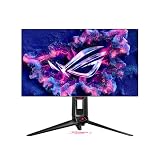
ASUS ROG PG32UCDM
The PG32UCDM is our flagship pick, a 32-inch 4K QD-OLED running at 240Hz with a blistering 0.03ms response. A custom heatsink and graphene film manage heat and reduce burn-in risk, while 99 percent DCI-P3 coverage, true 10-bit color, USB-C with 90W delivery, and G-Sync compatibility make it a stunning centerpiece for high-end PCs, PS5, and Xbox alike.
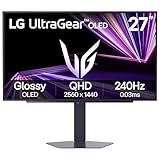
LG UltraGear 27GX704A-B
For competitive players, the 27-inch UltraGear QHD OLED hits the sweet spot. Its 240Hz refresh, 0.03ms response, and G-Sync compatibility deliver ultra-fluid, tear-free motion, and DisplayHDR TrueBlack 400 with HDMI 2.1 and DisplayPort rounds out a fast, focused esports-friendly display that keeps frame rates achievable.
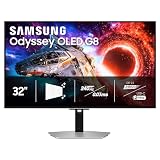
Samsung Odyssey OLED G6
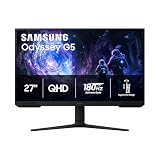
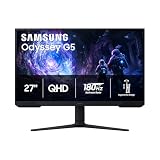
The 27-inch Odyssey OLED G6 pairs QD-OLED color with a rapid 240Hz refresh and 0.03ms response in a glare-free finish. Pantone validation, HDR10, a height-adjustable stand, and Samsung’s OLED Safeguard burn-in protection make it a polished all-rounder for gamers who want vivid color and everyday usability plus a three-year warranty.
Samsung Odyssey OLED G9
The 49-inch Odyssey G9 QD-OLED is the immersive ultrawide statement piece. Its dual-QHD curved canvas at 240Hz and 0.03ms wraps your peripheral vision in the action, and with G-Sync compatibility, FreeSync Premium Pro, and an adjustable stand, it is ideal for sim racing, flight, and sprawling single-player worlds.
LG UltraGear 32GX850A-B
The 32-inch UltraGear 4K OLED brings clever versatility with a dual-mode display that switches between crisp 4K at 165Hz and a faster 330Hz for competitive sessions. Add 0.03ms response, G-Sync, FreeSync Premium Pro, TrueBlack 400 HDR, and a fully adjustable stand, and you get a do-everything panel for cinematic play and fast shooters alike.
Frequently Asked Questions
Is OLED burn-in still a concern for gaming?
Modern OLED gaming monitors include multiple safeguards like pixel shifting, logo dimming, and panel refresh routines, and manufacturers back them with warranties. With normal mixed use and these protections enabled, burn-in is far less of a worry than it once was.
Should I choose 27-inch QHD or 32-inch 4K OLED?
A 27-inch QHD panel keeps pixel density high and is easier to drive at very high frame rates, making it great for competitive play. A 32-inch 4K display offers more detail and immersion for cinematic games but needs a more powerful graphics card to hit high frame rates.
What is the difference between QD-OLED and WOLED?
Both are excellent self-emissive panels. QD-OLED uses quantum dots for especially vivid color and strong brightness in colorful scenes, while WOLED is known for crisp detail and refined handling. In practice, either delivers the perfect blacks and fast response OLED is loved for.
Do I need HDMI 2.1 for an OLED gaming monitor?
If you plan to connect a PS5, Xbox Series X, or a modern GPU and want high refresh rates at 4K, HDMI 2.1 provides the bandwidth to do it. For QHD panels DisplayPort also handles high refresh rates well, so check which ports match your devices.
Verdict
OLED is the clear choice for the best-looking gaming in 2026, and the ASUS ROG PG32UCDM leads our list with its gorgeous 4K QD-OLED panel and 240Hz speed. Competitive players will love the fast, frame-rate-friendly LG 27GX704A-B, the Samsung Odyssey OLED G6 balances color and value, and the ultrawide G9 or dual-mode LG 32GX850A-B cater to immersion and versatility. Match the size and resolution to your GPU and play style, enable the burn-in safeguards, and enjoy the most striking image quality a monitor can offer.