Key takeaways
- Performance: The 5070 Ti pulls meaningfully ahead in raw rasterization and ray tracing thanks to its higher core count, especially at 4K.
- VRAM: The 5070 Ti carries 16GB of GDDR7 versus the 5070’s 12GB, giving it more room for high-res textures and future titles.
- Price: The standard 5070 costs noticeably less, freeing budget for other components, while the Ti commands a premium.
- Memory bandwidth: The Ti’s wider 256-bit bus feeds its cores faster, widening the gap as resolution and detail climb.
- Power draw: The 5070 Ti pulls more watts and benefits from a stronger PSU, whereas the 5070 is easier to cool and power.
- Target resolution: The 5070 is a 1440p high-refresh champion; the 5070 Ti stretches comfortably into 4K with DLSS 4 assistance.
What's inside
The RTX 5070 and RTX 5070 Ti sit at the heart of NVIDIA’s 2026 mainstream lineup, and they are the two cards most 1440p and entry-1440p ultra gamers agonize over. They share the same Blackwell architecture and DLSS 4 feature set, but the Ti brings more cores, more memory bandwidth, and a chunkier 16GB frame buffer that changes what each card can comfortably handle.
Getting this choice right matters because the price gap between them is real money that could instead go toward a better CPU, more storage, or a faster monitor. This comparison breaks down where the extra spend on the 5070 Ti pays off and where the standard 5070 is the smarter, more balanced buy for your build in 2026.
As an Amazon Associate we earn from qualifying purchases at no extra cost to you. Product prices and availability are accurate as of the date shown and are subject to change.


⚡ Save on Your Next PC — Amazon Prime
Prime members get fast free shipping on the systems above, plus early access to Prime Day & Black Friday PC deals. New members get a 30-day free trial.
Watch: RTX 5070 vs 5070 Ti: Which to Buy in 2026? — Video Review
Quick Verdict
The RTX 5070 is the value pick for high-refresh 1440p gaming and sensible budgets, delivering excellent frames for the money. The RTX 5070 Ti, in cards like the ASUS Prime OC or GIGABYTE Gaming OC, is the choice if you want headroom for 4K, heavy ray tracing, and a 16GB buffer that ages more gracefully over the next few years.
Key Differences
- Performance: The 5070 Ti pulls meaningfully ahead in raw rasterization and ray tracing thanks to its higher core count, especially at 4K.
- VRAM: The 5070 Ti carries 16GB of GDDR7 versus the 5070’s 12GB, giving it more room for high-res textures and future titles.
- Price: The standard 5070 costs noticeably less, freeing budget for other components, while the Ti commands a premium.
- Memory bandwidth: The Ti’s wider 256-bit bus feeds its cores faster, widening the gap as resolution and detail climb.
- Power draw: The 5070 Ti pulls more watts and benefits from a stronger PSU, whereas the 5070 is easier to cool and power.
- Target resolution: The 5070 is a 1440p high-refresh champion; the 5070 Ti stretches comfortably into 4K with DLSS 4 assistance.
RTX 5070
The RTX 5070 is built to be the sweet-spot card of this generation, and options like the ASUS TUF Gaming RTX 5070 OC deliver superb 1440p performance without the flagship price. Its 12GB of GDDR7 and Blackwell efficiency handle modern titles at high settings with room to spare, and DLSS 4 with multi-frame generation pushes frame rates high enough to satisfy fast-refresh monitors. For the majority of gamers still playing at 1440p, this is all the GPU they need.
Where the 5070 shows its limits is at 4K with the heaviest ray tracing and in the most VRAM-hungry future games, where the 12GB buffer can become a constraint. If your monitor is 1440p and you want the best frames per dollar, though, the 5070 lets you redirect the savings toward a better CPU or display, making it the more balanced build in many cases.
RTX 5070 Ti
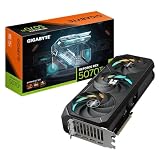
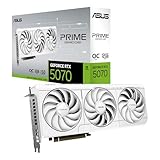
The RTX 5070 Ti is the step up for players who want to push resolution and eye candy harder, and cards like the ASUS SFF-Ready Prime OC, GIGABYTE Gaming OC, and MSI Ventus 3X OC all showcase its strengths. More cores, a wider 256-bit bus, and a full 16GB of GDDR7 let it handle 4K gaming and demanding ray-traced titles that make the standard 5070 sweat. That larger frame buffer is also the single best insurance against the rising VRAM demands of upcoming games.
The trade-off is cost and power. The Ti asks for a meaningful premium and draws more watts, so you will want a capable power supply and case airflow to match. If you game at 4K, chase maximum ray tracing, or simply want the longest useful lifespan before your next upgrade, that extra outlay buys real, lasting headroom that the 5070 cannot match.
Which Should You Buy?
- For 1440p high-refresh gaming: pick the RTX 5070, because it delivers all the frames you need at that resolution for less money.
- For 4K gaming: pick the RTX 5070 Ti, because its extra cores and 16GB buffer keep 4K smooth where the 5070 struggles.
- For heavy ray tracing: pick the 5070 Ti, because the added horsepower absorbs the demanding lighting workload better.
- For the best value build: pick the RTX 5070, because the savings can fund a stronger CPU or faster monitor.
- For longevity and future titles: pick the 5070 Ti, because 16GB of VRAM ages more gracefully as games grow hungrier.
Frequently Asked Questions
Is the RTX 5070 Ti worth the extra money over the 5070?
It depends on your resolution. At 4K or with heavy ray tracing, the Ti’s extra cores and 16GB buffer justify the premium. At 1440p, the standard 5070 offers better value and leaves budget for other upgrades.
Is 12GB of VRAM enough on the RTX 5070 in 2026?
For 1440p gaming, yes, in the vast majority of current titles. At 4K or in the most texture-heavy future games, the 5070 Ti’s 16GB gives more comfortable headroom and a longer useful life.
Can the RTX 5070 handle 4K gaming?
It can, especially with DLSS 4 upscaling and frame generation, but you may need to dial some settings back in demanding titles. For consistent high-frame 4K, the 5070 Ti is the safer choice.
Do both cards support DLSS 4?
Yes. Both the 5070 and 5070 Ti are Blackwell cards with full DLSS 4 support, including multi-frame generation, so both benefit from NVIDIA’s latest performance-boosting features.
Final Verdict
If you game at 1440p and want the most performance per dollar, the RTX 5070 is the smart, balanced buy that leaves room in the budget elsewhere. If you target 4K, crave maximum ray tracing, or want the longevity that 16GB of VRAM provides, the RTX 5070 Ti is worth the premium. Match the card to your monitor and ambitions, and both deliver excellent Blackwell-era gaming in 2026.