Key takeaways
- Match the card to your monitor: A 1080p 144Hz panel is well served by an RTX 5060 or RX 9060 XT, while 1440p gamers should stretch for a 16GB card like the RTX 5060 Ti or RX 9060 XT to avoid stutter in demanding titles.
- Prioritize VRAM for longevity: 8GB is workable at 1080p today, but 16GB models cost surprisingly little extra in this bracket and give you far more breathing room for ray tracing, high-resolution textures, and the next three years of releases.
- Weigh upscaling and frame generation: NVIDIA’s DLSS 4 remains the more mature and more widely supported technology, while AMD’s FSR implementations on RDNA 4 have closed much of the gap — factor in which games you actually play.
- Check physical fit and power: Most cards here are compact 2 to 2.5-slot designs that suit mid-tower and small builds, but always measure your case clearance and confirm your PSU has the right connectors and headroom.
- Don’t overlook cooling and warranty: Dual and triple-fan coolers with zero-RPM idle modes keep noise down during light workloads, and a 3-year warranty is meaningful protection on a component you plan to keep for several upgrade cycles.
What's inside
Shopping for a graphics card under $500 in 2026 means walking a tightrope. Push too far down the stack and you end up with 8GB of VRAM that runs out of headroom the moment you turn on ray tracing or load a texture-heavy open-world title. Reach too high and you blow past the budget on a card whose extra performance you’ll never actually see at 1080p or 1440p. Making it harder, marketing spec sheets rarely tell you which compromises actually matter in real games.
This guide cuts through that. We’ve focused on the current generation of mainstream cards — NVIDIA’s RTX 50-series and AMD’s RDNA 4 Radeon RX 9060 XT — and picked the models that deliver the most frames, the most VRAM, and the most longevity per dollar without crossing the $500 line. Below you’ll find a quick buying framework, honest reviews of the top contenders, and answers to the questions we see most often from readers building or upgrading a gaming PC on a real-world budget.
As an Amazon Associate we earn from qualifying purchases at no extra cost to you. Product prices and availability are accurate as of the date shown and are subject to change.




⚡ Save on Your Next PC — Amazon Prime
Prime members get fast free shipping on the systems above, plus early access to Prime Day & Black Friday PC deals. New members get a 30-day free trial.
Watch: Best Graphics Card Under $500 — Video Review
How to Choose Graphics Card Under $500
- Match the card to your monitor: A 1080p 144Hz panel is well served by an RTX 5060 or RX 9060 XT, while 1440p gamers should stretch for a 16GB card like the RTX 5060 Ti or RX 9060 XT to avoid stutter in demanding titles.
- Prioritize VRAM for longevity: 8GB is workable at 1080p today, but 16GB models cost surprisingly little extra in this bracket and give you far more breathing room for ray tracing, high-resolution textures, and the next three years of releases.
- Weigh upscaling and frame generation: NVIDIA’s DLSS 4 remains the more mature and more widely supported technology, while AMD’s FSR implementations on RDNA 4 have closed much of the gap — factor in which games you actually play.
- Check physical fit and power: Most cards here are compact 2 to 2.5-slot designs that suit mid-tower and small builds, but always measure your case clearance and confirm your PSU has the right connectors and headroom.
- Don’t overlook cooling and warranty: Dual and triple-fan coolers with zero-RPM idle modes keep noise down during light workloads, and a 3-year warranty is meaningful protection on a component you plan to keep for several upgrade cycles.
The Best Picks Reviewed
ASUS Dual RTX 5060 Ti 16GB OC
This is the sweet spot of the entire sub-$500 category: 16GB of GDDR7 paired with DLSS 4 makes it the most capable 1440p card you can buy at this price, and the Dual cooler keeps it quiet in a 2.5-slot footprint that fits most mid-towers. If you can afford the top of this budget, buy this one and stop shopping.
XFX Swift Radeon RX 9060 XT 16GB
AMD’s RDNA 4 answer to the 5060 Ti brings the same 16GB of memory at a friendlier price, and the triple-fan Swift cooler runs cool and quiet under sustained load. It’s the value champion here — excellent raster performance at 1440p, with ray tracing that’s finally competitive rather than an afterthought.
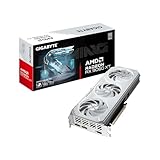
GIGABYTE RX 9060 XT Gaming OC ICE 16G
The ICE variant delivers the same 16GB RDNA 4 silicon in a white two-slot design with server-grade thermal gel and a reinforced backplate, making it the pick for anyone building a light-themed rig. Thermals are excellent for a dual-fan card, and the compact size opens up smaller cases that triple-fan models won’t fit.
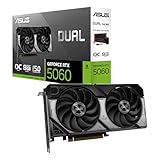
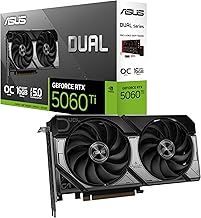
ASUS Dual RTX 5060 8GB OC
At the lower end of the budget, the Dual RTX 5060 is a genuinely good 1080p card — DLSS 4 does heavy lifting in newer titles, and the 0dB fan mode means it’s silent on the desktop. The 8GB frame buffer is the obvious limitation, so treat this as a 1080p card and don’t expect it to age as gracefully as the 16GB options above.
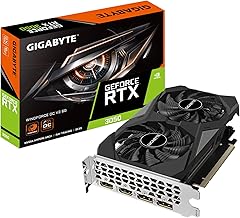
GIGABYTE RTX 5060 WINDFORCE OC 8G
GIGABYTE’s WINDFORCE take on the RTX 5060 is typically the cheapest way into the 50-series, and it trades nothing meaningful in performance for that lower price. It’s the right call for a tight budget 1080p build or an older system upgrade, provided you’re realistic about the 8GB ceiling.
Frequently Asked Questions
Is 8GB of VRAM still enough in 2026?
At 1080p with sensible settings, yes — most titles run well and DLSS 4 helps considerably. At 1440p, or with ray tracing and ultra textures enabled, 8GB increasingly becomes the bottleneck, which is why we recommend stretching to a 16GB card if your budget allows.
Should I buy NVIDIA or AMD at this price?
Choose NVIDIA if you value DLSS 4’s broader game support, better ray tracing, and stronger performance in creative and AI workloads. Choose AMD’s RX 9060 XT if you want the most raw raster performance and VRAM per dollar, which is often the smarter buy for pure gaming.
What power supply do I need?
A quality 550W to 650W unit covers every card on this list comfortably in a typical single-GPU build. Check your PSU’s connector layout before buying, and don’t skimp — an underpowered or low-quality supply is a common cause of instability that gets misdiagnosed as a bad GPU.
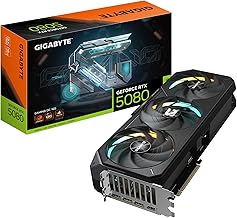
Is the RTX 5080 worth considering?
The ASUS TUF Gaming RTX 5080 is an outstanding card for 4K gaming, but it sits well above the $500 cap and isn’t a value proposition for most buyers. Only look at it if your budget is genuinely flexible and you’re gaming at high refresh 4K.
Final Thoughts
For most gamers under $500, the ASUS Dual RTX 5060 Ti 16GB is the card to beat — it’s the only option here that comfortably handles 1440p with DLSS 4 and has the VRAM to stay relevant. If you’d rather keep more cash in your pocket, the XFX Swift RX 9060 XT 16GB delivers nearly the same experience for less, and the ASUS Dual RTX 5060 8GB remains a solid, quiet choice for anyone locked into 1080p gaming.