Key takeaways
- Up to 24 inches: 1080p looks sharp and runs fast on modest hardware.
- 27 inches: 1440p is the ideal pairing, balancing sharpness and performance.
- 32 inches and up: 1440p still works, but 4K starts to justify its cost on larger panels.
Resolution is one of the first big decisions a gamer makes, and it shapes everything from how sharp your games look to how powerful a graphics card you need. The choice between 1080p, 1440p, and 4K is not simply higher is better, because each step up in resolution demands dramatically more from your hardware. Picking the wrong resolution for your GPU leaves you either staring at a soft image or wrestling with a slideshow, so getting this balance right is central to a satisfying setup.
This 2026 guide compares 1080p, 1440p, and 4K for gaming in plain terms: how each looks, how much graphics power each requires, and how resolution interacts with refresh rate and screen size. By the end you will know which resolution matches your hardware and play style, and why 1440p has become the sweet spot for so many gamers today.
Our top picks


 ASUS TUF Gaming 27” 1440P HDR Monitor
- Product Group: Personal Computer
- Binding: Personal Computers



As an Amazon Associate we earn from qualifying purchases at no extra cost to you. Ratings are shown as listed on Amazon.
⚡ Save on Your Next PC — Amazon Prime
Prime members get fast free shipping on the systems above, plus early access to Prime Day & Black Friday PC deals. New members get a 30-day free trial.
Watch: 1080p vs 1440p vs 4K for Gaming — Video Review
1080p: The Accessible High-Frame-Rate Choice
1080p, or Full HD, remains the most accessible resolution and the easiest to run at very high frame rates. Because it asks the least of your graphics card, it is ideal for competitive players who want hundreds of frames per second and for budget builds that prioritize smoothness over pixel count. On screens up to about 24 inches, 1080p still looks crisp, and it lets a modest GPU push a high refresh rate without breaking a sweat.
1440p: The Modern Sweet Spot
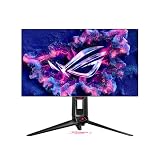
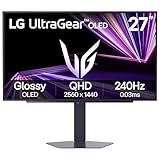
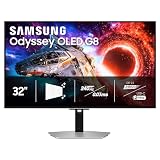
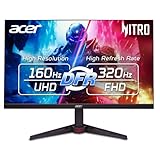
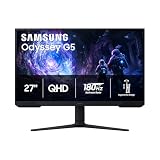
1440p, or QHD, has become the default recommendation for mainstream gaming because it doubles the visual detail of 1080p while remaining achievable for mid-range and high-end cards. On a 27 inch monitor the extra sharpness is immediately obvious, yet you can still hit high refresh rates. Panels like the Samsung Odyssey G5, ASUS TUF Gaming VG27AQ3A, Acer Nitro QHD, and LG UltraGear 27GS60QC pair 1440p with fast 180Hz refresh, while the Samsung Odyssey OLED G6 and ASUS ROG XG27ACS add premium panel quality.
4K: Stunning Visuals at a Steep Cost
4K, or UHD, delivers breathtaking detail and is fantastic for slower-paced, visually rich single-player games. The catch is that it demands roughly four times the pixels of 1080p, so it requires a powerful, expensive graphics card to run well, especially at high refresh rates. For most gamers in 2026, 4K is a premium destination rather than a starting point, best suited to those with high-end hardware who value fidelity over raw frame counts.
Match Resolution to Screen Size and GPU
- Up to 24 inches: 1080p looks sharp and runs fast on modest hardware.
- 27 inches: 1440p is the ideal pairing, balancing sharpness and performance.
- 32 inches and up: 1440p still works, but 4K starts to justify its cost on larger panels.
Always weigh your graphics card first; a resolution your GPU cannot drive smoothly will feel worse than a lower one running at a high frame rate.
Do Not Forget Refresh Rate
Resolution and refresh rate compete for the same graphics power, so there is a trade-off between sharper images and smoother motion. A fast-paced shooter often feels better at 1440p 180Hz than at 4K 60Hz, because fluid motion aids both immersion and reaction time. Decide which matters more for the games you play: if you chase competitive responsiveness, favor frame rate; if you savor cinematic worlds, lean toward resolution.
Tips
- Choose 1440p on a 27 inch monitor for the best all-around balance in 2026.
- Stick with 1080p if you want the highest possible frame rates on a budget GPU.
- Only commit to 4K if you have a high-end graphics card and prefer fidelity over speed.
- Balance resolution against refresh rate rather than maxing one and ignoring the other.
Frequently Asked Questions
Is 1440p worth it over 1080p?
For most gamers on a 27 inch screen, yes. The jump in sharpness is clearly visible, and mid-range cards can still deliver high frame rates, making 1440p the current sweet spot.
Do I need an expensive PC for 4K gaming?
Generally yes. 4K pushes about four times the pixels of 1080p, so smooth performance requires a powerful, pricier graphics card, especially if you also want a high refresh rate.
Does higher resolution reduce my frame rate?
Yes. More pixels mean more work for your GPU, so frame rates drop as resolution rises on the same hardware. That is why matching resolution to your graphics card matters so much.
Should I prioritize resolution or refresh rate?
It depends on your games. Competitive and fast-paced titles benefit more from a high refresh rate, while cinematic single-player games reward the extra detail of a higher resolution.
Conclusion
Choosing between 1080p, 1440p, and 4K comes down to matching resolution to your graphics card, screen size, and the way you play. 1080p maximizes frame rates on a budget, 4K delivers stunning fidelity for powerful rigs, and 1440p sits in the middle as the sweet spot most gamers will be happiest with in 2026. Balance it thoughtfully against refresh rate, and your display will feel right for years of play.