Key takeaways
- Excellent 4K and 1440p performance with DLSS 4 frame generation
- Cool and quiet WINDFORCE triple-fan cooler under sustained load
- Sturdy build with metal backplate and included anti-sag support
- Strong value relative to the flagship tier
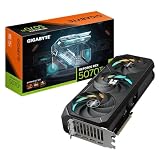
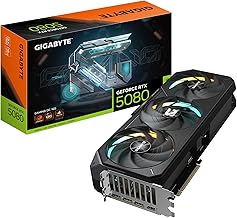
The GIGABYTE GeForce RTX 5080 Gaming OC 16G is the card most people actually end up buying when they want 4K performance without stepping up to the price bracket of a flagship. It pairs NVIDIA’s Blackwell GB203 silicon with 16GB of 256-bit GDDR7 and GIGABYTE’s triple-fan WINDFORCE cooler, and ships with a modest factory overclock out of the box.
It is aimed at gamers building or upgrading a mid-to-high-end desktop who play at 1440p high-refresh or 4K with DLSS 4 and frame generation. If you are coming from a 30-series or an older 40-series card and want a quiet, capable 4K GPU that does not demand a boutique case or a 1000W supply, this is squarely the target audience. Content creators leaning on CUDA and NVENC will also find plenty to like.
Our top picks


 ASUS TUF Gaming GeForce RTX™ 5080 16GB
- Product Group: Personal Computer
- Binding: Personal Computers


As an Amazon Associate we earn from qualifying purchases at no extra cost to you. Ratings are shown as listed on Amazon.
⚡ Save on Your Next PC — Amazon Prime
Prime members get fast free shipping on the systems above, plus early access to Prime Day & Black Friday PC deals. New members get a 30-day free trial.
Watch: GeForce RTX 5080 Review — Video Review
Design & Build
The Gaming OC is a large 3.5-slot card with a matte shroud, RGB accent along the top edge, and a reinforced metal backplate that helps keep the PCB from sagging over time. The three WINDFORCE fans use GIGABYTE’s alternate-spin layout to reduce turbulence, and they idle completely silent under light loads. It is a genuinely heavy card, so the bundled anti-sag bracket is welcome, and you will want to confirm clearance in mid-tower cases before committing.
Performance
At 4K the RTX 5080 handles nearly every current title at 60fps or better on high settings natively, and DLSS 4 with Multi Frame Generation pushes demanding ray-traced games well past 100fps. The 16GB frame buffer is comfortable for 4K today, though it is the one specification that gives pause for anyone planning to keep the card five or more years as texture budgets climb.
The GIGABYTE cooler is the real story here: even under sustained load it keeps the GPU in the mid-60s Celsius with fan noise that stays below the rest of a typical gaming rig. The factory overclock is small, but there is meaningful manual headroom if you enable the higher power target.
Pros & Cons
- Excellent 4K and 1440p performance with DLSS 4 frame generation
- Cool and quiet WINDFORCE triple-fan cooler under sustained load
- Sturdy build with metal backplate and included anti-sag support
- Strong value relative to the flagship tier
- 16GB VRAM is adequate now but a concern for long-term 4K longevity
- Physically large and heavy; check case clearance carefully
- Factory overclock is conservative out of the box
Alternatives to Consider
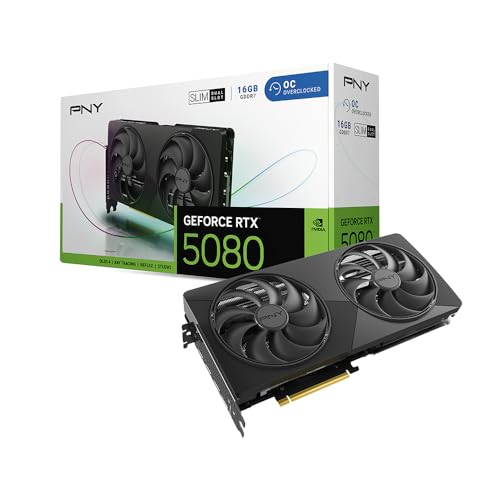
If you want factory RGB flair, the PNY GeForce RTX 5080 Epic-X RGB OC offers a flashier aesthetic at similar performance. Builders with a compact chassis should look at the ASUS Prime RTX 5080 OC, which trims the card to a SFF-friendly 2.5-slot design. And if you want the most robust cooling and binning available, the ASUS ROG Astral RTX 5080 sits a tier above with its quad-fan vapor-chamber design, albeit at a premium.
Frequently Asked Questions
What power supply does the RTX 5080 Gaming OC need?
NVIDIA recommends an 850W unit, and that is sensible for a full build. The card uses the 12V-2×6 connector, and GIGABYTE includes an adapter, though a native ATX 3.1 supply is cleaner.
Will it fit in a mid-tower case?
Usually, but not always. At 3.5 slots and over 340mm long on some SKUs, measure your case’s GPU clearance first, particularly if you run front-mounted radiators or drive cages.
Is 16GB of VRAM enough for 4K in 2026?
For current games, yes, it handles 4K with headroom. The caveat is future-proofing: a handful of the most demanding titles with maxed textures can approach the limit, so buyers planning a long ownership window should weigh that.
Does it support DLSS 4 and Multi Frame Generation?
Yes. As a Blackwell card it fully supports DLSS 4, including Multi Frame Generation, which is where much of its high-refresh 4K capability comes from in supported games.
Verdict
The GIGABYTE RTX 5080 Gaming OC is an easy recommendation for anyone building a high-end 4K rig who values quiet, reliable cooling over flashy extras. Its only real reservations are physical size and a 16GB buffer that looks slightly tight for the long haul, but for the here and now it delivers flagship-adjacent gaming at a more reasonable price.