Key takeaways
- Resolution target: Match VRAM and GPU power to your monitor — 8GB is fine for 1080p, but 1440p and 4K gaming benefit from 12-16GB cards like the RX 9070 XT or RX 9060 XT.
- Power supply headroom: Check the card’s recommended PSU wattage and connector requirements before buying; high-end RDNA 4 cards draw noticeably more power than budget RDNA 3 models.
- Cooling and noise: Triple-fan and dual-fan designs with 0dB idle modes keep temperatures and noise down during long sessions, especially in smaller cases.
- Case and slot clearance: Confirm physical card length and slot width (2-slot vs 2.5-slot coolers) fit your case, particularly for compact or ITX builds.
- Display outputs and standards: If you’re running high-refresh 4K or plan to upgrade monitors soon, prioritize cards with HDMI 2.1 and DisplayPort 2.1 for full bandwidth support.
What's inside
Picking the right AMD graphics card in 2026 is trickier than it looks. Between RDNA 3 holdovers, the newer RDNA 4 lineup, and a flood of near-identical model names from different board partners, it’s easy to overspend on VRAM you don’t need or underspend and bottleneck a new CPU. Add in fluctuating prices and confusing “OC” and “Gaming” branding across manufacturers, and most buyers end up guessing.
This guide cuts through that noise. We’ve compared the current top AMD Radeon options across price tiers, from budget 1080p cards to high-end 4K performers, focusing on real-world gaming performance, cooling design, and value. Below you’ll find our picks, a practical buying checklist, in-depth reviews, and answers to the questions we hear most often.
As an Amazon Associate we earn from qualifying purchases at no extra cost to you. Product prices and availability are accurate as of the date shown and are subject to change.





🎮 Get More From Your Setup — Free
Prime Gaming gives you free PC games every month, in-game loot, and a free Twitch channel sub — plus fast free shipping on all the gear above. New members get a 30-day free trial.
Watch: Best Amd GPU For Gaming — Video Review
How to Choose a Amd GPU For Gaming (2026)
- Resolution target: Match VRAM and GPU power to your monitor — 8GB is fine for 1080p, but 1440p and 4K gaming benefit from 12-16GB cards like the RX 9070 XT or RX 9060 XT.
- Power supply headroom: Check the card’s recommended PSU wattage and connector requirements before buying; high-end RDNA 4 cards draw noticeably more power than budget RDNA 3 models.
- Cooling and noise: Triple-fan and dual-fan designs with 0dB idle modes keep temperatures and noise down during long sessions, especially in smaller cases.
- Case and slot clearance: Confirm physical card length and slot width (2-slot vs 2.5-slot coolers) fit your case, particularly for compact or ITX builds.
- Display outputs and standards: If you’re running high-refresh 4K or plan to upgrade monitors soon, prioritize cards with HDMI 2.1 and DisplayPort 2.1 for full bandwidth support.
The Best Amd GPU For Gaming (2026)s Reviewed
XFX Swift RX 9060 XT OC Triple Fan 16GB
The triple-fan cooler on this RX 9060 XT keeps temperatures low even under sustained load, and 16GB of GDDR6 gives it real longevity for 1440p gaming as newer titles push VRAM demands higher. It’s a strong pick for buyers who want RDNA 4 efficiency without jumping to the 9070 tier.
GIGABYTE RX 9060 XT Gaming OC ICE 16G
GIGABYTE’s server-grade thermal gel and reinforced structure make this a durable choice for long-term use, while the compact 2-slot design fits a wider range of cases than most 16GB cards. Performance is nearly identical to the XFX variant, so this comes down to cooler preference and case fit.
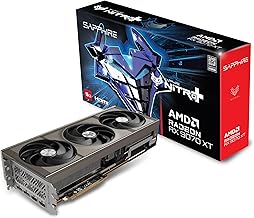
Sapphire Nitro+ RX 9070 XT Gaming OC 16GB
Sapphire’s Nitro+ line has a strong reputation for cooling and build quality, and this RX 9070 XT lives up to it with quiet, stable performance even during extended 4K sessions. If you want the best all-around RDNA 4 card on this list without going overboard on price, this is it.
GIGABYTE RX 9070 XT Gaming OC 16G
This is GIGABYTE’s answer to the high-end RDNA 4 tier, offering the same 16GB GDDR6 and PCIe 5.0 support as the Sapphire card at a competitive price point. It’s a great option for buyers who want top-tier 4K performance but are comparing coolers and price across brands.
ASRock RX 7700 XT Challenger 12GB
The RX 7700 XT Challenger remains a smart value pick for 1440p gaming, with 12GB of VRAM that handles modern titles comfortably and a genuinely quiet dual-fan cooler with 0dB idle mode. It’s the best balance of price and performance for gamers not chasing 4K.
Frequently Asked Questions
Is RDNA 4 worth it over RDNA 3 cards like the RX 7700 XT?
RDNA 4 cards such as the RX 9060 XT and RX 9070 XT offer better efficiency and ray tracing performance, but RDNA 3 cards like the RX 7700 XT still deliver excellent 1440p value at a lower price if ray tracing isn’t a priority.
How much VRAM do I actually need for gaming in 2026?
8GB is now the minimum for comfortable 1080p gaming, 12GB is a solid sweet spot for 1440p, and 16GB is recommended if you’re gaming at 4K or want your card to stay relevant for several years.
Does a triple-fan cooler actually perform better than a dual-fan one?
Triple-fan coolers generally run cooler and quieter under sustained load due to increased surface area, but a well-designed dual-fan card with good airflow, like the ASRock Challenger series, can still perform very well in most cases.
Do I need PCIe 5.0 for these cards to perform well?
No — PCIe 5.0 support is forward-looking and these cards will run at full performance on PCIe 4.0 motherboards, since current GPUs don’t yet saturate PCIe 4.0 bandwidth.
Final Thoughts
For most gamers, the Sapphire Nitro+ RX 9070 XT stands out as the best overall pick thanks to its strong 4K performance and cooling, while the GIGABYTE RX 9060 XT Gaming OC ICE offers excellent value for 1440p builds. If budget is the priority, the ASRock RX 7700 XT Challenger remains a dependable, quiet performer that won’t break the bank.