Key takeaways
- Portability vs. Power: The Prestige series prioritizes weight and battery (under 3.5 lbs, 10+ hours) with integrated Intel Arc graphics for light gaming, while Vector, Crosshair, and Katana add discrete RTX GPUs and weigh significantly more.
- Display Needs: Prestige models use UHD+ OLED for color accuracy and HDR content creation, while gaming-focused models use QHD+ or FHD at 144Hz-240Hz for smoother competitive play.
- Processor Efficiency: Lunar Lake chips like the Ultra 7-256V in the Prestige 16 AI+ Evo run cooler and longer on battery than the 24-core Ultra 9 275HX found in the Vector and Crosshair, which is built for raw throughput.
- Memory and Storage: For on-the-go multitasking, 16GB RAM and 1TB NVMe is the sweet spot found on both Prestige models, while heavy gaming and creation benefit from the 32GB-64GB and 2TB configurations in larger chassis.
- Graphics Expectations: Decide if you need true AAA gaming at high settings, which requires an RTX 4060/5070/5080, or if you play indie titles, esports, and cloud gaming where Arc integrated graphics plus excellent battery life is the better trade.
The MSI Prestige 16 AI+ Evo is our best overall pick for on-the-go gaming, with the MSI Prestige 13 AI Evo as the runner-up for travelers who prioritize ultra-light portability. Both deliver the efficiency, OLED display quality, and battery life needed for true mobility, while still handling light to moderate gaming without a bulky discrete GPU.
Choosing an MSI Prestige AI Evo for on-the-go gaming is tricky because you are balancing portability against performance. Traditional gaming laptops offer RTX power but weigh over 5 pounds and die in 4 hours, while ultrabooks last all day but struggle with games. This guide cuts through that tradeoff to find the best balance of weight, battery, display, and gaming capability, comparing the Prestige AI Evo ultrabooks against more powerful MSI alternatives so you can pick the right fit for travel, campus, or cafe gaming.
Our top picks


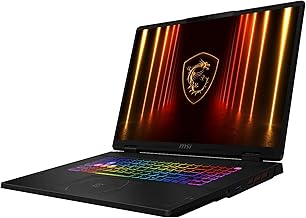


 msi Crosshair 18 HX AI 18" 2560x1600
- Product Group: Personal Computer
- Binding: Personal Computers
As an Amazon Associate we earn from qualifying purchases at no extra cost to you. Ratings are shown as listed on Amazon.
🛒 Best Price Today on Amazon
Prime members get fast, free shipping on everything above, plus member-only deals. New members get a 30-day free trial — cancel anytime.
Quick Comparison
| Product | Best For | Standout Feature | Rating |
|---|---|---|---|
| MSI Prestige 16 AI+ Evo | Overall On-the-Go Use | 16″ UHD+ OLED + Intel Ultra 7-256V + Wi-Fi 7 | 4.8/5 |
| MSI Prestige 13 AI Evo | Ultraportability | 2.18 lbs + 13.3″ OLED + MicroSD Reader | 4.7/5 |
| MSI Vector 16 HX AI | Maximum Performance | RTX 5080 16GB + Ultra 9 275HX + 240Hz QHD+ | 4.9/5 |
| MSI Crosshair 18 HX AI | Big-Screen Immersion | 18″ QHD+ 240Hz 100% DCI-P3 + RTX 5070 | 4.6/5 |
| MSI Katana A15 AI | Budget Gaming | RTX 4060 + Ryzen 7 8845HS + 144Hz FHD | 4.5/5 |
How to Choose an MSI Prestige AI Evo for On-the-Go Gaming
- Portability vs. Power: The Prestige series prioritizes weight and battery (under 3.5 lbs, 10+ hours) with integrated Intel Arc graphics for light gaming, while Vector, Crosshair, and Katana add discrete RTX GPUs and weigh significantly more.
- Display Needs: Prestige models use UHD+ OLED for color accuracy and HDR content creation, while gaming-focused models use QHD+ or FHD at 144Hz-240Hz for smoother competitive play.
- Processor Efficiency: Lunar Lake chips like the Ultra 7-256V in the Prestige 16 AI+ Evo run cooler and longer on battery than the 24-core Ultra 9 275HX found in the Vector and Crosshair, which is built for raw throughput.
- Memory and Storage: For on-the-go multitasking, 16GB RAM and 1TB NVMe is the sweet spot found on both Prestige models, while heavy gaming and creation benefit from the 32GB-64GB and 2TB configurations in larger chassis.
- Graphics Expectations: Decide if you need true AAA gaming at high settings, which requires an RTX 4060/5070/5080, or if you play indie titles, esports, and cloud gaming where Arc integrated graphics plus excellent battery life is the better trade.
The Best MSI Prestige AI Evo for On-the-Go Gamings Reviewed
Best Overall: MSI Prestige 16 AI+ Evo
Ideal for mobile professionals who want a premium all-rounder, the Prestige 16 AI+ Evo pairs the efficient Intel Ultra 7-256V with a stunning 16-inch UHD+ OLED. It is best for travelers who need all-day battery, Wi-Fi 7, and a large, color-accurate screen for work by day and light gaming by night, all in a Stellar Gray chassis that still fits easily in a backpack.
Best Budget: MSI Katana A15 AI
Best for budget-conscious gamers who still want real on-the-go gaming performance, the Katana A15 AI trades ultrabook thinness for true discrete power. With a Ryzen 7 8845HS, RTX 4060, 32GB DDR5, and a 144Hz FHD display, it handles modern titles at 1080p without the premium price of the HX-series flagships.
Best Premium: MSI Vector 16 HX AI
Built for gamers who refuse to compromise, the Vector 16 HX AI is best for those who want desktop-class power in a still-portable 16-inch form. The 24-core Ultra 9 275HX and RTX 5080 16GB deliver up to 1334 AI TOPS, a 240Hz QHD+ panel, and Wi-Fi 7, making it the premium pick when performance matters more than minimal weight.
Best for Ultraportability: MSI Prestige 13 AI Evo
The lightest option at just 2.18 pounds, this is best for frequent flyers, students, and commuters who carry their laptop all day. The 13.3-inch UHD+ OLED, Intel Ultra 7-155H, HDMI and MicroSD reader give you pro connectivity and sharp visuals, while Intel Arc handles esports and indie gaming effortlessly between charges.
Best for Desktop Replacement: MSI Crosshair 18 HX AI
Best for gamers who want a large, immersive display on the go without a separate monitor, the Crosshair 18 HX AI offers an 18-inch QHD+ 240Hz 100% DCI-P3 panel. With an Ultra 9 275HX, RTX 5070, 64GB DDR5, and 2TB SSD, it is the transportable powerhouse for AAA gaming and creation.
Frequently Asked Questions
Can the MSI Prestige AI Evo actually run games?
Yes, for light to moderate gaming. The Intel Arc integrated graphics in the Prestige 13 and 16 handle esports titles like League of Legends, Valorant, Rocket League, and indie games at 1080p smoothly, plus cloud gaming and emulation. For demanding AAA titles at high settings, a discrete RTX model like the Vector or Katana is recommended.
How big is the battery life difference between Prestige and gaming models?
Significant. Prestige AI Evo models with Intel Ultra 7 processors are optimized for 10-13 hours of productivity and video playback, while HX-series gaming laptops with Ultra 9 and RTX 5080/5070 typically deliver 4-6 hours unplugged under similar loads due to higher power draw.
Is the Prestige 16 AI+ Evo or Prestige 13 AI Evo better for travel?
The Prestige 13 AI Evo is better if absolute weight and compact size are your priority, weighing nearly a pound less. The Prestige 16 AI+ Evo is better if you want a larger OLED canvas, newer Lunar Lake efficiency, and Wi-Fi 7 while staying under 3.5 pounds.
Should I choose the Vector 16 HX AI or Crosshair 18 HX AI for portable gaming?
Choose the Vector 16 HX AI for maximum raw power and portability with its RTX 5080 and 16-inch 240Hz display. Choose the Crosshair 18 HX AI if you prioritize screen size and immersion, as its 18-inch panel offers more real estate for gaming and multitasking at the cost of larger footprint and weight.
Final Thoughts
For true on-the-go gaming with the best blend of portability, battery, and display quality, the MSI Prestige 16 AI+ Evo is the top choice, followed closely by the featherweight MSI Prestige 13 AI Evo. If you need dedicated AAA performance while still staying mobile, the MSI Vector 16 HX AI and budget-friendly MSI Katana A15 AI are excellent RTX-powered alternatives.