Key takeaways
- Panel size and desk space: A 27-inch 4K panel delivers dense, ultra-sharp text, while a 32-inch model like the LG 32UR550K-B feels more immersive but needs a deeper desk and comfortable viewing distance.
- Refresh rate: Office and media users are perfectly served by 60Hz, but gamers should target 120Hz or the 240Hz dual-mode found on OLED screens for buttery motion.
- HDR and brightness: Look for at least DisplayHDR 400; true impact comes from OLED panels rated DisplayHDR True Black 400 with deep, inky contrast.
- Connectivity: USB-C with power delivery (as on the LG 32UP83AK-W with 60W PD) lets a single cable drive the display and charge a laptop, cutting cable clutter dramatically.
- Ergonomics: A stand offering tilt, height, swivel, and pivot adjustment protects your neck over long sessions and makes portrait-mode coding far more comfortable.
What's inside
A great 4K monitor transforms everything from spreadsheet work to late-night gaming, packing roughly four times the pixels of a standard 1080p panel into razor-sharp text and lifelike images. In 2026 the category has matured to the point where crisp IPS panels, genuine HDR, and USB-C charging are no longer luxuries reserved for creative professionals with unlimited budgets.
The tricky part is matching the right panel to the way you actually work and play. A color-accurate editing display and a 240Hz OLED gaming screen both wear the “4K” label, yet they serve wildly different needs. Below we break down how to choose wisely, then walk through five standout picks that cover office productivity, media, and high-refresh gaming.
As an Amazon Associate we earn from qualifying purchases at no extra cost to you. Product prices and availability are accurate as of the date shown and are subject to change.


⚡ Save on Your Next PC — Amazon Prime
Prime members get fast free shipping on the systems above, plus early access to Prime Day & Black Friday PC deals. New members get a 30-day free trial.
Watch: Best 4K Monitor 2026 — Video Review
How to Choose a 4K Monitor
- Panel size and desk space: A 27-inch 4K panel delivers dense, ultra-sharp text, while a 32-inch model like the LG 32UR550K-B feels more immersive but needs a deeper desk and comfortable viewing distance.
- Refresh rate: Office and media users are perfectly served by 60Hz, but gamers should target 120Hz or the 240Hz dual-mode found on OLED screens for buttery motion.
- HDR and brightness: Look for at least DisplayHDR 400; true impact comes from OLED panels rated DisplayHDR True Black 400 with deep, inky contrast.
- Connectivity: USB-C with power delivery (as on the LG 32UP83AK-W with 60W PD) lets a single cable drive the display and charge a laptop, cutting cable clutter dramatically.
- Ergonomics: A stand offering tilt, height, swivel, and pivot adjustment protects your neck over long sessions and makes portrait-mode coding far more comfortable.
The Best 4K Monitors Reviewed
Dell 27 S2725QS
The Dell 27 Monitor S2725QS hits a rare sweet spot: a 27-inch 4K IPS panel running at 120Hz with FreeSync Premium, 99% sRGB coverage, and a fully adjustable stand. That combination makes it equally at home crunching documents and driving fast-paced games, and its anti-glare coating keeps reflections in check in bright rooms.
LG 27UP650K-W
For creators who value calibrated color, the LG 27UP650K-W pairs a DisplayHDR 400 IPS panel with Reader Mode and Flicker Safe technology to reduce eye strain. Its clean white chassis and tilt/height/pivot stand suit a minimalist workspace, and the 60Hz refresh is plenty for photo and video editing.
LG 32UR550K-B
If you crave a bigger canvas, the LG 32UR550K-B stretches 4K across a 32-inch panel with HDR10 support. The extra real estate makes side-by-side windows genuinely usable, and the height-adjustable stand keeps it ergonomic despite the larger footprint.
LG 32GX870A-B UltraGear OLED
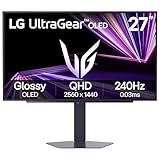
Gamers chasing the ultimate picture should look at the LG 32GX870A-B, a 32-inch UltraGear OLED with a dual-mode 240Hz refresh, 0.03ms response, and DisplayHDR True Black 400. OLED’s per-pixel lighting delivers perfect blacks and dazzling highlights, while USB-C and DP2.1 keep it future-proof.
Samsung 32″ ViewFinity S7
The Samsung ViewFinity S7 rounds out our list with a high-resolution 4K panel, HDR10, and Samsung’s Eye Saver Mode for lengthy work sessions. Bundled Display Manager software and both HDMI and DisplayPort inputs make it a versatile hub for a mixed work-and-play setup.
Frequently Asked Questions
Is 4K worth it on a 27-inch monitor?
Absolutely. At 27 inches, 4K produces around 163 pixels per inch, giving you exceptionally crisp text and fine detail. You may want to enable display scaling in Windows so menus and icons stay comfortably readable.
Do I need HDR for everyday use?
HDR mainly benefits movies, games, and color-critical work. For office tasks it makes little difference, but if you consume a lot of HDR media an OLED panel with True Black certification is a noticeable upgrade.
Can one USB-C cable really power my laptop?
Yes, provided the monitor offers enough wattage. A model with 60W power delivery, like the LG 32UP83AK-W, can charge many thin-and-light laptops while carrying video, giving you a genuine single-cable setup.
What refresh rate should a gamer choose?
For competitive play, 120Hz is a strong baseline and 240Hz is ideal. The dual-mode OLED options let you switch between 4K clarity and a high-refresh mode, so you get the best of both worlds.
Final Thoughts
The best 4K monitor is the one aligned with your priorities: the Dell S2725QS balances speed and value, the LG UltraGear OLED chases gaming perfection, and the ViewFinity S7 or 32-inch LG models deliver spacious, comfortable productivity. Decide whether refresh rate, color accuracy, or screen size matters most, and any pick on this list will keep your desk looking sharp well beyond 2026.