Key takeaways
- Sharpness: 4K packs four times the pixels of 1440p, giving noticeably crisper text and finer detail, especially on 32-inch and larger panels.
- GPU load: 4K demands far more graphics horsepower to hit high frame rates, while 1440p is far easier to drive fast.
- Refresh rate: 1440p panels commonly reach 180Hz and higher affordably; high-refresh 4K exists but costs more and needs a top GPU.
- Price: 1440p monitors and the cards to run them cost less overall; 4K raises both the display and hardware budget.
- Best use: 1440p suits competitive and fast-paced play; 4K rewards cinematic, detail-rich single-player games.
- Screen size fit: 1440p looks great up to 27 inches, while 4K justifies itself more on 32-inch and larger screens.
What's inside
Choosing a gaming monitor in 2026 often lands on one big fork: 1440p or 4K. Both resolutions look sharp and modern, but they place very different demands on your graphics card and pull your build in different directions between raw frame rate and pixel-perfect clarity.
1440p (2560×1440) has become the sweet spot for high-refresh gaming, letting cards drive 144Hz and beyond without brutal compromises. 4K (3840×2160) packs four times the pixels for stunning detail but asks a lot more of your GPU. The right pick depends on your hardware, your screen size, and whether you chase competitive smoothness or cinematic sharpness.
As an Amazon Associate we earn from qualifying purchases at no extra cost to you. Product prices and availability are accurate as of the date shown and are subject to change.


⚡ Save on Your Next PC — Amazon Prime
Prime members get fast free shipping on the systems above, plus early access to Prime Day & Black Friday PC deals. New members get a 30-day free trial.
Watch: 1440p vs 4K Gaming Monitor: 2026 Guide — Video Review
Quick Verdict
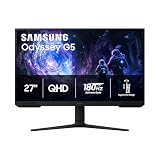
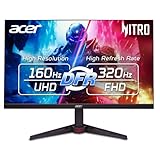
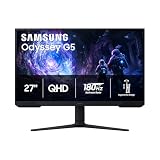
Pick 1440p, like the Samsung Odyssey G5 180Hz, if you want high frame rates on a mainstream-to-strong GPU and value responsiveness. Pick 4K, such as the Acer Nitro VG270K or LG UltraGear 4K OLED, if you have a powerful graphics card, sit at a larger screen, and want maximum detail for immersive and single-player titles.
Key Differences
- Sharpness: 4K packs four times the pixels of 1440p, giving noticeably crisper text and finer detail, especially on 32-inch and larger panels.
- GPU load: 4K demands far more graphics horsepower to hit high frame rates, while 1440p is far easier to drive fast.
- Refresh rate: 1440p panels commonly reach 180Hz and higher affordably; high-refresh 4K exists but costs more and needs a top GPU.
- Price: 1440p monitors and the cards to run them cost less overall; 4K raises both the display and hardware budget.
- Best use: 1440p suits competitive and fast-paced play; 4K rewards cinematic, detail-rich single-player games.
- Screen size fit: 1440p looks great up to 27 inches, while 4K justifies itself more on 32-inch and larger screens.
1440p Gaming Monitors
1440p is the balanced choice most gamers should start from. A panel like the Samsung Odyssey G5 (G51F) at 180Hz gives you sharp visuals and buttery motion without forcing a flagship GPU, which is why it dominates the value-to-performance conversation in 2026.
It especially shines at 27 inches, where the pixel density looks clean and your graphics card can push high frame rates in demanding titles. For competitive shooters, fast RPGs, and anyone who wants smoothness first, 1440p delivers the best overall experience for the money.
4K Gaming Monitors
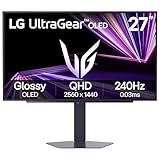
4K is the choice for pure visual impact. Screens like the Acer Nitro VG270K or the LG 32GX850A UltraGear OLED render breathtaking detail, and on larger panels that extra resolution transforms scenery, textures, and HUD clarity in immersive games.
The catch is hardware: to enjoy 4K at high refresh you need a strong modern GPU, and the whole setup costs more. If you play story-driven and visually rich titles, sit close to a big screen, and have the graphics power to back it up, 4K rewards you with the most striking image available.
Which Should You Buy?
- For competitive gaming: pick 1440p because high refresh rates are easy to reach and responsiveness beats extra pixels.
- For a mainstream GPU: pick 1440p because it lets a mid-to-high card shine without constant compromises.
- For cinematic single-player games: pick 4K because the detail and immersion are worth the GPU cost.
- For a large 32-inch-plus screen: pick 4K because the higher pixel density keeps big panels looking sharp.
- For best value overall: pick 1440p because you save on both the monitor and the graphics card needed to feed it.
Frequently Asked Questions
Is 4K worth it for gaming in 2026?
It is if you own a powerful GPU and favor detailed single-player games on a large screen. If you chase high frame rates or run a mid-range card, 1440p delivers a better all-round experience.
Can my GPU handle 4K?
4K at high refresh needs a strong modern graphics card. Mid-range cards can struggle to hold high frame rates, so check your GPU tier; if it is not top-tier, 1440p is the safer, smoother pick.
Does 1440p look blurry compared to 4K?
No. At 27 inches 1440p looks crisp and clean. 4K is sharper, but the difference is most visible on 32-inch and larger panels or when viewing text and fine detail up close.
Which resolution is better for competitive play?
1440p, because it is far easier to sustain the high frame rates competitive gaming rewards. The clarity is plenty, and the responsiveness advantage matters more than extra pixels in fast titles.
Final Verdict
In 2026, choose 1440p for the best blend of high refresh, value, and easy GPU demands, and step up to 4K when you have the graphics power, a larger screen, and a taste for maximum detail in immersive games; match the resolution to your GPU and play style and either delivers a superb experience.