Key takeaways
- Immersion: Curved panels wrap the image toward your eyes for a more enveloping feel, strongest on large and ultrawide screens.
- Geometry: Flat screens keep perfectly straight lines, which competitive players and creators often prefer for accuracy.
- Viewing comfort: On big monitors, a curve keeps edges more equidistant from your eyes, reducing strain during long sessions.
- Size fit: Curves shine at 32 inches and on ultrawides; at 27 inches the benefit is minimal and flat is often better.
- Multi-monitor setups: Flat panels align cleanly side by side, while curved screens are trickier to pair.
- Content beyond gaming: Flat displays show photos, video, and design work without any curvature distortion.
What's inside
Curved versus flat is one of the most visible monitor decisions you will make in 2026. The two look strikingly different on a desk, and beyond aesthetics they change how immersive wide screens feel, how comfortable long sessions are, and how content beyond gaming appears.
A curved monitor gently wraps the image toward you for a more enveloping field of view, which pairs especially well with large and ultrawide panels. A flat monitor keeps geometry perfectly straight, which many prefer for precise work and competitive play. The best choice depends on screen size, your uses, and personal comfort.
As an Amazon Associate we earn from qualifying purchases at no extra cost to you. Product prices and availability are accurate as of the date shown and are subject to change.


⚡ Save on Your Next PC — Amazon Prime
Prime members get fast free shipping on the systems above, plus early access to Prime Day & Black Friday PC deals. New members get a 30-day free trial.
Watch: Curved vs Flat Gaming Monitor: 2026 Guide — Video Review
Quick Verdict
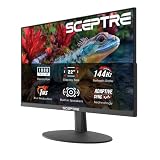
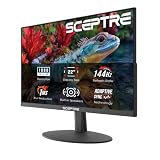
Pick curved, like the Sceptre 34-inch Ultrawide or Samsung Odyssey G55C, if you want immersive wide or ultrawide gaming and comfortable viewing across a big panel. Pick flat, especially at 27 inches or for competitive and creative work, if you value straight-line accuracy, easier multi-monitor setups, and distortion-free content.
Key Differences
- Immersion: Curved panels wrap the image toward your eyes for a more enveloping feel, strongest on large and ultrawide screens.
- Geometry: Flat screens keep perfectly straight lines, which competitive players and creators often prefer for accuracy.
- Viewing comfort: On big monitors, a curve keeps edges more equidistant from your eyes, reducing strain during long sessions.
- Size fit: Curves shine at 32 inches and on ultrawides; at 27 inches the benefit is minimal and flat is often better.
- Multi-monitor setups: Flat panels align cleanly side by side, while curved screens are trickier to pair.
- Content beyond gaming: Flat displays show photos, video, and design work without any curvature distortion.
Curved Gaming Monitors
Curved monitors are all about immersion. On a large or ultrawide panel like the Sceptre 34-inch Ultrawide WQHD or SANSUI 34-inch UWQHD, the curve pulls the edges of the screen into your peripheral vision, making racing, flight, and open-world games feel wrapped around you.
The curve also improves comfort on big screens by keeping the whole image at a more even distance from your eyes, which helps during marathon sessions. Curved panels look fantastic as a single-monitor centerpiece; they are best when the screen is large enough for the curvature to actually do something.
Flat Gaming Monitors
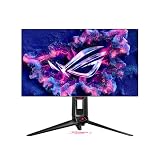
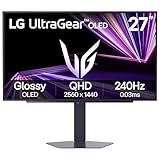
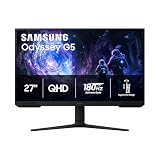
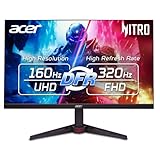
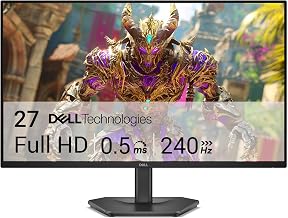
Flat monitors are the versatile, no-compromise default. A panel like the Samsung Essential S3 or a flat 27-inch gaming display keeps every line perfectly straight, which competitive gamers value for reading the playfield and creators need for accurate design and editing work.
They also stack neatly into multi-monitor arrays and display all content, from spreadsheets to movies, without any distortion. At smaller sizes a curve adds little, so flat is frequently the smarter pick at 27 inches and below, offering a clean, familiar, and flexible experience for gaming and everything else.
Which Should You Buy?
- For immersive single-player and sim games: pick curved because the wraparound effect deepens the experience.
- For a large or ultrawide screen: pick curved because the curvature genuinely improves comfort and immersion.
- For competitive gaming: pick flat because straight geometry and precise lines aid fast, accurate play.
- For creative and mixed work: pick flat because photos, video, and design appear without curvature distortion.
- For a 27-inch or multi-monitor setup: pick flat because the curve adds little and flat panels align better.
Frequently Asked Questions
Are curved monitors better for gaming?
They can be, especially on large and ultrawide screens where the curve boosts immersion and comfort. On smaller 27-inch panels the effect is minimal, so a flat monitor is often the better, more versatile choice.
Do curved monitors distort content?
For gaming and video the curve feels natural, but straight-line tasks like design, photo editing, and spreadsheets can look slightly bent. Creators who need precise geometry usually prefer a flat panel.
What screen size makes a curve worth it?
Curvature pays off most at 32 inches and above, and on ultrawide monitors. Below 27 inches the benefit is small, and many gamers find flat panels just as comfortable at those sizes.
Can I use a curved monitor for work?
Yes, and immersive tasks and multitasking on a wide canvas feel great. Just note that fine design and layout work can show mild distortion, so precision creators may lean flat.
Final Verdict
For 2026, choose curved when you want immersive gaming on a large or ultrawide screen and value viewing comfort, and choose flat for competitive play, creative accuracy, multi-monitor setups, or smaller panels; the curve rewards big screens, while flat stays the versatile all-rounder.