Key takeaways
- Shopping for a Core i5 laptop under $600 is a sweet spot if you need real everyday power without paying for extras you will never use. At this price you can get a current 12th or 13th-gen i5, 8GB to…
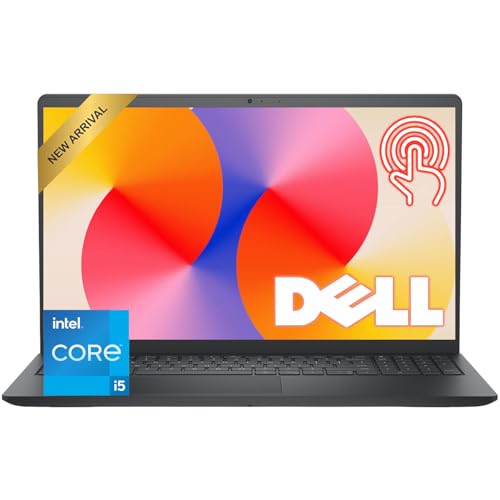
Shopping for a Core i5 laptop under $600 is a sweet spot if you need real everyday power without paying for extras you will never use. At this price you can get a current 12th or 13th-gen i5, 8GB to 16GB of RAM, and a 512GB SSD, which is enough for schoolwork, office work, Zoom, and light photo editing. What you will not get is a fast dedicated GPU, a great high-brightness display, or all-day premium build quality.
The trick is knowing which corners were cut. Two laptops can both say “i5 / 8GB / 512GB” and feel completely different because of the screen, RAM type, and cooling. If you pick based on processor alone, you will likely end up with a dim screen and soldered 8GB RAM that feels slow in two years.
What an i5 under $600 actually gets you
Most options in this range use an Intel Core i5-1235U, i5-1335U, or i5-13420H. For Word, Excel, Chrome with 15-20 tabs, Canvas, and 1080p video, all three are fine. The H-series chip is about 15-20% faster under sustained load, but it also runs hotter and drains battery faster. For most students and office workers, the U-series with better battery life is the smarter trade.
Integrated Iris Xe graphics handle 4K YouTube, Photoshop basics, and light games like Minecraft, Stardew Valley, League of Legends, and Sims 4 at low to medium settings. It does not handle Elden Ring, Warzone, or DaVinci Resolve 4K timelines well. If that is your workload, you need to raise your budget to $800+ for an RTX 3050 machine, not hunt for a miracle $550 gaming laptop.
Expect 6 to 9 hours of real battery life, a plastic chassis, a 250-300 nit display, and no SD card reader on many thin models. Keyboards are usually usable, webcams are usually mediocre, and speakers are almost always thin. That is normal here.
How the main options compare
Under $600, you are mostly choosing between three workhorse lines. They share similar CPUs but differ in screen, upgradeability, and thermals.
| Type | Typical Specs for $500-$600 | Strengths | Weaknesses | Best For |
|---|---|---|---|---|
| 15.6-inch value clamshell (Acer Aspire class) | i5-1335U, 8GB-16GB, 512GB SSD, 1080p IPS | Big screen, often has extra RAM slot, full ports including HDMI | Bulkier, 300-nit screen washes out outdoors, basic speakers | School, home office desk use |
| Thin-and-light 15.6-inch (IdeaPad / Pavilion class) | i5-1235U / 1335U, 16GB, 512GB SSD, 1080p IPS | Lighter, better keyboard, quieter fans | RAM often soldered, fewer upgrade options | Commuters, college backpack carry |
| 14-inch compact (older Inspiron / IdeaPad Slim class) | i5-1235U, 8GB, 256GB-512GB SSD, 1080p IPS | More portable, better battery life | Smaller screen for split-screen work, usually 8GB base | Writing, travel, secondary work laptop |
Best approach for school
For high school and college, prioritize 16GB RAM and a 1080p IPS screen over a slightly faster i5. Chrome + Google Docs + Zoom + Spotify will use 9-11GB easily. An 8GB machine will start swapping and stuttering during finals week when you have 25 tabs open.
A practical buy is a Acer Aspire with i5 and 16GB RAM in the 15.6-inch size. You get a full keyboard with numpad for math classes, two USB-A ports for a mouse and flash drive, and usually a door to add a second SSD later. The failure mode to watch: the hinge and lid flex if you grab it by the corner every day. Carry it from the base and use a padded sleeve.
If you walk across campus all day, the cheaper 15.6-inch brick gets old fast. In that case look for a 14-inch or thin 15-inch model around 3.5 lbs, even if it means 8GB soldered RAM. Just make sure the listing explicitly says “upgradeable” or shows 16GB from the factory. Do not assume you can add RAM later — many thin models cannot.
Best approach for work from home and office
For Excel, QuickBooks, Teams, and browser-based tools, CPU matters less than screen comfort and ports. A dim 220-nit TN panel will give you headaches by 3 p.m. Only buy IPS, 300 nits if possible, and matte / anti-glare if you work near a window.
A solid middle ground is a Lenovo IdeaPad with i5 configured with 16GB RAM and 512GB SSD. Keyboards in this line are consistently better than budget competitors, which matters if you type 5,000+ words a day. Pair it with a cheap 24-inch external monitor and you have a perfectly capable home office for under $700 total.
Common failure mode for work: heat and noise during video calls. U-series i5s with single-fan cooling will spin up on Teams with background blur on. Fix it by using a $20 laptop stand for airflow, turning off blur, and plugging in power — these chips throttle hard on battery and your mic can pick up fan noise.
What about light gaming and creative work?
Be honest about expectations. An i5 with Iris Xe can do Canva, Lightroom with 24MP RAW files, 1080p Premiere cuts with proxies, and casual gaming. It cannot do smooth 1080p high-setting AAA gaming or heavy 4K video exports without long renders and hot fans.
If you want a bit more graphics headroom, look for an i5-13420H version with dual-channel RAM (2x8GB). Dual-channel gives Iris Xe about 20-30% more fps in light games than single-channel 1x16GB. Sellers rarely list this clearly, so check the Q&A or reviews for “2x8GB.” A HP Pavilion with i5 and 16GB RAM often ships in that dual-channel setup and has slightly better speakers for media.
When the cheaper option is fine: if you only edit phone photos, write papers, and play indie games, save the $80 and take 8GB / 512GB with an IPS screen. Put the savings toward a 1TB external SSD. If you edit multi-layer Photoshop files or 50-tab research sessions, spend up to $599 for factory 16GB — you cannot cheaply fix soldered RAM later.
What to check before you click buy
First, verify the exact CPU generation. Some listings under $600 still hide an 11th-gen i5-1135G7 or even a 10th-gen chip. Those are not terrible, but they should cost $380-$430, not $579. Search the listing for “1235U,” “1335U,” or “13420H” and skip anything older unless the discount is steep.
Second, confirm SSD size and type. Accept nothing less than 512GB PCIe NVMe for a primary laptop in 2026. Windows plus Office plus a few games eats 150GB fast. 256GB means you will be living with an external drive by month three.
Third, check Wi-Fi and warranty. Look for Wi-Fi 6 (802.11ax) and Bluetooth 5.1 or newer. For refurbished units, only buy “manufacturer refurbished” or “Amazon Renewed” with a 90-day minimum return window, and test battery, webcam, and all keys in the first week. Budget laptop batteries fail more often than CPUs, and a weak hinge out of the box only gets worse.
FAQ
Is 8GB RAM enough with an i5 under $600?
Enough for basic school and office work, but tight. If you keep under 12 browser tabs and close Zoom when not in use, it is fine. If you multitask heavily or keep a laptop 4+ years, get 16GB now.
Can an i5 laptop under $600 run games?
Yes for esports and indie titles at 1080p low/medium: Valorant, Fortnite Performance Mode, Minecraft, Sims 4. No for recent AAA games at high settings. For that you need a dedicated RTX GPU, which starts well above $600.
Should I choose i5 or Ryzen 5 at this price?
Both are good. Ryzen 5 7530U often has slightly better integrated graphics and battery life, while 13th-gen i5 often wins in single-core office tasks. Pick based on RAM, screen, and price rather than brand loyalty.
New budget i5 or refurbished business laptop?
New is better if you want battery life and warranty. A refurbished business-class ThinkPad or Latitude gives you a tougher keyboard and chassis but an older CPU and worn battery. Choose refurbished only for typing-heavy work and if you are comfortable replacing a battery.