Key takeaways
- Finding the best laptop with i7 under $600 means resetting expectations first. You can get an Intel Core i7 for that price, but you will not get a new, current-generation i7 with great battery, great screen, and 16GB RAM all…
Finding the best laptop with i7 under $600 means resetting expectations first. You can get an Intel Core i7 for that price, but you will not get a new, current-generation i7 with great battery, great screen, and 16GB RAM all at once. Something has to give: age of the chip, build quality, display, or condition.
That does not make it a bad buy. For school, office work, light photo editing, and older games, a $450 to $600 i7 machine is often faster in daily use than a brand-new $600 i3 or Pentium machine, especially if it has an SSD and 12GB to 16GB of RAM. You just have to buy the right trade-off.
What an i7 actually gets you at this price
Intel has used the i7 name for over a decade across very different chips. An 11th or 12th gen i7-1165G7 or i7-1255U is a solid thin-and-light processor with good single-core speed. An 8th or 10th gen i7-8550U or i7-10510U is still fine for Chrome, Office, Zoom, and coding, but it runs hotter and its integrated graphics are weaker.
What matters more than i7 vs i5 on paper: SSD instead of hard drive, 12GB or 16GB RAM instead of 8GB, and whether the cooling can actually sustain the chip. A well-cooled i5 with 16GB RAM and a 512GB SSD will beat a starved i7 with 8GB RAM and a 256GB SSD in real student and office work.
If you shop new under $600, expect an i7-1165G7, i7-1255U, or i7-1355U paired with 8GB to 16GB RAM and Intel Iris Xe or UHD graphics. No dedicated GPU at this price unless you go refurbished gaming or workstation. That is fine for school and work, not enough for modern AAA gaming.
New, refurbished, and off-lease: the real choice
Under $600, you have three distinct paths:
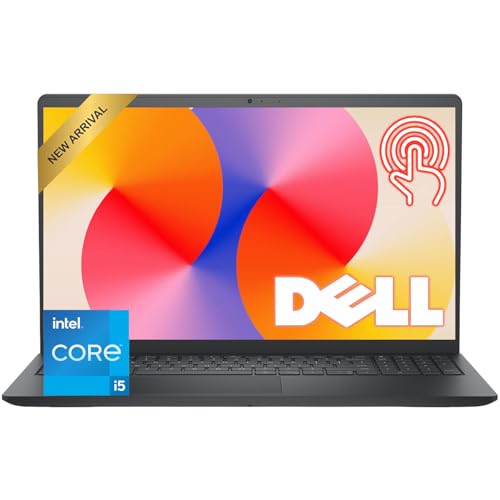
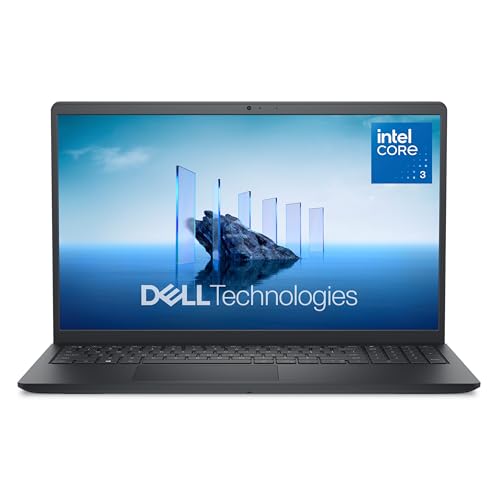
1. New budget i7 ultrabook: Usually Acer Aspire, HP Pavilion, Lenovo IdeaPad, or Dell Inspiron lines. You get a warranty, new battery, and 11th to 13th gen chip, but the screen is often dim 250-nit 1080p, the chassis flexes, and RAM may be soldered at 8GB or 12GB. Good for a student who needs reliability and warranty.
2. Manufacturer refurbished / renewed: This is where the value is for work and creative use. A 1- to 3-year-old business laptop with an i7, 16GB RAM, and 512GB SSD often sells for $380 to $550. Battery health varies, and you may get light scratches, but keyboards, ports, and cooling are usually much better than new consumer budget models.
3. Off-lease business machines: Think Lenovo ThinkPad T-series, Dell Latitude 5000/7000, HP EliteBook 800-series with 8th to 11th gen i7. Best keyboards and repairability, easy to upgrade SSD/RAM, lots of ports. Trade-off: heavier, dimmer screens than modern consumer laptops, and integrated graphics only. Ideal for coding, writing, office work, and school if you do not care about thinness.
For most buyers, a renewed business-class i7 with 16GB RAM is the smarter buy than a new i7 with 8GB RAM. Check return policy and look for at least 90-day warranty and stated battery health.
| Type | Typical spec under $600 | Best for | Main trade-off |
|---|---|---|---|
| New budget i7 ultrabook | i7-1165G7 / i7-1255U, 8-16GB, 512GB SSD, Iris Xe | School, Office, warranty peace of mind | Weak screen, flexy build, often soldered RAM |
| Renewed business laptop | i7 10th-11th gen, 16GB, 512GB SSD | Work, coding, long typing sessions | Used battery, possible wear, older Wi-Fi |
| Refurbished gaming / workstation | i7 9th-11th gen + GTX 1650 / T-series GPU | Light gaming, Premiere, CAD | Heavy, loud fans, short battery, higher failure risk |
| 2-in-1 convertible i7 | i7-1165G7 / i7-1255U, 12GB, 512GB SSD | Notes, creative markup, travel | More expensive per spec, fragile hinge |
What to check before you buy
Do not buy on i7 alone. Filter by these four things and you will avoid most duds:
RAM and slots: 16GB is the sweet spot for Chrome + Office + Zoom + 20 tabs. If it is 8GB, confirm it has an open SODIMM slot. Many thin models under $600 have soldered RAM with no upgrade path. If you keep laptops 4 years, soldered 8GB is a failure mode.
SSD size and type: Insist on 512GB NVMe if you store photos, games, or Adobe files. 256GB fills fast on Windows 11. Avoid any listing that still says 1TB HDD as primary drive; it will feel slow even with an i7.
Screen: This is where $500 i7 laptops cut corners. Look for 1080p IPS, 300 nits or better if you work near windows. Many budget models are 220-250 nits TN-like panels with washed-out colors. If you do Lightroom or design work, a dim screen hurts more than a slightly older CPU helps.
Cooling and power: Thin i7s throttle under sustained load. Check reviews for fan noise and whether it ships with a 45W or 65W charger. Single-fan ultrabooks will drop from 4GHz to 2GHz after a few minutes in video export or gaming. That is normal, but do not expect desktop-like rendering.
A practical starting point is to browse current i7 laptops with 16GB RAM and 512GB SSD and filter to under $600, then discard anything with 8GB soldered or a 1366×768 display.
Who should and should not buy an i7 under $600
Good fit for: college students running Office, SPSS, Python, or light Figma; office workers living in Chrome and Teams; creators doing 1080p photo editing and light 1080p video. The extra threads help with multitasking and export versus i3 or Ryzen 3.
Not a good fit for: gamers wanting new AAA titles at 1080p high, 4K video editors, or anyone needing all-day 10-hour battery. At this budget, gaming performance comes from the GPU, not the i7 badge. You would be better served by a Ryzen 5 or i5 with a GTX/RTX card than an i7 with integrated graphics. See listings for refurbished gaming laptops with GTX graphics under $600 if play matters more than CPU brand.
Also be honest about weight. Refurbished mobile workstations with i7-H chips are powerful, but they are 5-pound machines with 3- to 4-hour real battery life. Fine as a portable desktop for dorm or office. Miserable as a carry-all-day campus laptop.
How to shop to avoid a dud
Stick to 10th gen or newer for new purchases. An 8th gen i7 is only worth it if it is a cheap $250 to $350 business refurb with 16GB RAM, not a $550 new machine. Check the exact chip number, not just i7. An i7-1255U beats an i7-8550U by a wide margin in both CPU and graphics.
Prefer Wi-Fi 6, backlit keyboard, fingerprint reader, and USB-C charging if you travel. Those small features matter daily. For work-from-home, HDMI, Ethernet, and two USB-A ports save dongle headaches, which is why Latitudes and ThinkPads remain popular.
If you need touchscreen or pen, convertibles exist under $600 but usually drop you to 8GB to 12GB RAM to hit price. Only take that trade if you actually handwrite notes daily. Otherwise take the clamshell with 16GB.
Students who carry the laptop everywhere should also look at renewed thin and light i7 laptops from business lines – you often get a magnesium or aluminum chassis and better hinge than a new plastic budget model at the same price.
FAQ
Is an old i7 better than a new i5 under $600?
Usually no if the age gap is more than 3 generations. A new i5-1335U with Iris Xe will beat an 8th gen i7-8550U in speed, battery, and graphics. Only pick the older i7 if it brings 16GB RAM, 512GB SSD, and better build for much less money.
Can an i7 laptop under $600 run games?
Esports and older titles, yes. Expect 60 fps in Valorant, CS2 at low, League, Minecraft, and GTA V at modest settings on Iris Xe. Do not expect Baldur’s Gate 3, Starfield, or Cyberpunk at playable settings without a dedicated GPU.
Is 8GB RAM enough with an i7?
Workable for basic school and office use, but it is the first bottleneck. With Windows 11, Teams, and Chrome, 8GB leads to stutter. If you cannot upgrade later, spend the extra $40 to $80 to get 16GB now.
New or refurbished i7 for college?
New if you need full warranty and battery life and cannot risk downtime. Refurbished business-class if you want more RAM, better keyboard, and better ports for the money and can accept a shorter battery and possible cosmetic wear.