Key takeaways
- Data science on a $600 laptop is possible, but you have to buy for the right bottlenecks: RAM, CPU threads, and a decent SSD. You won’t get a real GPU for model training at this price, and that’s fine for…
Data science on a $600 laptop is possible, but you have to buy for the right bottlenecks: RAM, CPU threads, and a decent SSD. You won’t get a real GPU for model training at this price, and that’s fine for most students and beginners. Python, pandas, Jupyter, SQL, Tableau, and even small scikit-learn jobs run well if you avoid the two traps that kill budget machines: 8GB of soldered RAM and a slow, nearly-full 256GB drive.
What $600 actually buys you
At under $600 new, you are looking at integrated graphics, not RTX. That means no meaningful CUDA acceleration for deep learning. For coursework, portfolio projects, and learning machine learning fundamentals, you don’t need it. A modern 6-core Ryzen 5 or Intel Core i5 with 16GB RAM can clean a 1-2GB CSV, run train-test splits, and plot in matplotlib without drama. Where it struggles is large joins that exceed RAM, hyperparameter searches with hundreds of fits, and anything with transformers or large image datasets. Expect fans to spin up and longer runtimes, but not crashes if you have enough memory.
The biggest failure mode I see is people buying a thin laptop with 8GB RAM because the CPU sounds fast. Open Chrome with 15 tabs, VS Code, Jupyter, and Spotify, then load a 500MB dataframe, and Windows will start paging to SSD. Everything stutters. The second failure mode is storage: a 256GB SSD sounds fine until you add Anaconda, two Python environments, Power BI, and a couple datasets. You end up with 30GB free and updates start failing. Prioritize 16GB RAM and 512GB SSD over a slightly newer processor.
Minimum specs to target
For data science under $600, don’t go below this: 6-core CPU from the last 3 years (Ryzen 5 5500U / 7530U / 7640U or Intel Core i5-1235U / 1335U), 16GB RAM ideally in dual-channel, 512GB NVMe SSD, 1080p IPS display, and Wi-Fi 6. A backlit keyboard and upgradeable RAM / SSD slots are big pluses. Avoid Celeron, Pentium, Athlon Silver, and Snapdragon-only Windows machines for this use case. They can browse and run Office, but package installs and local Jupyter work are painful. Chromebooks are also a poor fit unless you live 100% in Colab and have another machine for offline work.
Linux compatibility matters more here than for school or office use. Most Ubuntu-based distros and WSL2 on Windows 11 work well on Ryzen and Intel integrated graphics. Check that Wi-Fi and fingerprint drivers are supported if you plan to dual-boot. If you only use Windows + WSL2, you avoid most driver headaches and still get a real terminal for pip, conda, and Docker.
| Priority | What to get under $600 | Why it matters for data science | What to avoid |
|---|---|---|---|
| RAM | 16GB DDR4/DDR5 | Keeps pandas, Jupyter, browser tabs in memory without swapping | 8GB soldered with no slot |
| CPU | Ryzen 5 or i5, 6+ cores | Faster groupbys, encoding, cross-validation | 2-4 core Celeron / Pentium / older Athlon |
| Storage | 512GB NVMe SSD | Room for conda envs, Docker images, datasets | 128GB eMMC or 256GB with no upgrade slot |
| Display | 15.6-in 1080p IPS, or 14-in 1080p IPS | More rows/columns visible, less eye strain | 768p TN panels with poor viewing angles |
| GPU | Integrated Radeon 610M/660M or Iris Xe | Fine for viz and light work; use cloud for heavy training | Expecting local LLM or CNN training |
Best value pick: 15-inch Ryzen 5 with 16GB / 512GB
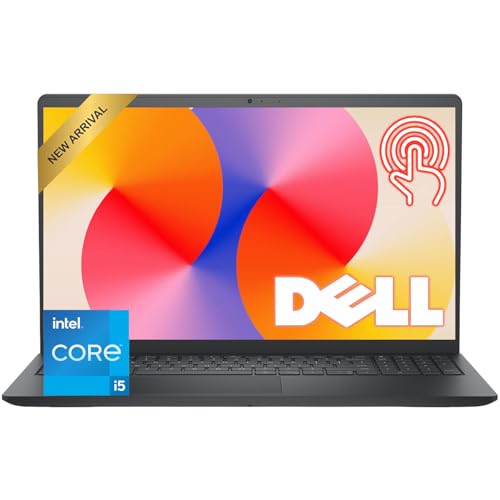
This is the configuration I recommend to most beginners. A 15.6-inch machine built around a Ryzen 5 5500U or 7530U with 16GB RAM and a 512GB SSD usually lands at $450 to $580 on sale. The extra screen space helps when you have code on one side and output on the other, thermals are better than ultra-thin 14-inch models, and many still have an open SODIMM slot and second M.2 slot. Battery life is typically 7-9 hours for browsing and coding, less under sustained loads.
Who it suits: students taking Python, statistics, SQL, and intro ML, and career-switchers building a portfolio. Trade-offs: weight is usually 3.7 to 4.2 lbs, speakers and screens are average, and build is plastic. If you commute daily and want lighter, the same specs in 14-inch cost $50 to $80 more and run hotter. When you shop, look specifically for a Ryzen 5 16GB RAM 512GB laptop rather than sorting by lowest price, because listings mix 8GB and 16GB versions under nearly identical titles.
Good alternative: Intel Core i5 12th / 13th gen
If your classes use Power BI, Excel with heavy Power Query, or tools that favor single-thread speed, an Intel i5-1235U or i5-1335U with Iris Xe and 16GB RAM is often the smoother pick. Quick Sync also helps if you record presentations. Performance for pandas and scikit-learn is very close to Ryzen at this price, so buy whichever gives you 16GB + 512GB cheaper that week. I have seen Intel models throttle more in thin chassis, so check reviews for sustained Cinebench or long compile tests, not just burst scores.
Who it suits: business analytics students and anyone living in Microsoft tools. Failure mode: many Intel budget models ship as 8GB / 256GB to hit $399. Upgrading later can cost $60 to $100 and voids the easy-return window if you damage a clip. It is usually cheaper to buy 16GB factory-installed. A search for an Intel i5 16GB RAM laptop with 512GB SSD filters out most of those stripped base configs.
When refurbished is smarter: business-class ThinkPad / Latitude / EliteBook
The third option is a manufacturer-refurbished or off-lease business laptop with a Ryzen 5 Pro or i5, 16GB RAM, and 512GB SSD. Keyboards, hinges, and serviceability are a step above $500 consumer laptops, and you often get better Linux support and two SSD / RAM slots. The catch is the screen: many are 250-nit panels that look washed out next to a new IdeaPad or Pavilion. Battery health also varies. Only buy refurbished with a 1-year warranty, stated battery guarantee, and free returns.
Who it suits: tinkerers who will add RAM, swap SSDs, and run Linux full-time. If you find a certified refurbished ThinkPad Ryzen 5 with 16GB RAM for under $500, it can outlast a new budget machine. If the listing doesn’t show exact CPU generation, RAM in GB, SSD size, and screen resolution, skip it. Vague “Core i5, fast, great for students” listings often hide 7-year-old dual-cores that will choke on modern notebooks.
How to stretch a $600 laptop further
Use the cloud for heavy lifting. Run large training jobs, grid searches, and image models in Google Colab, Kaggle Notebooks, or a cheap cloud VM, then use the laptop for writing code, EDA, and visualization. Keep local environments lean: Miniconda instead of full Anaconda, one env per course, and uninstall old kernels. Store raw datasets on an external SSD and keep at least 20% of the internal drive free to preserve SSD speed. If your laptop has only 8GB but has an open slot, a $25 8GB stick is the best upgrade you can buy, more impactful than any CPU step-up at this price.
FAQ
Is 8GB RAM enough for data science under $600?
It’s workable for very light coursework with 5-8 browser tabs and small datasets, but 16GB is the practical minimum if you multitask. If you must buy 8GB to stay under budget, only do it if RAM is upgradeable and you plan to add another stick soon.
Do I need a dedicated GPU for machine learning?
No, not to learn. Most intro courses use CPU-friendly libraries like pandas, scikit-learn, and statsmodels. For neural networks, use Colab or Kaggle’s free GPUs. A sub-$600 laptop with an RTX card will almost always have serious compromises elsewhere.
MacBook Air or Windows under $600?
You won’t get a new MacBook Air for $600, and used M1 models at this price often have 8GB / 256GB with worn batteries. For strict budget data science, a new Windows Ryzen 5 / i5 with 16GB / 512GB gives you more memory and storage for the money.
What screen size is best for coding and data viz?
15.6-inch 1080p is best value for split-screen work and stays cooler. Choose 14-inch only if you carry it daily and accept a higher price, more fan noise, and usually soldered RAM.